
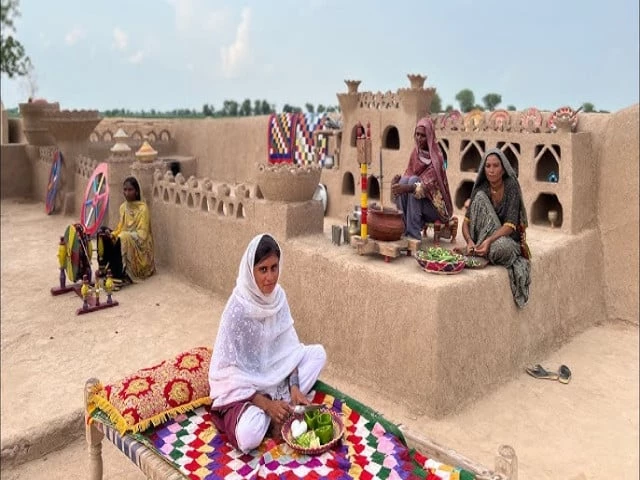
The absence of official records, basic services and rehabilitation policies deepens the calamity
Mailsi village. Photo: Courtesy of YouTube
MAIL:
The nomadic settlements spread across Tehsil Mailsi have increasingly taken the form of a neglected humanitarian, social and security crisis, raising concerns in social circles who say the continued lack of attention from the State has allowed the situation to worsen and now demands urgent intervention from higher authorities.
Like many parts of Punjab, Mailsi is home to a large population of nomadic families who live in makeshift huts along roads, railway tracks and near residential areas. However, neither district administrations nor other government departments have verified data on their exact number, identity or living conditions.
The absence of a clear policy for their registration, rehabilitation or social integration has meant that the issue continues to grow uncontrolled.
Only in Mailsi city, nomadic families can be found near the railway station, Model Town, Jamal Town and Dauraha areas.
Similar settlements exist in surrounding localities, including Adda Nohail, Dokota, Adda Lal Sagu, Tibba Sultanpur, Garha Mor and other areas, where families live in temporary huts near roads, junctions and populated neighborhoods.
Unofficial estimates suggest that the number of nomadic individuals in the tehsil may number several thousand, although constant migration and lack of official registration make exact figures impossible.
A major concern is the almost complete absence of legal identity between these communities.
Most families do not have national identity cards, depriving them of access to education, healthcare, social protection schemes and financial assistance programmes, including the Benazir Income Support Programme.
Lack of documentation also prevents many from benefiting from public health initiatives such as polio, measles and rubella vaccination campaigns, further exacerbating health risks.
Social workers, including Haji Muhammad Bilal, Chaudhry Ataul Muhyuddin Gujar, Chaudhry Akbar Ali and Muhammad Usman Akram, say food insecurity is widespread among nomadic families.
Most lack access to balanced and nutritious meals, and often rely on leftover food from weddings, banquets and public gatherings.
As a result, children, women and the elderly suffer from malnutrition, chronic diseases and poor physical development.
Experts warn that persistent nutritional deprivation is contributing to educational delay, substance abuse and broader social deterioration within these communities.
Living conditions deteriorate further during extreme weather conditions.
The huts, typically made of grass, cloth and plastic sheets, offer little protection against seasonal changes.


