NEWNow you can listen to Pak Gazette articles!
NBA legend Michael Jordan shared his thoughts on load management with the league’s players on Tuesday night.
Jordan sat down with NBC’s Mike Tirico as part of the “MJ: Insights to Excellence” series that airs during the network’s game programming. Tirico asked the former Chicago Bulls star what he thought about the strategy.
CLICK HERE FOR MORE SPORTS COVERAGE ON PakGazette.Com
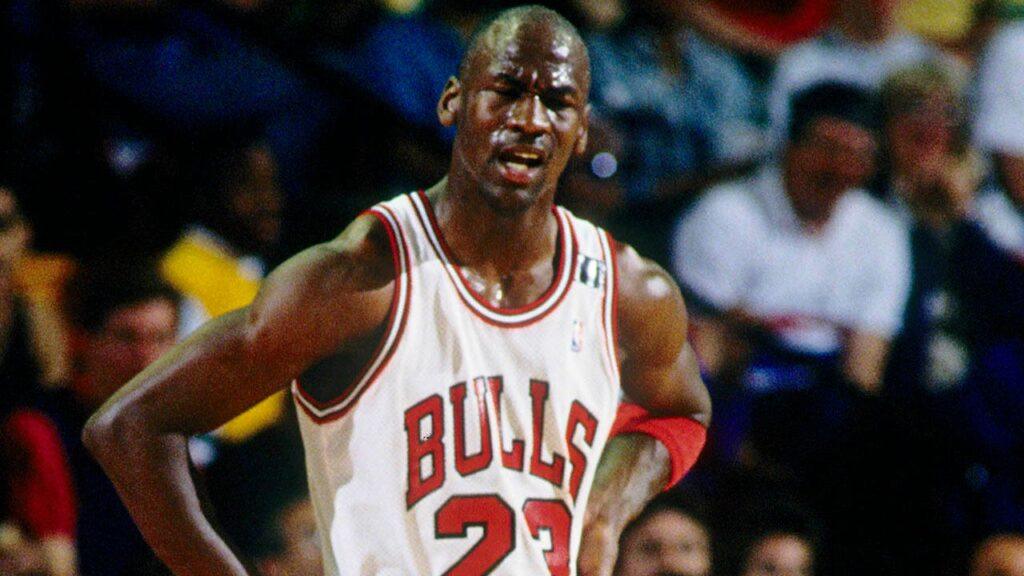
Chicago Bulls guard Michael Jordan (23) during the 1988-89 NBA Eastern Conference Finals against the Detroit Pistons at Chicago Stadium. (MPS/USA TODAY Sports)
“It shouldn’t be necessary first and foremost. I never wanted to miss a game because it was an opportunity to prove it,” Jordan said. “It was something that felt like the fans were there to see me play. I wanted to impress that guy at the top who probably worked hard to get a ticket or get money to buy it.
Jordan insisted that he really cared about the guy who sat on the nosebleeds.
“Yeah, because I knew he was probably yelling at me and I wanted to shut him up. He called me all kinds of names, I definitely wanted to shut him up,” she said. “You have a duty. If they want to see you, and as a performer, I want a show. So if kids come to see me play, I don’t want to miss the opportunity. If physically I can’t do it, then I can’t do it. But physically, if I can do it and I just don’t feel like doing it, that’s a whole different lens.”
Jordan recalled spraining his ankle early in his career and being asked to sit down. He refused, saying that, in his opinion, he needed to be on the court to show what he was capable of. He said he always felt the need to never let his teammates down.
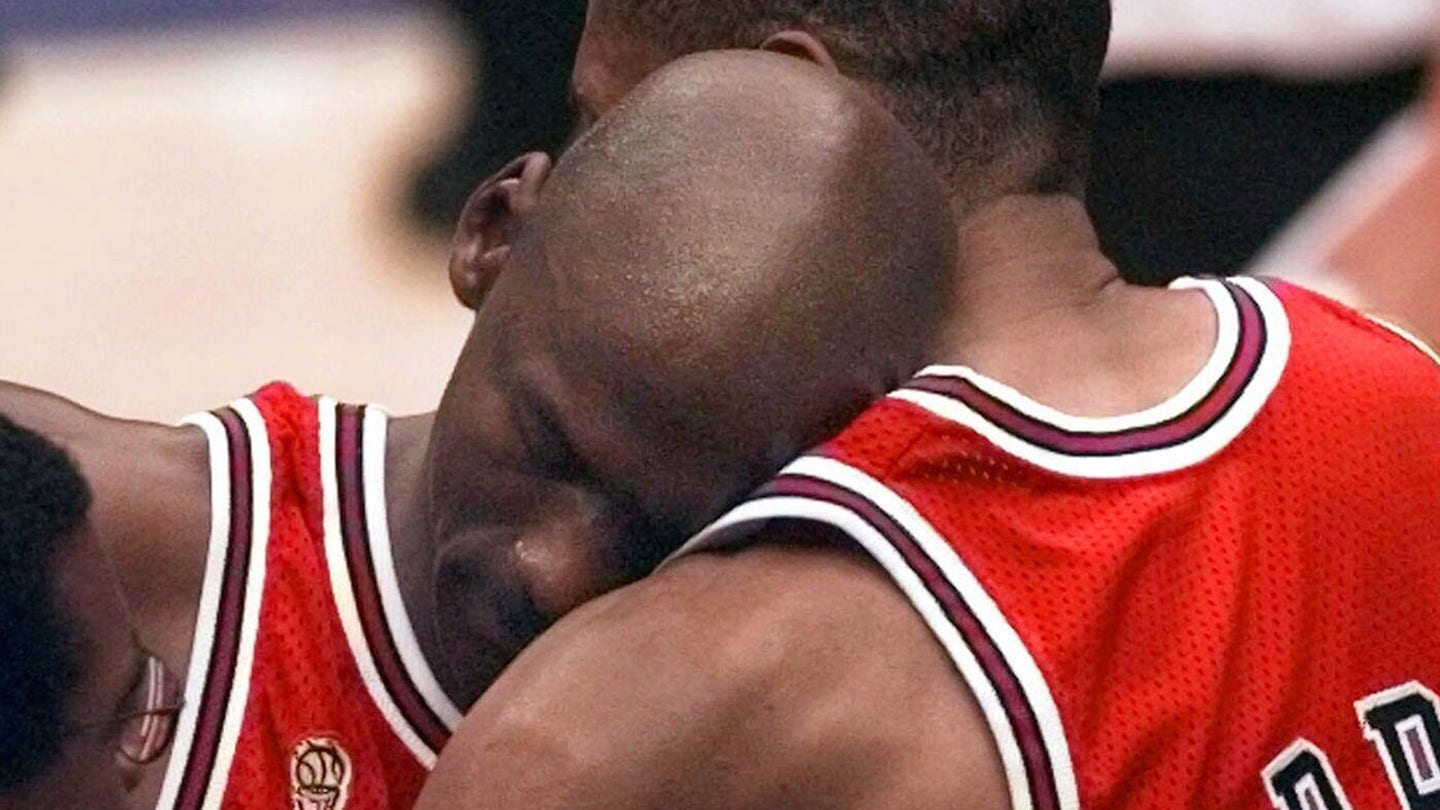
Michael Jordan of the Chicago Bulls collapses into the arms of teammate Scottie Pippen, right, at the end of Game 5 of the NBA Finals against the Utah Jazz on June 11, 1997, in Salt Lake City. (AP Photo/Susan Ragan, File)
MICHAEL JORDAN WISHES HE COULD TAKE THE ‘MAGIC PILL’ TO PLAY BASKETBALL AGAIN
He pointed to Game 5 of the 1997 NBA Finals against the Utah Jazz, known as the “Flu Game.”
“I was going to find a way to get out, even if it was a decoy. Once I got out, you never know how, trying hard, you never know what happens,” he said. “The next thing I knew, the emotions, the situation, the team’s need, all those things catapulted me to say, ‘I’m going to gut this.’
“Going back to your point about what load management is, I play basketball 2.5 hours a day, 3 hours a day, that’s your job. That’s what you get paid to do. That’s for the NBA player. What do you do the other 21 hours? To me, that’s when you should be preparing for your next day of work, for your next challenge.
“Maybe I’m not one of the guys who would probably model that… but you should think about that in retrospect of what load management really is. One, it’s the sense of pride in the fans who are paying. Two, it’s the sense of making sure I stay on my toes; I’m not going to lose it. Three, I want our rhythm as a team to always be there. It can disrupt that synergy.”
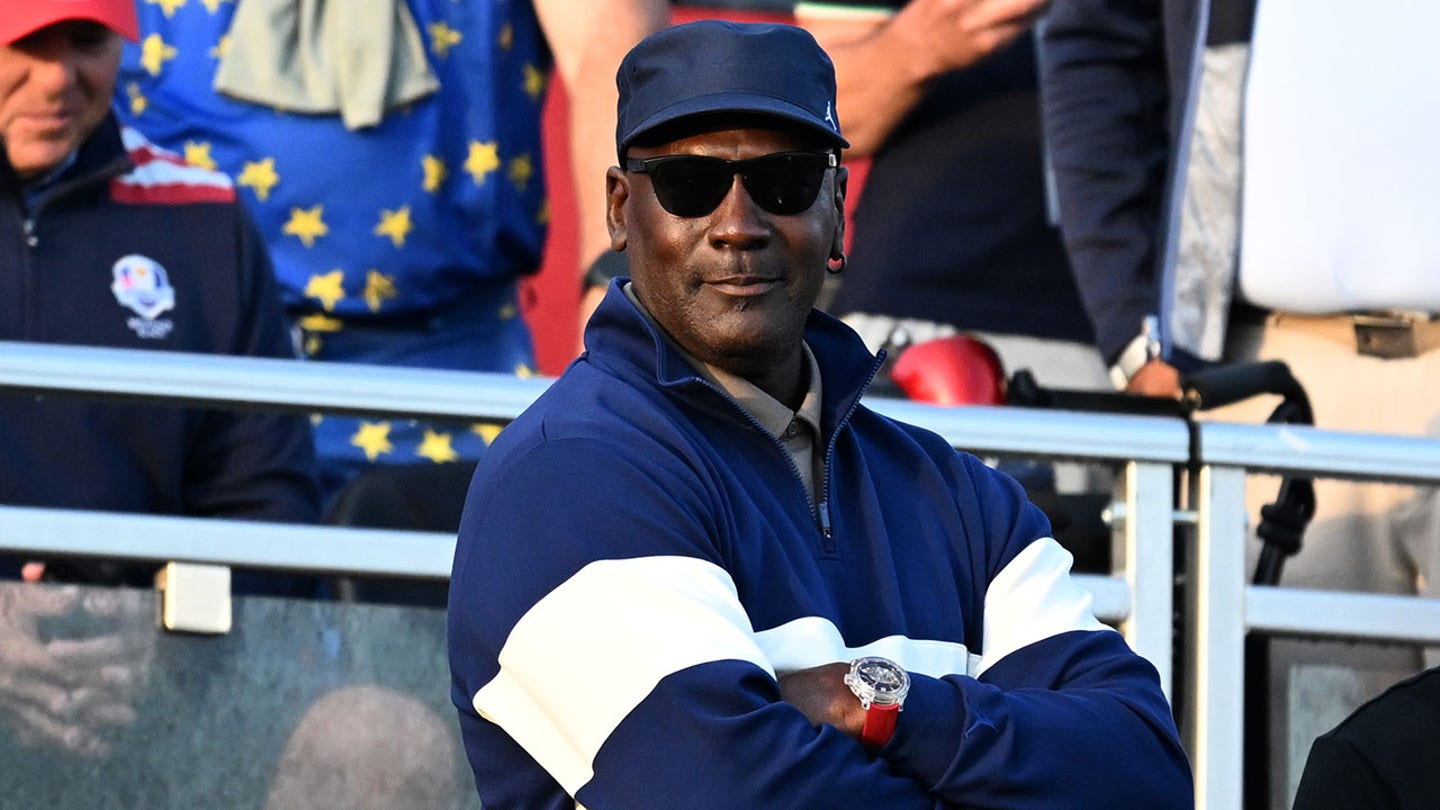
September 27, 2025; Bethpage, New York, United States; Michael Jordan watches the first hole on the penultimate day of Ryder Cup competition at Bethpage Black on September 27, 2025. (Dennis Schneidler/Image Images)
CLICK HERE TO DOWNLOAD THE Pak Gazette APP
The NBA has attempted to curb the use of load management in recent years. Contractual incentives are tied to players receiving honors such as NBA MVP and All-NBA First Team selection. Players must play at least 65 games to be eligible.