
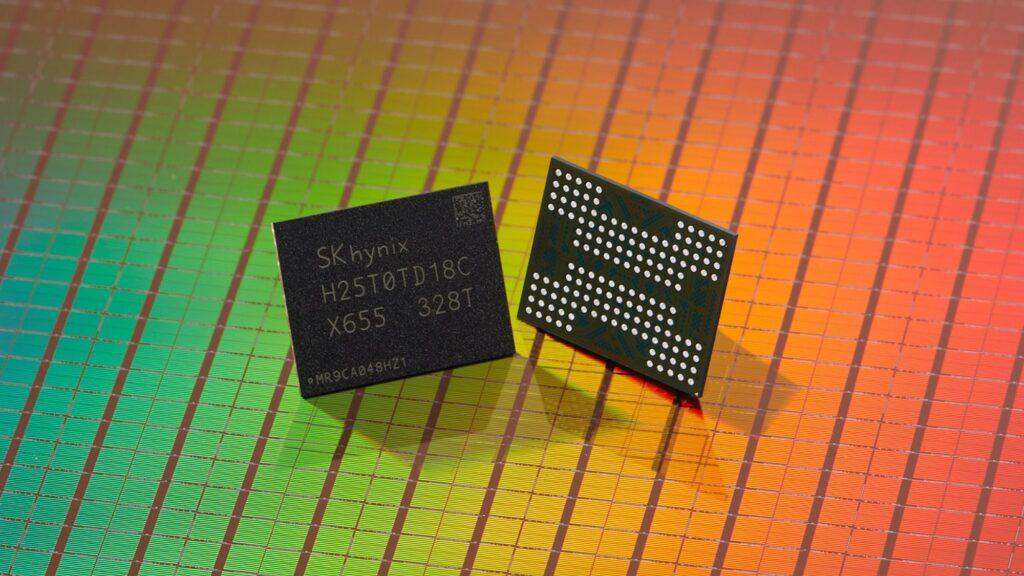
- MLC NAND now serves exclusively industrial, automotive, medical and networking equipment
- Samsung’s exit leaves gaps in MLC supply that competitors partially fill
- TLC and QLC increasingly handle consumer and enterprise storage demand
As storage technologies evolve to meet growing data demands, the trajectory of NAND Flash memory is undergoing a clear shift.
New data from TrendForce has said that MLC (Multi-Level Cell) NAND Flash is steadily moving away from mainstream storage markets toward narrowly defined niches.
Demand remains concentrated in industrial control systems, automotive electronics, medical equipment and network infrastructure, where long qualification cycles and predictable behavior outweigh profitability.
Major suppliers reduce exposure
The segment currently controlling demand prioritizes resilience and continuity of supply, but its overall growth prospects remain limited.
As a result, MLC no longer aligns with the volume-driven economics of the SSD market, especially as capacity requirements continue to increase rapidly.
Strategic exits from large NAND manufacturers are primarily driving the MLC supply crunch: Samsung decided to discontinue MLC products, with final shipments scheduled for mid-2026, removing the largest contributor from the market.
Kioxia, SK hynix and Micron have continued to restrict production largely to existing contractual obligations.
trend force estimates that global MLC NAND capacity will decrease by 41.7% year-on-year in 2026.
This reduction reflects a deliberate reallocation of capital towards advanced TLC (Triple-Level Cell) and QLC (Quad-Level Cell) process technologies rather than a short-term supply disruption.
As international vendors withdraw, companies focused on high-reliability, embedded memory gain relative influence.
Macronix, traditionally associated with NOR Flash, has shifted parts of its capacity toward MLC NAND to serve customers facing supply gaps, reducing overall NOR Flash production while increasing supply concentration.
trend force suggests that this change may provide firmer pricing support for medium to high density NOR Flash products.
It is also likely to reverse years of pressure caused by excess manufacturing capacity across the flash drive market.
The rapid decline in MLC production, combined with the absence of replacement capacity, triggered early volume commitments beginning at the end of the first quarter of 2025.
Buyers accelerated purchases to ensure long-term availability, leading to sharp price increases that have persisted.
While these conditions benefit remaining vendors in the short term, they reinforce MLC as a legacy technology rather than a scalable foundation for future storage.
As MLC recedes, TLC and QLC increasingly absorb demand in the consumer and business segments.
Its cost-per-bit advantages align with rising capacity expectations driven by data-intensive workloads and expanding artificial intelligence tools.
Most modern SSD designs now favor these technologies, accepting trade-offs in endurance through controller-level management and workload optimization.
In this context, PLC (Penta-Level Cell NAND Flash) remains speculative, with TrendForce suggesting it may not be viable until petabyte-class SSD capabilities are economically justified.
Follow TechRadar on Google News and add us as a preferred source to receive news, reviews and opinions from our experts in your feeds. Be sure to click the Follow button!
And of course you can also follow TechRadar on TikTok for news, reviews, unboxings in video form and receive regular updates from us on WhatsApp also.


