
- “And then?” of Mullvad. TV advert blocked from airing in the UK
- The foreign campaign criticizing the television ban has also aroused resistance
- Mullvad’s anti-surveillance ad aired in Germany, Sweden and the United States.
Swedish VPN provider Mullvad is known for its strong stance on privacy and is willing to voice its opinion on the matter. However, when the company tried to bring its anti-surveillance system “And then?” advertisement on British television, was received with rejection.
Directed by Jonas Åkerlund, the 30-second ad aims to raise awareness about online censorship and mass surveillance. Originally designed to criticize “Chat Control”, the EU’s controversial proposal for mandatory message scanning, the campaign has since been repurposed to challenge any legislation that threatens digital freedom.
While the ad previously aired in Germany, Sweden and the United States, the UK’s advertising clearance body Clearcast blocked the broadcast. Clearcast cited a “lack of clarity” and argued that mentions of violent criminals were “inappropriate and irrelevant” and could “imply that the VPN facilitates criminal activity.”
According to Mullvad, TfL forced the company to change its advertisements on the London Underground. The first victim was a poster displaying a QR code that linked to the banned commercial.
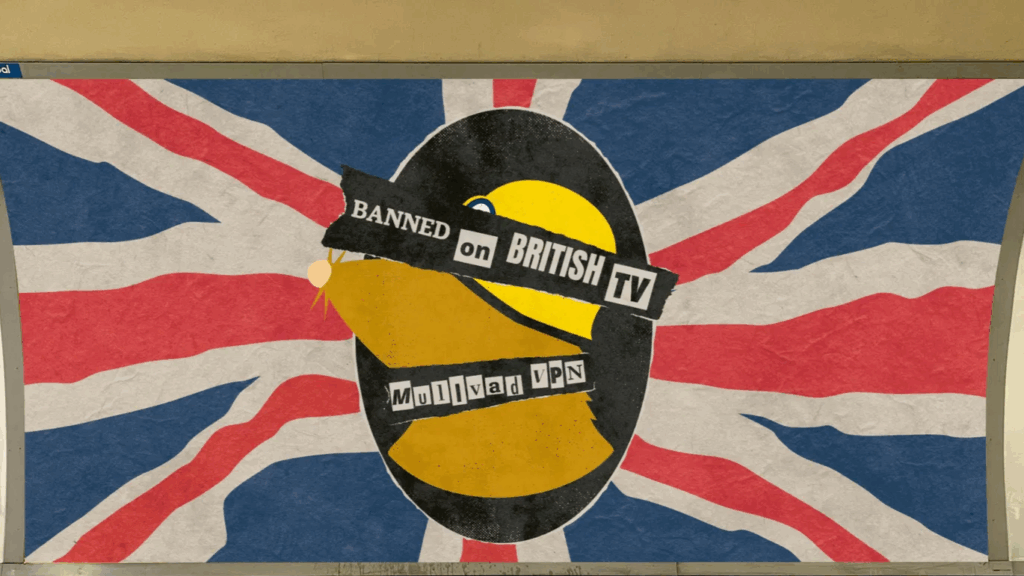
A second design, which featured the Mullvad logo over a Union Jack with the legend “Banned on British Television”, also faced opposition and was subsequently blocked.
Today we take to the streets with a big “And then?” campaign in the United Kingdom, despite having faced strong opposition. First, our TV spot “And Then?” was banned from British television. And then the outdoor advertising campaign aimed at criticizing the TV ban largely stopped. Here you can see… pic.twitter.com/n8NZNmvEDOFebruary 22, 2026
“In the end, we decided to just post the message ‘And then?’ as a relevant issue for underground travelers in a nation sliding down the slippery slope of mass surveillance and censorship,” Mullvad said.
The provider noted that unlike underground restrictions, its surface QR code campaign was launched successfully and without “any resistance so far.”
The battle for visibility moved to the streets of London today, as Mullvad confirmed plans to bypass traditional broadcast channels by projecting banned ads directly onto city walls.
While the exact locations and times of these guerrilla-style broadcasts remain tightly guarded, the move signals a significant escalation in Mullvad’s public outcry against UK advertising rules.
TechRadar has reached out to Mullvad for more details and will update this story as it develops.
What is at stake for Brits’ online privacy?
Mullvad’s persistence in running his campaign in the UK is a direct response to what he sees as a deteriorating legal landscape for privacy.
“In the UK, mass surveillance and censorship reminiscent of authoritarian countries is about to be introduced – and when we try to criticize this, we are stopped for very vague reasons,” Mullvad said.
Specifically, the provider pointed to the government’s use of the Investigatory Powers Act. In February 2025, the Home Office issued a secret order, a Technical Capability Notice, requiring Apple to create a backdoor to access encrypted iCloud data. The move sparked an industry-wide backlash and led Apple to remove the feature from the UK market.
Mullvad also highlighted the current impact of the Online Safety Act and its potential to curb freedom of expression. This has been intensified by the government targeting the “VPN loophole.”
Last week, Prime Minister Keir Starmer confirmed a three-month consultation period to explore options to “age restrict or limit children’s use of VPNs”. While the government frames this as a child safety measure, critics have called the proposal “a disgrace.”
It is in this climate that, according to Mullvad, the resistance against his anti-surveillance campaign may be “a sign” of what could come next.
“Europe should be a strong beacon of freedom and rights, rather than moving in an authoritarian direction. Limiting the ability to criticize mass surveillance is, unfortunately, a sign that things are going in the wrong direction,” Mullvad said.
We test and review VPN services in the context of legal recreational uses. For example: 1. Access a service from another country (subject to the terms and conditions of that service). 2. Protect your online security and strengthen your online privacy when you are abroad. We do not support or condone using a VPN service to break the law or conduct illegal activities. Future Publishing does not endorse or approve the consumption of paid pirated content.
Follow TechRadar on Google News and add us as a preferred source to receive news, reviews and opinions from our experts in your feeds. Be sure to click the Follow button!


