
Electoral law modified as opposition warns of restrictions on transparency and powers of courts
ISLAMABAD:
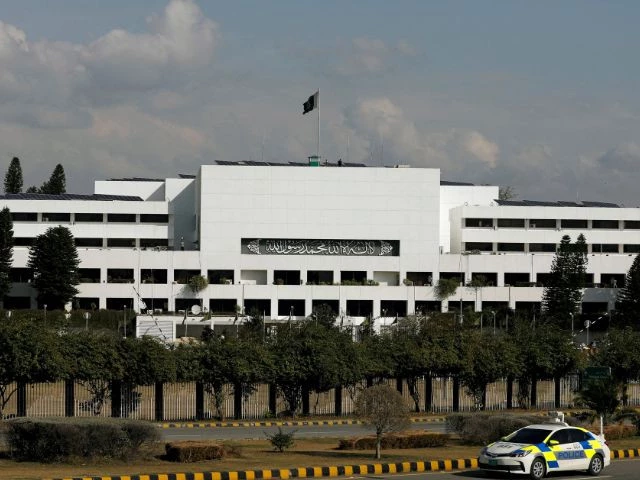
The National Assembly on Wednesday approved a bill allowing members of the National Assembly and Senate to keep their assets confidential for up to a year, citing security concerns.
The bill, introduced by Pakistan People’s Party lawmaker Shazia Marri, makes key amendments to the Election Act 2017. Under the new law, a lawmaker can request that details of his or his family’s assets be kept secret if there is a credible threat to his or her safety.
Once such a request is approved by the Speaker of the National Assembly or the President of the Senate, the Election Commission of Pakistan will be required to keep the information confidential for up to one year.
The legislation also transfers key powers under electoral laws from the Supreme Court to the Federal Constitutional Court (FCC). Gives the FCC primary authority over appeals, legal interpretation, and election dispute resolution.
As part of the changes, the word “Supreme” has been replaced by “Federal Constitutional Court” in article 155 of the Electoral Law. Amendments were also made to Sections 202, 212, and 232, formally incorporating the FCC into these provisions.
Under the bill, the FCC’s role in various legal forums has been clearly defined, with the stated goal of ensuring transparency while balancing fundamental rights.
Pakistan Tehreek-e-Insaf president Advocate Gohar Ali Khan criticized the bill, saying it would transfer routine election matters from the Supreme Court to the Constitutional Court. He held that such cases did not require constitutional interpretation.
“If the Electoral Commission orders a new vote in 20 polling stations, this matter would now be taken to the Constitutional Court,” he said.
Justice Minister Azam Nazir Tarrar defended the changes, saying many Electoral Commission matters had already been examined by the Constitutional Court. He said issues such as banning a political party were constitutional in nature and should be decided by the FCC.
Matters related to cross-voting would also fall under the jurisdiction of the Constitutional Court, he said, adding that it was not practical for most electoral appeals to reach the Supreme Court while others went to a different forum.
Following its approval in the National Assembly, the bill will now go to the Senate for consideration.
Debate over the 18th Amendment
During the session, PPP leader Syed Naveed Qamar raised a point of order, accusing his opponents of using the recent Gul Plaza fire in Karachi to criticize the 18th Amendment.
Referring to statements by Defense Minister and PML-N parliamentary leader Khawaja Asif, Qamar said the fire was being used as an excuse to attack the constitutional amendment.
“The Gul Plaza fire was used as an excuse to attack the 18th Amendment. The issue of the fire was deliberately linked to this constitutional amendment,” he said.
Qamar warned against centralization of powers, saying Pakistan’s strength lies in its federal structure. “Pakistan is a federal country. Do you want to try a new experiment?” asked.
He also criticized calls to withdraw resources from the provinces. “How can provinces cut funding for health and education to give to the federation so it can take out loans and repay them?” said.
Indus Waters Treaty
In a separate briefing, the Ministry of Water Resources told the House that India has suspended the Indus Waters Treaty since April 2025. It said around 1.45 million acres under the Upper Chenab Canal and 3.19 million acres under the Janab Canal were expected to be severely affected.
The ministry said per capita water availability had fallen from more than 5,000 cubic meters in 1951 to 819 cubic meters currently and was projected to decline to 744 cubic meters by 2030, posing serious social and economic risks.
Bills presented
Several other bills were introduced during the session.
Mirza Ikhtiar Baig introduced the Criminal Procedure Code (Amendment) Bill, 2026, which seeks changes in sections 174B and 174C, and referred it to a committee.
PTI-backed lawmaker Aslam Ghumman moved a constitutional amendment seeking to abolish reserved seats for women and introduce direct elections. Justice Minister Tarrar opposed the bill in principle and recommended it be sent to a standing committee.
Pakistan Steel Mills and Railways
In written replies, the Ministry of Industries and Production said Pakistan Steel Mills has remained closed since 2015 and 700 acres had been allocated for a new or revived steel mill. Agreements have been signed with the Russian Industrial Engineering Company, while most of the factory’s workforce has been laid off.
The Ministry of Railways said Pakistan Railways owns more than 168,000 acres across the country, with more than 12,000 acres under illegal occupation. He said thousands of acres had been reclaimed in recent years, generating revenue for the department.
Comments by Ali Muhammad Khan
PTI leader Ali Muhammad Khan said the country’s political environment was discouraging for the youth and criticized the treatment of former Prime Minister Imran Khan.
“A 75-year-old person is being treated in Adiala prison,” he said, adding that meetings with lawyers and relatives were being restricted.
Calling for dialogue, he said political leaders should sit together and talk. “Release Imran Khan and give him access,” he said.
The session of the National Assembly was suspended until 11 a.m. on Thursday.


