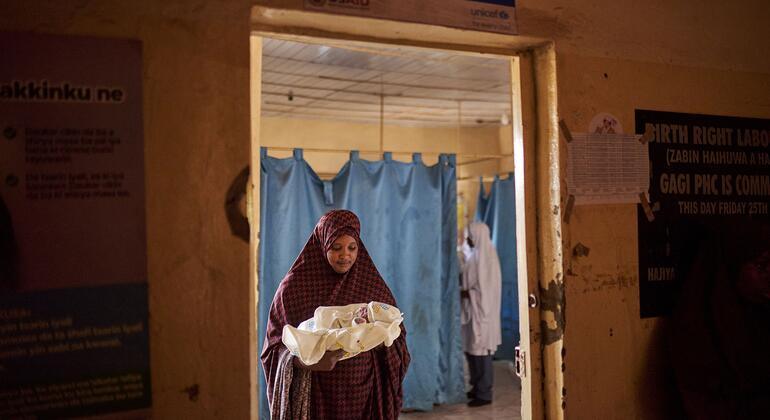
The majority of these deaths can be prevented with proven, low-cost interventions and access to quality health care, the report highlights.
For the first time, the analysis provides a complete picture not only of how many children are dying and where, but also why, fully integrating global estimates on the causes of death.
He Infant mortality levels and trends The report presented by the United Nations Inter-Agency Group for the Estimation of Child Mortality shows that, Although deaths of children under five have more than halved since 2000, the pace of reduction has slowed by more than 60 percent since 2015..
Malnutrition and other major threats
Among its key findings, more than 100,000 children aged between one month and five years died directly from severe acute malnutrition (the first global estimate of such deaths), with some of the highest numbers recorded in Pakistan, Somalia and Sudan.
Experts warn that the real number of victims is likely higher, as malnutrition weakens immunity and increases vulnerability to other diseases, while many cases go unrecorded.
“No child should die from diseases that we know how to prevent. But we see worrying signs that progress on child survival is slowing, and at a time when we are seeing new global budget cuts,” said Catherine Russell, Executive Director of the United Nations Children’s Fund (UNICEF).
A mother holds her newborn baby in the Special Care Newborn Unit of a hospital in Uttar Pradesh, India.
Infectious diseases remain a major threat, with the top nine infections accounting for 43 percent of deaths in children under five years of age worldwide.
Beyond the first month of life, diseases such as malaria, diarrhea and pneumonia remain the leading causes of death, especially in high-burden settings.
Deaths remain concentrated in a handful of endemic countries, including Chad, the Democratic Republic of the Congo, Niger and Nigeria. – where conflict, climate crises, invasive mosquitoes, drug resistance and other biological threats continue to impact access to prevention and treatment.
Newborn deaths now account for almost half of all under-five mortality, reflecting slower progress in preventing deaths at birth. Complications from premature birth and those that arise during childbirth are the main causes, along with infections.
Children in conflict are more likely to die
Geographic disparities remain stark. Sub-Saharan Africa accounted for 58 percent of all under-five deaths in 2024, while South Asia accounted for another 25 percent.
Children living in fragile and conflict-affected environments are almost three times more likely to die before their fifth birthday than those in other places.
The report also notes that 2.1 million children, adolescents and young people aged 5 to 24 died in 2024. While infectious diseases and injuries remain the leading causes among younger children, the risks change in adolescence: self-harm is the leading cause of death among girls aged 15 to 19 and road traffic injuries among boys.
UN officials warned that Declining development funding is putting increasing pressure on essential maternal, newborn and child health programmes..
Countries are not on track to meet child survival goals
UN Economic and Social Affairs chief Li Junhua described the findings as “a stark reminder” that many countries are far from meeting the child survival targets set out in the Sustainable Development Goals.
“We know how to prevent these deaths. What is needed now is renewed political commitment, sustained investment in primary health care and stronger data systems. to ensure that no child is left behind,” he said.
The report highlights that investments in child health remain among the most cost-effective development measures, with proven interventions such as vaccines, nutrition programs and specialized birth care capable of saving millions of lives.