
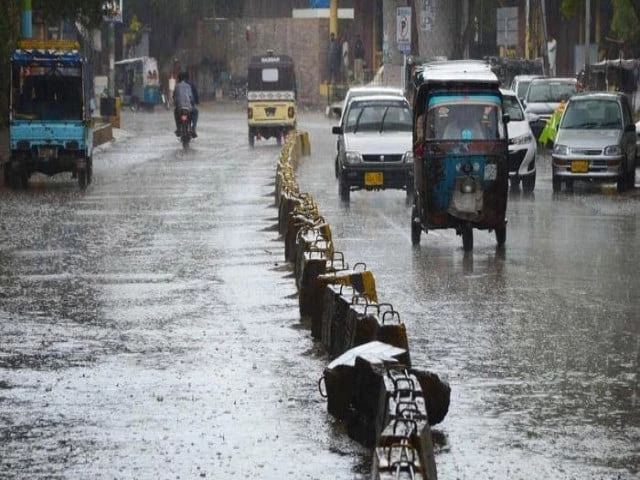
Rains in Karachi. Photo: APP (file)
KARACHI:
Heavy rains accompanied by strong winds wreaked havoc in Karachi, disrupting city systems and turning ongoing development projects into a major danger for residents. Many citizens fell into potholes and motorcycles and cars were damaged. The Red Line and the Karimabad underpass became symbols of fear as millions of commuters were stranded in severe traffic jams for hours. Streets and residential neighborhoods were inundated with rainwater, while drainage systems remained largely ineffective.
The overflowing sewers and drains aggravated the problems in several areas. Even though Mayor Karachi visited several places, the administrative machinery of the city’s municipal bodies remained largely absent.
Rainwater accumulated in the same places as in previous periods, but this time the ongoing development projects worsened the situation.
Videos circulated on social media showing a motorcyclist stuck in a pothole, searching for his bike, while a nearby car had also fallen into a pothole. Citizens warned others on social media to avoid traveling from Hussainabad to Karimabad. The Karimabad underpass, which was already delayed for three years, deteriorated further after the rains.
Similarly, construction work along the University Road Red Line caused significant disruption. Traveling from Chaurangi Jail to Hasan Square and from Hasan Square to Nipa Chawrangi became a nightmare for commuters.
A powerful new western weather system that entered Pakistan from Balochistan brought widespread rains in Karachi on Thursday. In some areas, spells of light to heavy rain persisted for more than an hour and, in certain localities, torrential rain caused urban flooding. Thick clouds obscured the city even in the afternoon, while hail was reported in areas such as Mauripur and Clifton. The Meteorological Department has forecast partly cloudy skies and light to moderate rain on Friday.
The system, which moved in from southwestern Balochistan, started affecting Karachi on Wednesday night and continued till Thursday afternoon.
During the rain, strong winds were also recorded, reaching a maximum speed of 38 km/h. According to the Meteorological Department, Nazimabad recorded rainfall of 6.69 mm; Keamari: 5.6mm; Saadi City: 4.8 mm; Gulistan-e-Johar: 4.42mm; M-9 highway: 4.35 mm; Orangi City: 3.94mm; Gulshan-e-Maymar: 3.6mm; Surjani City: 3.5mm; DHA: 3.3mm; Old Airport: 3.26 mm; Sharea Faisal: 3.04mm; Mauritius: 2.9 mm; North Karachi: 2.88 mm; Corangi: 1.82mm; and Gulshan-e-Hadeed received 1.7 mm of rain.
After the rain, rainbows could be seen in several areas.
The Early Warning Center of the Meteorological Department has predicted that the new weather system could continue to affect Karachi and several rural districts of Sindh until April 4. Authorities have advised residents to take precautions and avoid non-essential travel.
Meanwhile, the Karachi Metropolitan Corporation (KMC) said it has successfully managed the effects of intermittent heavy rains across the city, ensuring timely drainage of water and minimal disruption to daily life.


