
ICU remains down and surgeries delayed as hospital struggles to ease patient burden
FINED:
Nishtar-II Hospital in Multan, established to reduce the increasing patient load at Nishtar-I Hospital, is yet to achieve its main objective due to severe shortage of administrative and medical staff, sources revealed.
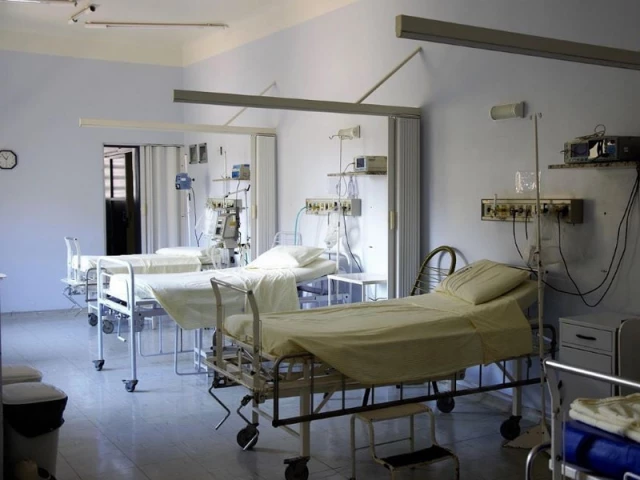
According to hospital experts, Nishtar-II has been facing a persistent human resource crisis since its inception. As a result, its Intensive Care Unit (ICU) remains non-functional to date, forcing critical patients to be transferred to other hospitals located several kilometers away. The situation has also affected surgical services, as patients have to wait a long time to undergo surgery.
Sources attribute the delay mainly to an acute shortage of doctors and technical staff in the anesthesia department. The hospital currently has six operating tables, but operating them simultaneously has become a big challenge for the administration. Due to staffing limitations, only three or four operating tables operate during the morning shift, while the situation deteriorates further in the afternoon and night shifts, where only gynecological and emergency surgeries are performed.
Inside sources further claimed that several doctors at Nishtar-II are devoting limited time to the hospital and giving priority to private practice, thereby negatively affecting public health services.
Another serious issue has arisen regarding operating room (OT) staff. Sources revealed that not a single OT assistant has been formally hired at the hospital. To fill the gap, employees hired under the housekeeping cadre are assigned duties as OT assistants.
Most of these assistants are known to be officially designated as cleaning staff and receive salaries equivalent to those of sanitation workers, despite performing highly sensitive and technical tasks. Experts warn that this practice not only violates service rules but also contravenes medical and legal standards, posing potential risks to patient safety.
Official statements sent by the Department of Anesthesia and ICU have requested immediate hiring for dozens of vacant positions to guarantee the provision of basic health services. The documents reveal that to manage 10 operating theaters (six elective and four emergency), the hospital needs at least 18 senior registrars in anesthesia, 18 doctors or medical officers, nine surgical technologists, nine anesthesia technologists, nine head nurses, 36 charge nurses, 18 junior technicians (surgical), 18 junior technicians (anaesthesia), besides sweepers and stretcher bearers.
Similarly, to operate a 50-bed ICU and other departments, the hospital needs one professor of anesthesia/intensive care, five associate professors, 10 assistant professors, 20 senior registrars in anesthesia, 20 in medicine, 35 doctors, five head nurses, 50 charge nurses, physiotherapy technologists, pharmacists and additional support staff including ward attendants and security staff.
Health professionals and residents have urged the Punjab Health Department to immediately address the staffing crisis by recruiting doctors, anesthesia specialists, nursing and technical staff. They highlighted that timely action is essential for Nishtar-II to function at its full capacity and effectively reduce the burden on Nishtar Hospital-I.


