
Oil prices rose well above $110 a barrel on Monday, in a sign of growing concern that war in the Middle East will continue to take its toll on energy supplies.
It was the first time in almost four years that the world’s benchmark oil, known as Brent, cost more than $100 a barrel. Oil is now about 50 percent more expensive than before the United States and Israel began attacking Iran on February 28.
In Asia, where economies rely heavily on oil imported from the Middle East, stocks fell broadly, falling 6 percent in South Korea and 4 to 5 percent in Japan.
Oil rose between $115 and $120 a barrel. Prices fell below $110 a barrel after the Financial Times reported that finance ministers from the Group of 7 countries were planning a call on Monday to discuss the release of oil reserves.
President Trump, who campaigned in part to lower the cost of energy, said in a post on Truth Social on Sunday that higher oil prices were “short-term” and said they were “a very small price to pay for the security and peace of the United States and the world.”
The huge jump in oil prices suggests that traders are increasingly concerned about being able to access oil and natural gas from the Persian Gulf. The Strait of Hormuz, a waterway on Iran’s southern coast, has been virtually closed for more than a week, preventing fuel produced in the region from reaching foreign markets. One-fifth of the world’s oil and substantial amounts of natural gas typically pass through the strait each day.
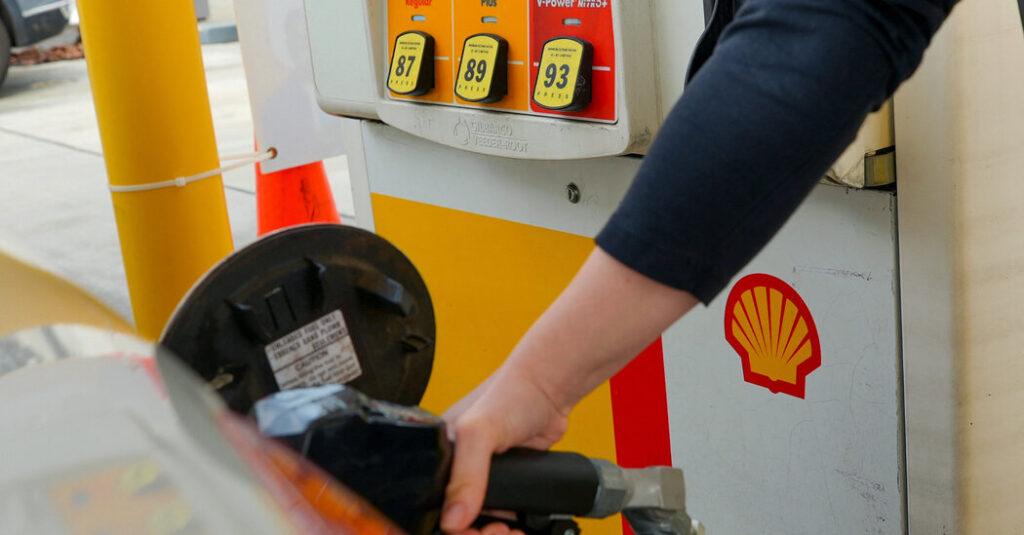
With little sign that shipping can return to normal anytime soon, higher oil prices will continue to drive up prices at the pump at a time when many Americans are worried about the economy. As of Sunday, the price of a gallon of regular gasoline had already risen about 16 percent since the war began, to a national average of $3.45, according to motor club AAA. Diesel prices had increased at a faster rate of around 22 percent.
Natural gas, which is used to heat homes and generate electricity, has also become more expensive, particularly in Europe and Asia, which rely heavily on imported fuel. Natural gas markets are more regional than oil markets, meaning that the United States, as the world’s leading producer of natural gas, has been comparatively isolated.
Earlier on Sunday, Energy Secretary Chris Wright sought to downplay the risk of energy prices staying high for a long time.
“You’re seeing a little fear in the market, but the world is not short of oil or natural gas today,” Wright told CNN. He said he expected cross-strait shipping to be disrupted for weeks at worst, not months.
Trump said last week that the US Navy could escort oil tankers through the Strait of Hormuz, but Wright said US forces were focused on limiting Iran’s missile and drone capabilities.
The sudden rise in oil and gas prices has raised concerns about inflation. The Federal Reserve typically counteracts rising prices by keeping interest rates high, to slow the economy and the pace of inflation. But Friday’s weak jobs data reinforced the case for a rate cut, creating a tug-of-war over the path forward.
A measure of investors’ inflation expectations has risen sharply. Investors now expect inflation to rise to around 4.5 percent in the next 12 months, from a forecast of 2.3 percent at the beginning of the year.
That has helped lift government bond yields, which prop up borrowing costs for businesses and consumers. The two-year Treasury yield, which is sensitive to changes in interest rate expectations, has risen about 0.2 percentage point since the war began, to 3.56 percent.


