
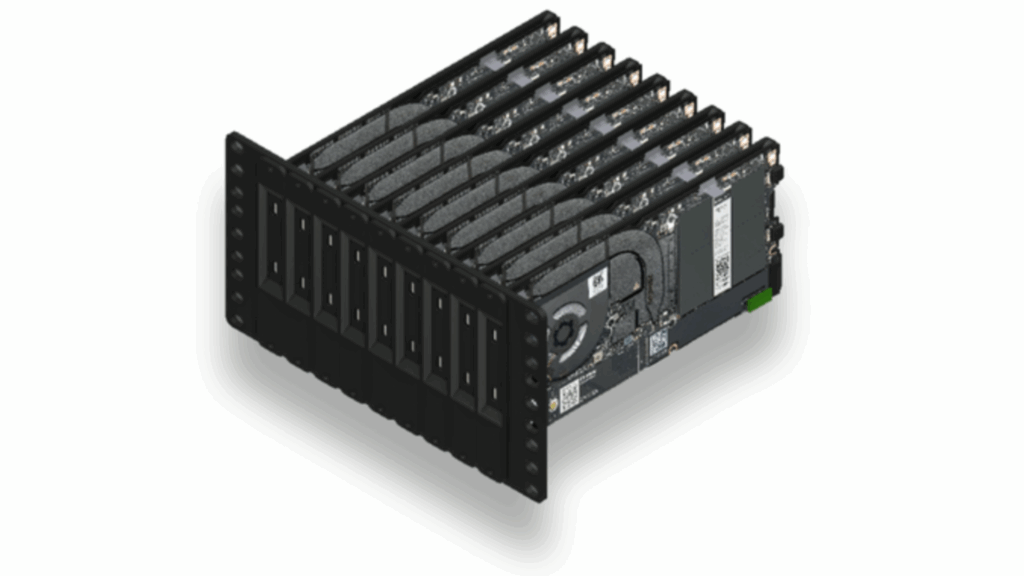
- FrameCluster turns unused laptop plates into a carefully structured rack system
- Performance increases only with the weakest CPU installed on all nodes
- Project replaces hardware expansion with physical order and shared assembly
FrameCluster is a rackmount platform designed to reuse unused Framework motherboards in a compact computing cluster.
The concept is aimed at users who already own obsolete or surplus boards and want to convert them into something resembling a small-scale computing system.
The platform supports 10- and 19-inch rack formats and is based entirely on fully 3D-printed lightweight parts.
Convert retired hardware into a rack system
Each board sits in a custom bracket that slides into a shared rack board, creating a modular structure that mirrors traditional server layouts.
The appeal here is not raw performance but organization, density and reusability.
Instead of leaving components sitting idle on shelves, users can deploy multiple boards in parallel for container workloads, service hosting, or experimental distributed setups.
This device is more like a hobbyist workstation environment than an enterprise-grade infrastructure.
According to the project description, both rack sizes have completed design validation and physical testing.
The creators report verified spacing, structural strength, cable routing, and compatibility with Framework boards.
The team also completed manufacturing preparation, including adjusted print profiles, finalized materials, and tested sourcing of inserts and fasteners.
The kits rely entirely on 3D printing capability, with each unit requiring multiple precision parts.
Fulfillment remains limited to the United States and each order is expected to be manually packaged and shipped.
FrameCluster is currently seeking a $42,500 funding goal on Kickstarter, but has only attracted $25 in pledges from two backers as of this writing, with 25 days left.
A broader target of $75,000 covers a future PCB expansion that would add power controls and basic status indicators.
The risks described focus on predictable small-scale manufacturing issues, such as print failures, supply delays, design adjustments, and shipping bottlenecks.
The platform does not include processing hardware itself, meaning that overall performance depends entirely on the CPU found in each repurposed motherboard.
Functionally, this creates a modular computing platform rather than a true high-performance system.
A setup like this might resemble a mobile workstation only in flexibility, not in processing density.
In practical use, FrameCluster offers a structured way to reuse hardware rather than a shortcut to building a real supercomputer.
Disclaimer: We do not recommend or endorse any crowdfunding projects. All crowdfunding campaigns carry inherent risks, including the possibility of delays, changes or non-delivery of products. Potential sponsors should carefully evaluate the details and proceed at their own discretion.
Follow TechRadar on Google News and add us as a preferred source to receive news, reviews and opinions from our experts in your feeds. Be sure to click the Follow button!
And of course you can also follow TechRadar on TikTok for news, reviews, unboxings in video form and receive regular updates from us on WhatsApp also.


