
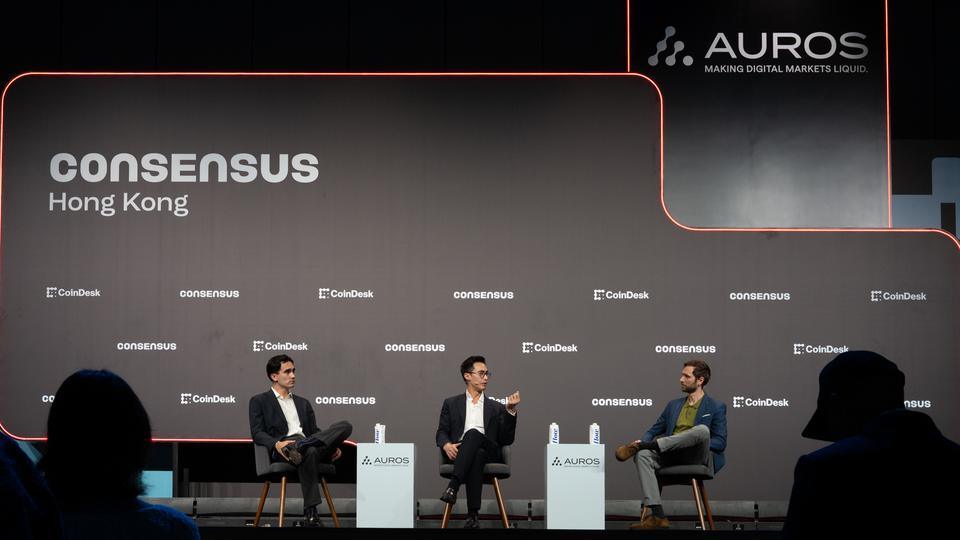
Hong Kong – Tokenization is gaining ground, but its success depends less on market hype and more on real-world utility, say executives at Ondo Finance and Securitize.
“There is no shortage of companies, issuers and companies interested in tokenizing,” said Graham Ferguson, head of ecosystem at Securitize, during a panel discussion at Consensus Hong Kong. “But it is up to us to figure out how to distribute these assets on-chain across exchanges in a way that is compliant and compatible with regulations globally.”
Ferguson emphasized that despite strong interest from institutions, distribution and compliance remain obstacles. “The biggest issue we face is communicating with exchanges and DeFi protocols about the requirements necessary to meet our obligations as a regulated entity,” he said.
Securitize has partnered with companies like BlackRock to tokenize real-world assets, including US Treasury funds. BlackRock’s BUIDL fund, launched in 2024, now holds more than $2.2 billion in assets, making it the largest tokenized Treasury fund on the market.
Ondo Finance, which also focuses on tokenized Treasuries and exchange-traded funds (ETFs), has around $2 billion in total value locked (TVL), according to data from rwa.xzy. Min Lin, managing director of global expansion at Ondo, said tokenized Treasuries today are a fraction of the potential market.
Both speakers emphasized that the next phase of tokenization will be driven by what users can actually do with tokenized assets. Ondo recently enabled the use of tokenized stocks and ETFs as margin collateral in perpetual DeFi companies, a first, Lin said.
“That brings a lot more capital efficiency in terms of the utility of those tokenized assets,” he added.
Ferguson agreed, arguing that technological advantages like programmable fulfillment and rapid settlement are not enough on their own. “Public services are by far number one,” he said. “That’s what will drive the next phase.”


