
KP CM warns against “decisions behind closed doors” and denounces “forced displacements” during winter
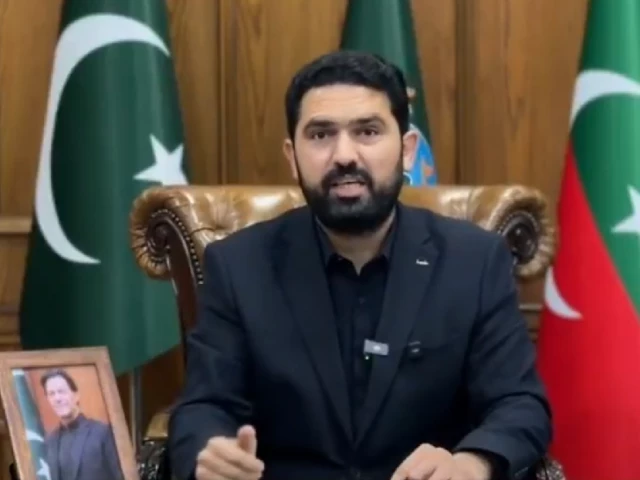
Khyber-Pakhtunkhwa Chief Minister Sohail Afridi addresses a video message on January 27, 2026. Screen recording
PESHAWAR:
Khyber Pakhtunkhwa Chief Minister Sohail Afridi has vehemently opposed the ongoing operation and forced displacement in the Tirah Valley, warning that decisions taken “behind closed doors” had once again plunged the region into suffering and instability.
He reported that elderly people, women and children were being uprooted in the frigid winter conditions.
In a detailed video message on Tuesday, the Prime Minister said that “once again extremely harsh conditions are being imposed on Tirah and people are suffering the serious consequences of decisions taken behind closed doors.”
He traced the current situation to the “regime change” that ousted the elected government of party founder Imran Khan, and said that after that, he had organized jirgas and peace mobilization campaigns in Khyber, Hazara, Malakand, Dera Ismail Khan and Waziristan to warn the Pashtun nation that “their future was being negotiated and terrorism was being imposed on them.”
He said such warnings were dismissed by the PDM government as propaganda, but the Pashtun people largely rejected such decisions.
According to the prime minister, districts where people resisted in time “continue to enjoy peace”, while areas where the threat was not taken seriously faced instability again.
He said the removal of Imran Khan’s government through closed-door decisions led to the return of terrorism in KP and devastated Pakistan’s economy, shutting down industries, leaving youth unemployed and forcing youth to find ways to leave the country.
“If there is any foreign visa available, a large majority of young people are willing to leave Pakistan because employment opportunities have disappeared,” he said.
The prime minister said that just as secret decisions harmed Pakistan, similar decisions imposed terrorism on KP. He said he openly opposed Operation Tirah when it was decided behind closed doors, questioning its rationale when “22 major military operations and more than 14,000 intelligence-based operations failed to end terrorism.”
He asked what positive result another operation might yield.
Afridi said a grand jirga convened under the roof of the Khyber Pakhtunkhwa Assembly, comprising all political and religious parties, unanimously approved a 15-point agenda, with all schools of thought agreeing that “military operations are not a solution” and that terrorism could only be eliminated through dialogue, consultations and the jirga system.
He said local elders and residents should be consulted as they better understand the traditions and conditions of the area.
Despite this consensus, he said another operation was imposed in Tirah and a 24-member local committee was formed under the leadership of the Peshawar Corps Commander and the Inspector General of the Frontier Corps.
In these jirgas it was stated that residents should leave Tirah because the operation could not be carried out while people were present. “The people of Tirah rejected this decision, but the people were forcibly displaced during the heavy pressure and heavy winter snowfall,” he said.
He said the world was witnessing the displacement of elderly, women and children in freezing conditions, while the operation itself could not be carried out due to snowfall, raising serious questions about the purpose of such decisions.
He said people were supposed to turn against him, the provincial government and Pakistan Tehreek-e-Insaf, but when he visited Tirah, he received “unprecedented respect and love” from his people.
The prime minister strongly condemned a recent federal government press release that claimed Tirah residents emigrated voluntarily, calling it “false and extremely dangerous.”
He said such statements were an attempt to create a wedge between the province, the institutions and the federation, and to erode public confidence in state institutions.
He said the credibility of the 24-member committee, the IG Frontier Corps and the Corps Commander had been damaged and their promises had become unreliable.
He added that the same committee members had promised the displaced people, on instructions from the IG Frontier Corps and the Corps Commander, that they would return within two months, a promise he had publicly said he did not trust during his visit to Bara.
Announcing further mobilization, the chief minister said that a grand jirga of all tribes residing in Khyber would be held at the Jamrud football stadium on Sunday at 2 pm, where people would be asked whether they migrated voluntarily or were forcibly displaced.
“It will show the world that injustice is being done to the people of Khyber Pakhtunkhwa,” he said, adding that “these people are not subjects of experimentation and their blood is not cheap.”
He said the provincial government had released Rs 4 billion for the care of the displaced, a move he said was not acceptable to the federation.
Recalling previous operations, he said compensation of Rs 400,000 had yet to be paid for the destroyed houses, while people from North Waziristan living in the Baka Khel camp were promised monthly stipends that had not materialized even after ten years, forcing the provincial government to bear the burden of its limited budget.
Sohail Afridi said that through closed-door decisions oppression, bloodshed and deprivation were imposed on the Pashtun nation, which had sacrificed more than 80,000 lives, but terrorism was being imposed again and more sacrifices were demanded.
He said this would not continue and that he would “remain like a mountain” with his people.
Calling on the public to speak out, he said it was now the people’s responsibility to defend their rights, warning that if they did not act now, “they would continue to carry coffins.”
He said that he stood shoulder to shoulder with the people, that he could not be bought or pressured and that he would expose the truth to the entire world.


