
Shehbaz says the country has changed forever. Calls on all parties to respect the ceasefire and gives credit to civil-military unity
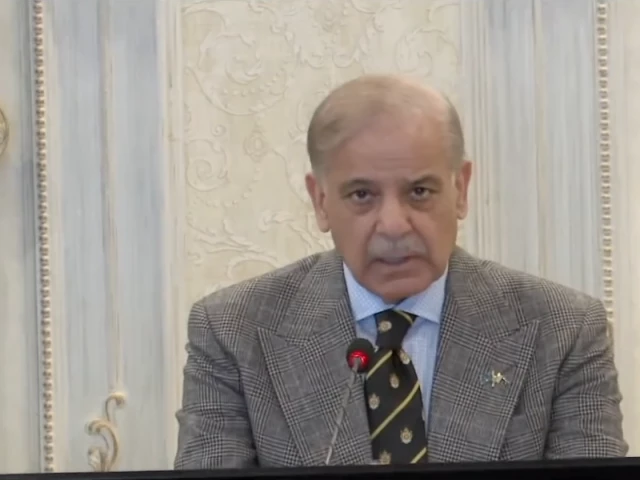
Prime Minister Shehbaz Sharif addresses the federal cabinet on February 4, 2026. Screen recording
ISLAMABAD:
Islamabad was on the cusp of an extraordinary diplomatic moment on Wednesday as Pakistan went from crisis mediator to host of high-stakes negotiations, a development framed by Prime Minister Shehbaz Sharif as “the most historic moment of honour” in the country’s history.
The White House has confirmed that Vice President JD Vance will travel to Pakistan for talks on Saturday, accompanied by high-level envoys. Iran is expected to send parliament speaker Mohammad Baqer Qalibaf along with Foreign Minister Abbas Araqchi.
Pakistan negotiated a 15-day ceasefire early Wednesday after a tense 40-day conflict between the United States and Iran, during which Islamabad maintained a careful balancing act, avoiding aligning itself with either side while quietly working to open channels for de-escalation and dialogue.
Addressing a meeting of the federal cabinet amid a tense atmosphere, Prime Minister Shehbaz said the feat was achieved through unity, coordinated civil and military leadership and sustained diplomatic engagement.
Pakistan has been “blessed with a rare honor” in helping to calm a conflict that threatened to spread far beyond the region,” he told cabinet members, who greeted him with a standing ovation as he described the importance of the breakthrough.
“This reflects the collective efforts and prayers of the nation, and the commitment of the leaders to avoid an escalation between brotherly countries,” he said, emphasizing that a potentially devastating confrontation had been contained, at least temporarily, through diplomacy.
On Tuesday, Pakistan intervened directly, with the prime minister urging US President Donald Trump to delay his threat of imminent military action for two weeks while also calling on Tehran to reopen the Strait of Hormuz as a gesture of goodwill.
His dual appeal helped unlock a pause in hostilities. Shehbaz described the response from both sides as marked by “remarkable wisdom and understanding”, adding that the ceasefire created a narrow but vital window for diplomacy to take root and avoid further escalation.
Building on that momentum, the prime minister extended a formal invitation to both sides to meet in Islamabad, setting the stage for what he called the ‘Islamabad Talks’ aimed at reaching a “conclusive agreement” to resolve long-standing disputes.
“I warmly welcome the astute gesture and extend my deepest gratitude to the leaders of both countries,” he said, adding, “We sincerely hope that the Islamabad talks succeed in achieving sustainable peace and look forward to sharing more good news in the coming days.”
Confirmation from the White House came quickly, with officials announcing that a US negotiating team led by Vice President JD Vance would travel to Pakistan, accompanied by high-level envoys, for in-person talks scheduled to begin Saturday morning local time.
Iran, which is facing the loss of several senior leaders during the conflict, is expected to send a high-level delegation led by Parliament Speaker Mohammad Baqer Qalibaf along with Foreign Minister Abbas Araqchi, signaling the seriousness with which Tehran is approaching the talks.
Important issues will be discussed during the diplomatic opening. US officials indicated that negotiations would take place behind closed doors and emphasized that Washington’s core demands had not changed, even as it agreed to a temporary suspension of military operations.
President Trump, who had previously threatened dire consequences, acknowledged Pakistan’s intervention to delay military action, linking the pause to assurances sought by both Islamabad and Tehran, particularly regarding maritime security in the Gulf.
Inside Pakistan, preparations to host the talks accelerated, transforming Islamabad into a tightly controlled diplomatic enclave as authorities implemented extensive administrative and security measures.
A two-day holiday was announced for Thursday and Friday to facilitate the arrival and movement of foreign delegations, with all official activities in the federal capital suspended, including sessions of the National Assembly and the Senate.
Specialized teams have been formed to oversee protocol, logistics and accommodation, reflecting the scale and sensitivity of the engagement as Pakistan prepares to host delegations from the two nations that have a long history of hostility.
A five-star hotel located in the Red Zone has been designated to house the visiting delegations, and law enforcement has assumed full control of its security. Existing guests have been asked to vacate the venue to make way for official use.
A strict security cordon has been established around the facility, with containers placed on surrounding roads and access routes sealed or heavily restricted, effectively turning the area into a fortified zone during negotiations.
Authorities have ordered the entrance to the Red Zone to be closed during key phases of the talks, with access strictly limited to authorized persons subject to extensive security screening and clearance procedures.
Special traffic management plans are being implemented to manage the movement of delegations, with designated routes and controlled corridors aimed at minimizing disruption while ensuring maximum safety. Authorities said the measures were necessary.
In his address to the cabinet, the prime minister stressed the importance of unity between political and military leaders, describing it as a decisive factor in Pakistan’s diplomatic success during the crisis.
He credited Deputy Prime Minister and Foreign Minister Ishaq Dar and his team for working tirelessly to facilitate the engagement, while paying tribute to Chief of Army Staff Field Marshal Syed Asim Munir for maintaining continuous contacts with international stakeholders.
The Prime Minister also acknowledged the role of friendly countries including Saudi Arabia, Qatar, Oman, Kuwait, Turkiye, Indonesia, Egypt, Azerbaijan, UAE and China for supporting Pakistan’s peace initiative at a critical time.
Referring to his recent conversation with Saudi Crown Prince Mohammed bin Salman following the attacks on Saudi energy facilities, Shehbaz reiterated Pakistan’s “unwavering solidarity” with the kingdom and reaffirmed the long-standing ties between the two countries.
He stressed that the ceasefire represented only a first step and warned that a sustained diplomatic effort would be needed to translate the temporary pause into a lasting agreement capable of addressing underlying tensions.
“The flames of conflict, which had threatened to spread across the region for more than a month, have been contained for two weeks,” he said, expressing hope that the window would lead to a permanent ceasefire and broader stability.
Highlighting the domestic dimension, the prime minister said the government had simultaneously managed economic pressures, including inflation, through coordinated policy measures and targeted interventions to protect citizens from external shocks.
He expressed gratitude to President Asif Zardari, former Prime Minister Nawaz Sharif and Pakistan People’s Party Chairman Bilawal Bhutto Zardari, as well as coalition partners and provincial leaders, for their support during the critical period.
The prime minister emphasized that the diplomatic success belonged to the entire nation, from workers and farmers to professionals and public servants, and described it as a collective achievement that had elevated Pakistan’s global standing.
“Pakistan has been changed forever,” he declared, adding that the country was now viewed with renewed respect and dignity for its responsible role in promoting peace and stability.
Later, while expressing concern over ceasefire violation in some places, Shehbaz called on all parties to respect the ceasefire. “Ceasefire violations have been reported in some places in the conflict zone, undermining the spirit of the peace process,” he wrote in X.
“I seriously and sincerely urge all parties to exercise restraint and respect the ceasefire for two weeks, as agreed, so that diplomacy can take a leading role towards a peaceful solution to the conflict,” the prime minister added.
(WITH CONTRIBUTIONS FROM NAEEM ASGHAR AND AGENCIES)


