
Pakistani citizens in Iran are urged to exercise caution and stay in regular contact with Pakistani missions.
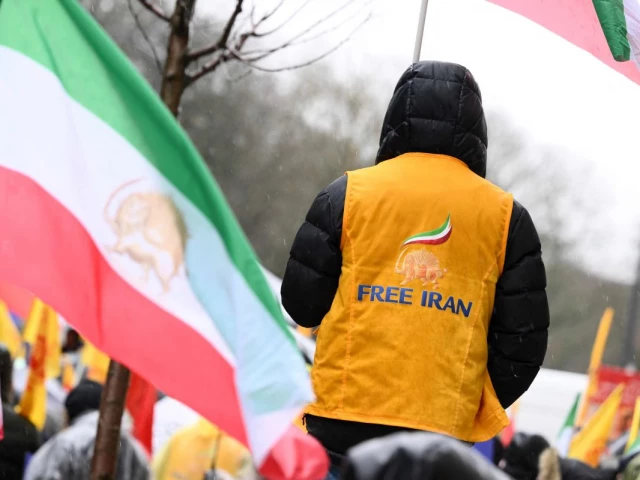
A supporter of the National Council of Resistance of Iran waves an Iranian flag as he takes part in a rally in support of the Iranian people’s uprising for democracy and freedom in Brussels on January 9, 2026. Iran’s Supreme Leader Ayatollah Ali Khamenei insisted on January 9, 2026 that the Islamic republic “would not back down” from the protests after the largest demonstrations yet in a nearly two-week movement sparked by anger over the increasing cost of living. PHOTO: AFP
Pakistan’s Ministry of Foreign Affairs has issued a travel advisory urging its citizens to avoid all non-essential travel to Iran, as protests continue to grip the Islamic Republic for the second consecutive week.
The notice, posted Saturday, comes as protests that began over economic reasons have turned violent, with more than 25 people dead.
“For their safety, Pakistani citizens are advised to avoid all unnecessary travel to the Islamic Republic of Iran until conditions improve,” he said.
“Pakistani citizens currently residing in Iran are urged to exercise caution, remain vigilant, minimize non-essential travel and remain in regular contact with Pakistani missions.”
For Pakistanis living in Iran, these are the relevant numbers to contact for updated information.
Pakistan Embassy in Iran
- Tehran
- +98-21-66-9413-88/89/90/91 (landline)
- +98-21-66-9448-88/90 (landline)
- +98 910 764 8298 (mobile)
- Zahidan
- +98 54 33 22 3389 (landline)
- +98 90 46 14 5412 (mobile)
- Mashhad:
- +98 910 762 5302
- +98 937 180 7175
Growing discomfort
Iran plunged into a near-total internet blackout on Friday as authorities moved to quell the biggest wave of anti-government protests in more than a decade, and Supreme Leader Ayatollah Ali Khamenei insisted the Islamic Republic “will not back down.”
Crowds chanting slogans such as “death to the dictator” and setting fire to official buildings marched through major cities on Thursday night.
The protests began on December 28 with a strike by merchants in Tehran’s Grand Bazaar over the collapse of the Iranian economy. Iran’s economy experienced high inflation rates, a devalued currency, and an energy deficit, culminating in repeated disruptions to electricity and gas supplies. The Iranian rial has depreciated sharply and the dollar reached approximately 145,000 Tomans.
Iran’s state statistics center reported an inflation rate of 42.2% in December 2025, an increase of 1.8% compared to November.
President Trump said Friday that the United States was “locked, loaded and ready,” warning that if Iran “violently kills protesters, as is its custom, the United States of America will come to its rescue.”
Israeli Prime Minister Benjamin Netanyahu also backed the protesters, telling ministers: “It is quite possible that we are at a time when the Iranian people are taking their destiny into their own hands.”
The rhetoric comes seven months after a 12-day conflict between Israel and Iran in June 2025, during which US forces bombed Iranian nuclear facilities.
Iranian authorities have characterized the protests as disorder orchestrated from abroad. Khamenei called the protesters “vandals” and “saboteurs,” accusing the United States of inciting unrest.
Read: Iran digs in as protests intensify across country
The head of the judiciary, Gholamhossein Mohseni Ejei, warned that the punishment of the “troublemakers” would be “decisive, maximum and without any legal leniency.”
Iran’s Supreme National Security Council accused Israel of backing the protests, alleging that unrest that began with economic demands had become, under Israeli leadership, an attempt to create disorder in the country.
Internet monitoring group NetBlocks said authorities imposed a complete connectivity blackout, leaving the country offline for prolonged periods.
General Amir Hatami, commander of the Iranian army, warned that Tehran would respond firmly to external threats, saying: “If the enemy makes a mistake, Iran’s response will be stronger than during last June’s 12-day war with Israel.”


