
Islamabad refers to the reports of the monitoring team of the 35th, 36th, 16th and 37th UN Security Council
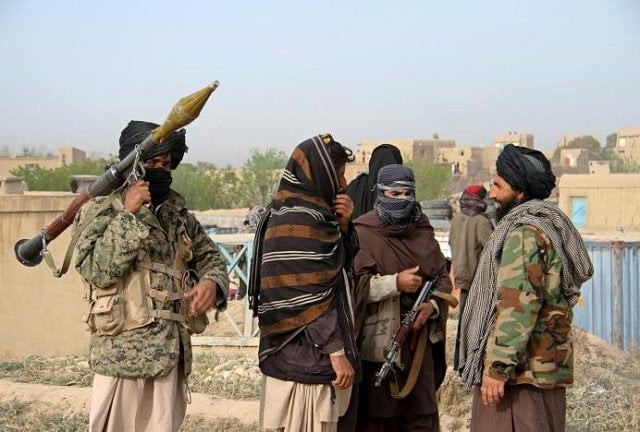
File photo of Tehreek-e-Taliban Pakistan militants. PHOTO: REUTERS
Pakistan on Sunday questioned the position of United Nations human rights experts regarding the lack of “credible evidence” linking the banned Tehreek-i-Taliban Pakistan (TTP) attacks to Afghan soil, pointing to multiple UN and international reports documenting the presence and activities of terrorist groups operating from Afghanistan.
Last month, UN experts urged Pakistan and Afghanistan to commit to a permanent ceasefire and also stated that Pakistan had not published credible evidence that TTP attacks within its territory were directed or controlled by de facto Afghan authorities.
The experts had called on the parties to respect international human rights law and international humanitarian law, including the protection of civilians and civilian objects. They called for prompt, independent and transparent investigations into all alleged violations, accountability for perpetrators and reparations for victims, in accordance with international standards.
Contrary to its position, Pakistan highlighted a contrast between the UN experts’ statement and the established findings of various UN Security Council Monitoring Team reports and assessments that consistently document the TTP presence, safe havens and operational activity from Afghan soil.
Read more: 796 Afghan Taliban killed, 286 checkpoints destroyed in Operation Ghazab Lil Haq so far: Tarar
Pakistan referred to the reports of the monitoring team of the 35th, 36th, 16th and 37th UN Security Council. It also cited SIGAR’s 66th and 68th reports of January 2025. Additional references include the Russian Foreign Ministry’s Political-Military Assessment of February 2026, the CSTO Security Assessment of 2026, the SCO Deliberations of September 2025, and the Quadrilateral Assessment of Russia, China and Iran in September 2025.
Pakistan further mentioned statements by Danish Ambassador to the UN Security Council in November 2025, Russian Security Council Secretary Sergei Shoigu in 2025, Russian Ambassador to the UN Vassily Nebenzia in 2025, and Russian Foreign Minister Sergei Lavrov in August 2025.
Such reports and assessments collectively highlighted Afghanistan as a hub for more than 20 international terrorist organizations (ITOs), with between 13,000 and 23,000 foreign terrorists, including more than 6,000 TTP fighters enjoying safe havens and operational freedom.
They also point to the continued presence of Al-Qaeda and the regrouping of its leaders, as well as the active expansion of ISIL-K.
The assessments document more than 600 TTP attacks in Pakistan launched from Afghan soil, with the Afghan Taliban providing shelter, facilitation and logistical support that enabled cross-border attacks and regional instability.
Pakistan questioned what additional evidence UN human rights experts needed, noting that multiple UN and international assessments already confirmed the presence of more than 20 terrorist groups, thousands of foreign terrorists and the Taliban’s continued support for its proxies operating from Afghan soil.
“Are these findings being ignored? Do they expect Pakistani leaders to go to Afghanistan and take pictures with TTP leaders like Hafiz Gul Bahadar and Mufti Noor Wali Mehsud?” questioned a security analyst.
Read more: Death toll reaches 50 in KP as rain-related incidents devastate province
He also expressed concern that UN experts questioned the credibility of the UN institutions themselves charged with monitoring, reporting and upholding international standards, maintaining that these established reports provided clear documentation of threats originating on Afghan territory.
The Sanctions Monitoring and Analytical Support Team’s 37th report, dated February 4, said attacks on Pakistan by the TTP from Afghanistan had increased, supporting Islamabad’s long-standing complaints about militant sanctuaries across the border.
The report not only supported Islamabad’s stance that Afghanistan had become a sanctuary for militants using its territory to launch attacks against Pakistan, but also came at a time when the country is facing a new wave of violence.


