
FO says Kabul must give assurances, rejects India’s claims and reports on JF-17 deal
ISLAMABAD:
Pakistan will remain part of the trilateral mechanism involving Pakistan, China and Afghanistan, saying the forum reflects Islamabad’s positive engagement, but will maintain its long-standing position on bilateral relations with Kabul, including demands for action against terrorist groups.
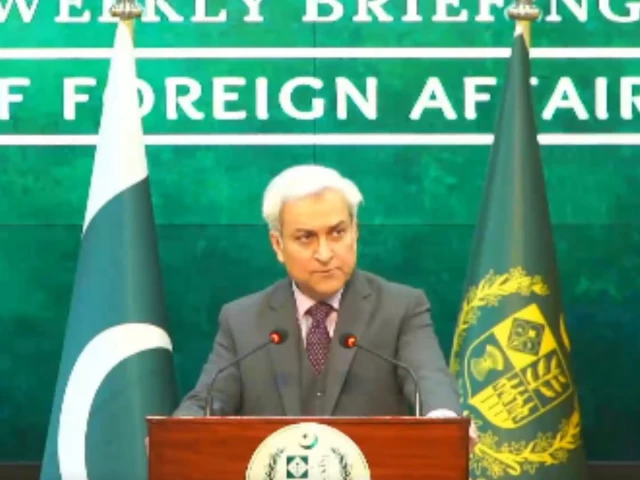
Speaking at the Foreign Ministry’s weekly press briefing on Thursday, spokesperson Tahir Hussain Andrabi said that during the dialogue between Pakistan and China it was agreed to maintain the trilateral mechanism. He said Pakistan does not seek a hostile relationship with Afghanistan but expects concrete measures from the Taliban administration.
🔴LIVE: Spokesperson’s Weekly Press Conference 01-08-2026 at Ministry of External Affairs, Islamabad
— Ministry of Foreign Affairs – Pakistan (@ForeignOfficePk) January 8, 2026
“Pakistan expects verifiable written assurances that Afghan territory or citizens will not be used for terrorism abroad,” Andrabi said. “These guarantees will also serve Afghanistan’s own interests.”
Pakistan has repeatedly said that Tehreek-e-Taliban Pakistan (TTP) leaders and fighters enjoy safe havens inside Afghanistan and operate with impunity under the supervision of the Taliban. The Afghan Taliban, however, accuse Pakistan of violating Afghan sovereignty through occasional airstrikes against TTP positions and exerting political and military pressure.
Pakistan’s frustration has grown over the years. Islamabad invested diplomatic and political capital to facilitate the Taliban’s return to power in 2021, hoping for better border security and a reduction in anti-Pakistan militancy. Instead, Pakistan has seen an increase in TTP attacks, worsening security in Khyber Pakhtunkhwa and Balochistan, and what it describes as a defiant Taliban government unwilling to address its concerns.
Responding to reports that Pakistan and Saudi Arabia are in talks to convert around $2 billion in Saudi loans into a deal for a JF-17 fighter jet, Andrabi said the Foreign Ministry was not aware of any such deal. He said Pakistan and Saudi Arabia share extensive defense ties and any developments would be communicated at an appropriate time.
Read: Pakistan, Saudi Arabia discuss converting $2 billion loans into JF-17 fighter jet deal
Regarding relations with India, the spokesperson rejected the recent statements by the Indian Foreign Minister as “baseless”. He accused India of supporting terrorism regionally and internationally and said the allegations against Pakistan could not hide India’s “anti-peace actions”. Andrabi also criticized the demolition of the Fateh Elahi mosque and related properties in Delhi, calling it part of an anti-Muslim campaign that he said began with the demolition of the Babri Masjid in 1992 and the subsequent construction of a temple.
Addressing regional developments, Andrabi said Pakistan opposes any foreign interference in Iran’s internal affairs. He was responding to reports of ongoing protests in Iran over inflation and economic hardship.
The demonstrations, now in their eleventh consecutive day, have turned violent in recent days. Iranian media reported that two security personnel were killed and at least 30 others were injured, while the total death toll from clashes across the country reached 35. Protesters reportedly threw stones at police and, in some cases, opened fire on security forces.
In Somaliland, Andrabi reiterated Pakistan’s opposition to recognition of the self-proclaimed state, saying it threatens the unity and territorial integrity of Somalia.
Israel became the first country to formally recognize the self-proclaimed Republic of Somaliland on December 26. On December 28, the foreign ministers of more than 20 Muslim-majority countries issued a joint statement rejecting Israel’s move. The statement, released by Pakistan’s Foreign Ministry, said the recognition violates international law and the UN Charter, which upholds the sovereignty and territorial integrity of states.


