
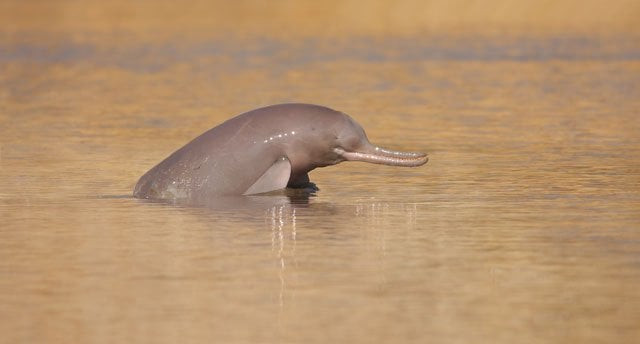
The strategy includes habitat restoration and safer river flows to protect the country’s iconic freshwater species.
Pakistan, in collaboration with WWF-Pakistan and federal and provincial departments, is developing a five-year national strategy to conserve the endangered Indus River dolphin, officials said. The plan, still in consultation, aims to protect the species and restore its riparian habitat through coordinated action in all provinces.
“The first Indus Dolphin Conservation Action Plan was drawn up in 2011,” said Hammad Naqi, director general of WWF-Pakistan. “Changes in river ecology and new threats mean the plan needs a comprehensive review and update.”
WWF-Pakistan and federal and provincial departments of wildlife, fisheries, environment and irrigation, including agencies in Punjab, Sindh and Khyber Pakhtunkhwa, have held consultations to build consensus on key elements of the plan, officials said.
Naqi said the number of dolphins remains lower in Punjab than in Sindh and unsustainable fishing practices, including illegal or harmful nets, are the biggest immediate threat in the Punjab stretch. Experts also warned that reduced river flow, pollution and riverbank degradation exacerbate the risk.
Population estimates have improved in recent decades, although figures vary depending on the source. A large study in 2017 recorded around 1,816 dolphins between Chashma and Sukkur, while WWF-Pakistan officials say current estimates are closer to 2,000.
At a recent meeting in Islamabad, stakeholders reviewed progress since 2011 and called for intensifying scientific research to provide reliable long-term data on demographic trends, habitat conditions, water flow patterns and the impacts of climate change. Experts said such data are essential for designing and evaluating conservation interventions.
Read: Giant algae blooms on ocean surface are poisoning Karachi’s fish
Participants also highlighted the urgency of restoring river ecosystems and associated wetlands, securing high-risk areas and improving water flow management through measures that can be immediately applied on the ground. According to specialists, solid coordination between federal and provincial institutions will be essential for the success of the new plan.
Proposed elements of the action plan include increasing dolphin numbers through targeted protection, rehabilitating riparian and wetland habitats, nominating critical sites for international recognition such as Ramsar or UNESCO Man and Biosphere status, strengthening law enforcement, expanding rescue and monitoring units, and a major boost to community participation and youth awareness.
The 2011 plan updated previous conservation measures. The critical stretch between Guddu and Sukkur, long recognized as prime dolphin habitat, has been protected under previous agreements. Previous plans recommended a joint coordination committee and rescue units for dolphins that get lost in irrigation canals. The 2011 plan also emphasized minimum environmental flows, reducing harmful nets, and training fishing communities.
Sheikh Muhammad Zahid, additional chief wildlife ranger of southern Punjab, said the Indus dolphin is protected under the wildlife law and strict measures are applied where populations persist. He observed sizable populations between the Chashma and Sukkur dams and said monitoring and scientific assessments are being strengthened. Officials and specialists said the new strategy will set a clear direction for the long-term survival of the species and mark a step towards safeguarding Pakistan’s freshwater ecosystems.


