- The government launches a campaign against polio throughout the country.
- 45 million children are targeted for poliovirus vaccination.
- Pakistan reported one case of wild poliovirus this year.
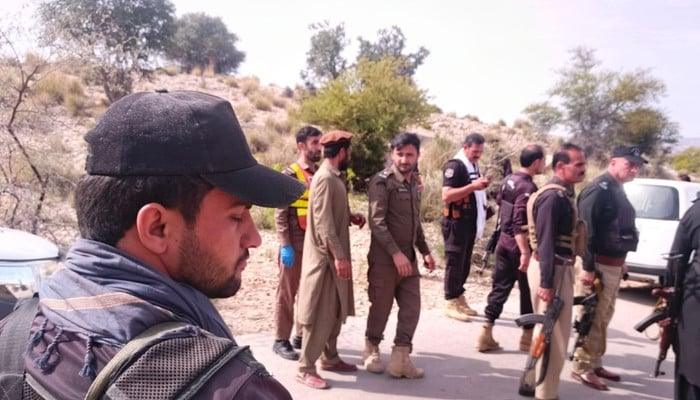
A policeman deployed to protect an anti-polio team was martyred and four others were injured when unidentified assailants opened fire on them in Hangu in Khyber Pakhtunkhwa on Monday.
Hangu SDPO Mujahid Hussain said the attack targeted a police van carrying a team of five assigned to provide security for a polio vaccination team in the Chapri Waziran area. All the police officers suffered gunshot wounds in the shooting, but one of them later succumbed to his injuries, he revealed.
The rest of the injured personnel were taken to a medical center, the SDPO added.
Pakistan Polio Program today officially started its second National Immunization Days (NID) 2026 campaign, to make Pakistan a polio-free nation.
The five-day national campaign aims to immunize more than 45 million children under five years of age. This effort is considered a decisive step in the country’s final push to stop poliovirus transmission and achieve eradication by the end of 2025.
NEOC last month confirmed the first wild polio case of 2026 in a four-year-old child from Bello Union Council, Sujawal district, Sindh.
The case was reported through the polio surveillance network and confirmed by the Regional Reference Laboratory for Polio Eradication of the National Institute of Health (NIH) in Islamabad.
In Pakistan and neighboring Afghanistan, the only countries where polio remains endemic, militants have for decades attacked vaccination teams and their security escorts.
Over the past decade, hundreds of police and health workers have been killed by militants.
Polio, a highly infectious virus that primarily affects children under five, can cause lifelong paralysis, but is easily prevented by oral administration of a few drops of a vaccine.
The Polio Eradication Initiative (PEI) is already analyzing the best response to address and prevent further transmission.
Despite the challenges, eradicating the global public threat of polio in Pakistan and around the world is within our reach, and PEI continues to step up its efforts to leave no child behind. Since 1994, thanks to polio vaccines, Pakistan has reduced polio cases by 99.8%: from an estimated 20,000 cases in the early 1990s to 31 in 2025.
In 2025, IEP Pakistan carried out five nationwide campaigns, in addition to targeted rounds of oral and injectable polio vaccination and activities integrated with the national routine immunization programme.
While the overall trend shows a decline in poliovirus detections compared to 2024, reflecting the impact of high-quality vaccination campaigns conducted in 2025, virus circulation persists in certain high-risk areas, including the districts of Sindh and southern Khyber Pakhtunkhwa (KP).
These detections underscore the continued need for robust, targeted efforts to interrupt transmission and consistent vaccination of children.
Polio is a highly contagious and incurable disease that can cause lifelong paralysis and death. However, the disease is preventable thanks to polio vaccines, which are safe and effective and have been used safely in 195 countries, including all Muslim countries.
Polio eradication is a collective responsibility. While Pakistan’s dedicated frontline workers ensure vaccines reach all children, parents and caregivers play a crucial role in ensuring their children receive all recommended doses, including routine vaccines.
PEI urges all parents and caregivers to ensure that their children are vaccinated during each campaign to protect them from permanent disability and/or death.
Communities, religious leaders and the media also play a vital role in promoting vaccination, fighting misinformation and ensuring that all children in Pakistan are protected. Together we can achieve a polio-free future for all children, in Pakistan and around the world.