
It leaves hundreds of refugees, many of them open-air shelters, exposed to bitter cold and hardship.
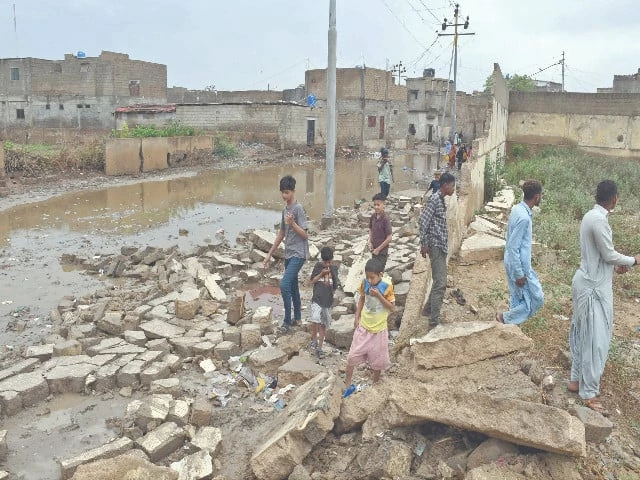
Heavy rains and strong winds batter the city, destroying walls and exposing structural vulnerabilities. Photo: Online
KHYBER:
The repatriation of Afghan refugees to their homeland continues apace; More than 10,000 have already returned to Afghanistan. Thousands more have reached the detention camp set up at Landi Kotal after crossing back, while a large number from various districts of Khyber-Pakhtunkhwa and Punjab are also arriving at the center for entry, registration and return formalities.
However, the process has been slowed by a shortage of basic facilities, insufficient staff and technical problems, raising concerns among both refugees and local residents.
Heavy rains in the area over the last day have further aggravated the difficulties for those staying in the camp. The downpour not only disrupted repatriation activities but also left hundreds of refugees, many of them open-air shelters, exposed to bitter cold and hardship. In a display of traditional Pashtun hospitality, the residents of Landi Kotal provided shelter in their hujras (guest rooms) to several affected families, protecting them from the rain. However, many other families remained in open fields, deprived of basic services.
Local welfare organizations and social activists played a commendable role in distributing food, water and shelter items in the camp and along the access routes to mitigate the impact of rain and cold. Community leaders have praised this spirit of humanitarian support while underscoring the need for more organized and sustained relief efforts.
Delays in the immigration and registration process have become a major obstacle. Afghan refugees and local Landi Kotal elders have demanded an increase in immigration staff to speed up registration. They noted that processing was also previously carried out at the Torkham border, which helped distribute the load. Now, with all activities centralized at the Landi Kotal detention camp, overcrowding has intensified.
The National Database and Registration Authority (NADRA) has set up 10 windows in the camp, but only two are dedicated to manifest preparation. These handle the full documentation, including fingerprints and photographs, of children over 10 years old, resulting in long queues and hours-long waits for many refugees. Officials have acknowledged that increasing the number of windows could speed up the process.
NADRA authorities have pointed out additional challenges, including difficulties in obtaining fingerprints due to henna on the hands of Afghan women and rough skin on the hands of men, which slow down biometric verification. Weak internet connectivity has made data transmission even more difficult, causing further delays in registration.
The Torkham border crossing is currently open only for the return of Afghan refugees, while regular pedestrian movement and commercial activities remain completely suspended. Other crossings along the Pakistan-Afghanistan border are also closed to trade, severely affecting the local economy. Traders, transporters, hotel owners, customs agents and daily wage workers in Landi Kotal have urged the government to reopen the border for commercial activities as soon as possible to restore the livelihoods of thousands of people.
Local elders warned that the prolonged border closure has dramatically increased unemployment and nearly paralyzed businesses in the area. They warned that if the situation was not improved soon, it would lead to greater economic hardship for the local population.
Following the directives of Khyber-Pakhtunkhwa Chief Minister Muhammad Sohail Afridi, his elder brother Naveed Afridi visited the Afghan refugee detention camp at Landi Kotal. He was accompanied by officials from the Provincial Disaster Management Authority (PDMA) and the Khyber district administration. During the visit, the team reviewed the camp facilities, problems faced by refugees and general administrative arrangements.
Naveed Afridi announced immediate relief measures and stated that initially 70 tents would be set up, along with three large community tents to meet collective needs. He directed the establishment of a regular medical camp to provide immediate medical care to the sick. Instructions were also given to ensure a constant supply of food.
By special order of Chief Minister Afridi, tents and food supplies have already been delivered to the camp and distributed among the Afghan refugees. Officials said the complaints about NADRA have been taken seriously and the concerned departments have been directed to resolve the issues promptly.


