
Network News
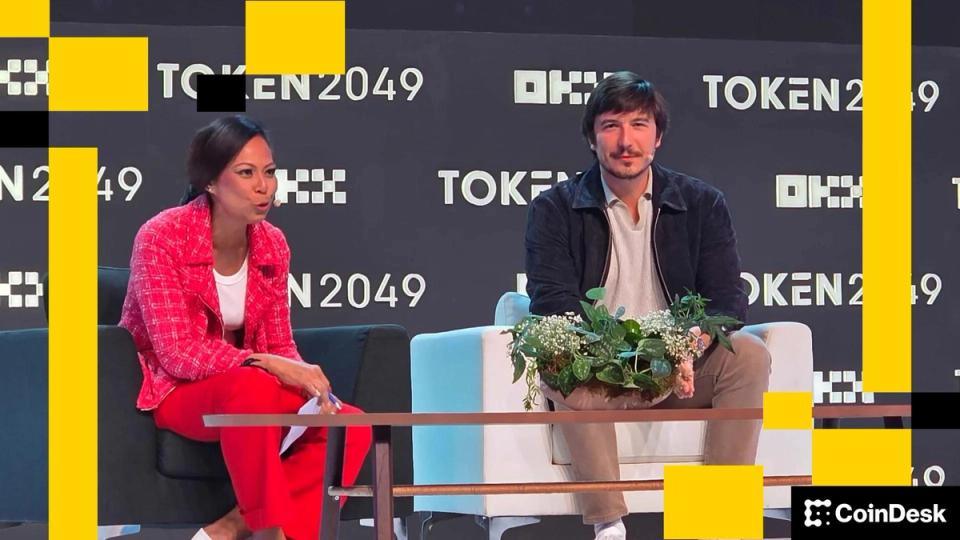
ROBINHOOD PRESENTS BLOCKCHAIN: Robinhood debuted the public testnet for its Layer 2 Ethereum blockchain with plans for a broader rollout later this year as the brokerage app aims to move more trading activity onto the chain. The new network, called Robinhood Chain, is based on Arbitrum and is designed to support real-world tokenized assets, including stocks and exchange-traded funds (ETFs). Developers will be able to build publicly on the network for the first time after six months of private testing, ahead of a future mainnet launch, the company announced at CoinDesk’s Consensus Hong Kong conference. With the chain, Robinhood aims to allow users to trade 24/7 and self-custody their assets in Robinhood’s own crypto wallet. Users will also be able to cross different chains and access decentralized finance (DeFi) applications on Ethereum, the company said. The moment comes as Ethereum’s core roadmap shifts more attention to the base layer. Certain upgrades have already reduced transaction costs, and other improvements are expected to continue to alleviate congestion, a development that weakens the arguments in favor of Layer 2 as a pure necessity for scaling. Robinhood’s approach suggests it is already operating under that assumption. “I think Vitalik [Buterin, the co-founder of Ethereum] “It was always pretty clear on this, that L2s weren’t just here to scale Ethereum,” Johann Kerbrat, senior vice president and general manager of crypto at Robinhood, said in an interview. “For us, it was never really about scaling Ethereum or making transactions faster.” — Margaux Nijkerk and Krisztian Sandor Read more.
CITADEL SUPPORTS LAYERZERO BLOCKCHAIN: LayerZero Labs introduced Zero, a blockchain aimed at powering institutional-grade financial markets, along with a strategic investment from Citadel Securities in ZRO, the network’s native token and governance asset. ARK Invest is also investing in LayerZero stock and the ZRO token, with CEO Cathie Wood joining a newly formed advisory board alongside ICE executive Michael Blaugrund and former BNY Mellon head of digital assets Caroline Butler, the company said. The size of the investments was not disclosed. The announcement signals a deeper push by traditional market infrastructure companies toward blockchain-based trading, clearing and settlement, as scalability and performance limitations have long limited real-world adoption. Tether Investments, the investment arm of the largest stablecoin issuer, also made a strategic investment in LayerZero Labs, he said. Citadel Securities said it is working with LayerZero to evaluate how Zero’s architecture could support high-performance workflows in trading and post-trade processes. The company’s investment in ZRO adds to growing institutional interest in LayerZero, best known for operating one of the largest crypto interoperability networks. Zero is designed around LayerZero’s first-of-its-kind heterogeneous architecture, which uses zero-knowledge proofs (ZKP) to separate transaction execution from verification. The company claims the design can scale to about 2 million transactions per second across multiple zones, with transaction costs close to a millionth of a dollar and effectively unlimited block space. — cunning will Read more.
MEGAETH MAINNET GOES LIVE: MegaETH, a high-performance blockchain built to make Ethereum applications feel almost instantaneous, debuted its public mainnet, entering an ecosystem mired in a fundamental debate about how Ethereum should scale. The project, which had been pitched as a layer 2 “real-time blockchain” targeting over 100,000 transactions per second (tps), would make on-chain interactions feel closer to traditional web applications than to current crypto networks. Ethereum runs at less than 30 tps, according to Token Terminal. The publication caps a rapid rise that has attracted both technical curiosity and significant financial backing. The project’s development arm, MegaLabs, raised a $20 million seed round in 2024 led by Dragonfly. Last October, it announced a $450 million oversubscribed token sale backed by some of the most recognizable names in the cryptocurrency world, including Ethereum co-founders Vitalik Buterin and Joe Lubin. The sale was one of the largest crypto fundraising of that year. — Margaux Nijkerk Read more.
ENS WASTE LAYER-2 PLANS: ENS decided not to move forward with Namechain, a planned layer 2 build, marking another high-profile shift away from the once-dominant narrative that Ethereum’s future would be built primarily on L2. Instead of its own rollup, ENS will now deploy the long-awaited ENSv2 update exclusively to the Ethereum mainnet, citing dramatically lower gas costs and a broader shift in Ethereum’s scaling philosophy. According to ENS founder and lead developer Nick Johnson, the original justification for releasing a custom rollup is no longer valid. “The landscape has changed since we first decided to pursue an L2,” Johnson said in an interview with CoinDesk. Two years ago, high gas prices made accumulations the “official trajectory,” but Ethereum’s base layer has since scaled to the point where transaction costs are sustainable. — Margaux Nijkerk Read more.
In other news
- Kraken has fired its chief financial officer, Stephanie Lemmerman, just as the crypto exchange prepares to list publicly in the US early this year, according to two people familiar with the matter. Lemmerman joined Kraken from Dapper Labs in November 2024 and was the exchange’s CFO for one year and four months. He now has a strategic advisory role at Kraken, one of the people said. Robert Moore, former vice president of business expansion, basically took over his job, the person said. An updated leadership page on the website of Kraken’s parent company, Payward Inc., lists Moore as deputy chief financial officer. Lemmerman does not appear. Clearly, it is important that Kraken removes its chief financial officer after filing a confidential filing with US regulators in November. This came just days after Kraken raised $800 million at a $20 billion valuation, including $200 million from Citadel Securities. — Ian Allison Read more.
- Jump Trading plans to acquire a small stake each in prediction market platforms Kalshi and Polymarket, Bloomberg reported, citing people with knowledge of the matter. The trading powerhouse, which focuses significantly on cryptocurrencies, will win the bets in exchange for providing liquidity on the two platforms. Jump will acquire a fixed amount of equity in Kalshi, while its stake in Polymarket will grow over time depending on the commercial capacity the company provides to the platform’s US operations. Jump expanded into prediction market trading in recent months, recruiting 20 employees for that business, according to Bloomberg. — Jamie Crawley Read more.
Regulation and policy
- President Donald Trump’s US bitcoin reserve does not yet exist and there is no mechanism in the federal government for the wholesale purchase of cryptocurrencies. Keep this in mind as you consider this weekend’s speculation about the price that would cause the White House to hit the buy button, thanks in large part to CNBC’s Jim Cramer. There is no such button. The president ordered a “strategic reserve” to be established to contain bitcoins, but that did not cause it to emerge. The Treasury Department and crypto advisors spent months auditing federal crypto holdings (although White House crypto advisor Patrick Witt told CoinDesk last week that they won’t share a number just yet). But the process had a snag: Advocates said they needed Congress to establish the setback under the law. The new US crypto sector law for stablecoin issuers did not include it, nor did the extensive crypto market structure bill currently moving through the US Senate. Passing legislation in this Congress (even less controversial matters) is a difficult task, and industry lobbyists are focused on the bill to finally establish market regulations and supervision for digital assets. A reserve may not even be second on the priority list, because cryptocurrency tax rules also attract it. — jesse hamilton Read more.
- Cryptocurrency wallet and exchange provider Blockchain.com has gained regulatory approval in the United Kingdom almost four years after apparently giving up. Blockchain.com was added on Tuesday to the Financial Conduct Authority’s (FCA) register of authorized crypto companies under its trading name “BC Operations.” The London-based company decided to withdraw its FCA license application in March 2022, having failed to obtain approval before an imminent deadline. Blockchain.com moved to its registered business in Lithuania. Registration in the United Kingdom allows Blockchain.com to carry out certain cryptocurrency-related activities in the United Kingdom as long as it complies with money laundering and terrorist financing regulations. — Jamie Crawley Read more.
Calendar
- February 10-12, 2026: Consensus, Hong Kong
- February 17-21, 2026: EthDenver, Denver
- February 23-24, 2026: NearCon, San Francisco
- March 24-26, 2026: Digital Asset Summit, New York City
- From March 30 to April 30. 2, 2026: EthCC, Cannes
- April 15-16, 2026: Paris Blockchain Week, Paris
- April 29-30, 2026: Token2049, Dubai
- May 5-7, 2026: Consensus, Miami
- September 29 to October 1, 2026: Korea Blockchain Week, Seoul
- October 7-8, 2026: Token2049, Singapore
- November 3-6, 2026: Devcon, Mumbai
- November 15-17, 2026: Solana Breakpoint, London


