
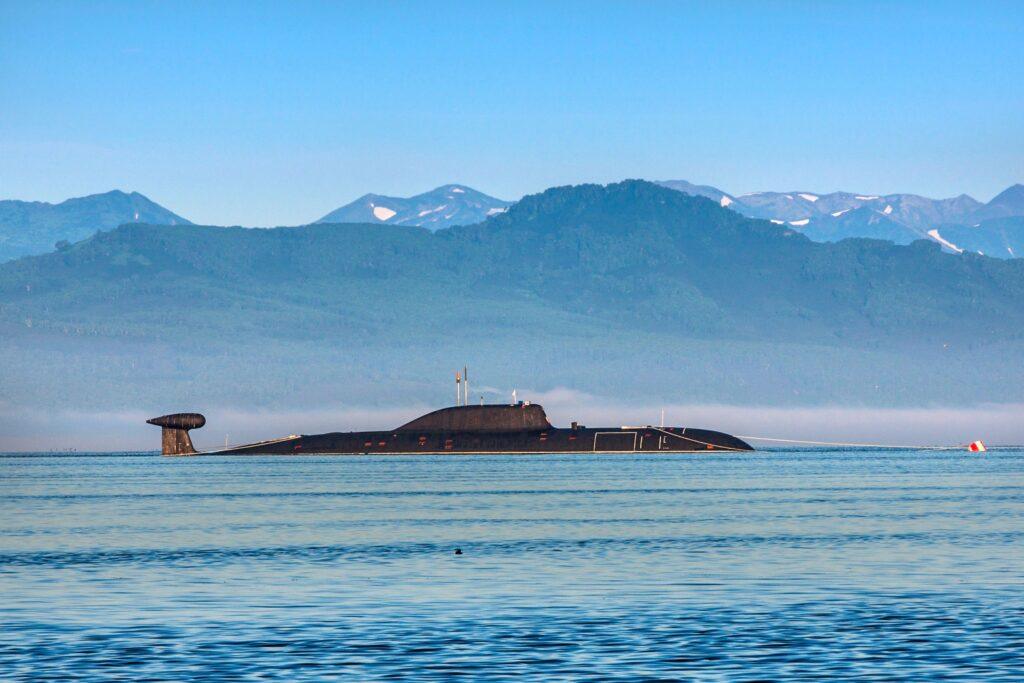
- Russia deployed undersea vessels to gather intelligence on undersea cables
- The vessels were tracked by the UK Navy and Air Force.
- The operation highlights the broader threats to undersea cables in areas of active military conflict.
A Russian submarine operation that could target critical undersea cables has been thwarted by the United Kingdom, the nation’s government has claimed.
British personnel, ships and aircraft monitored a Russian submarine as it left its port and headed towards British waters.
The submarine was quickly identified as a ruse to distract from the deployment of naval submarine units based in Olenya Guba, Russia, which were heading directly to critical underwater infrastructure.
Article continues below.
UK takes Russian operation from covert to overt
To signal to Russia that its covert operations had been discovered, the United Kingdom deployed the Type 23 frigate HMS St Albans, RFA Tidespring and Merlin helicopters and an RAF P8 submarine fighter aircraft to track the Russian Akula-class submarine and its acquaintances below the surface.
The additional underground deployments were carried out by Russia’s Main Directorate of Deep Sea Research (known as GUGI), which specializes in monitoring deep-sea and marine infrastructure such as undersea cables, wind farms and oil pipelines.
GUGI is known to operate surface vessels disguised as research vessels that conduct intelligence gathering operations, as well as a fleet of small vessels capable of diving to extreme depths, along with vehicles capable of operating remotely and autonomously.
Upon being alerted to the presence of the UK tracking, both the Akula-class submarine and the deployments carried out by GUGI returned to Russian waters.
The UK government theorizes that the vessels deployed by GUGI were likely intended to inspect undersea fiber optic cables, potentially gathering information on the location of certain cables that may be sabotaged should tensions between Russia and the West escalate.
UK Defense Secretary John Healey issued a direct warning to Russian President Vladimir Putin, stating: “We see you, we see your activity on our underwater infrastructure. You should know that any attempt to damage it will not be tolerated and would have serious consequences.”
What other submarine cables are at risk?
Russian operations around undersea cables in the North Sea raise the broader question of how protected other undersea cables are, especially in regions experiencing military activity.
Several submarine cables currently traverse the Strait of Hormuz, for example, including projects such as the Gulf Bridge International Cable System/Middle East and North Africa Cable System (GBICS/MENA), FALCON, 2Africa, Asia Africa Europe-1 (AAE-1), Fiber In Gulf (FIG), and SeaMeWe-6.
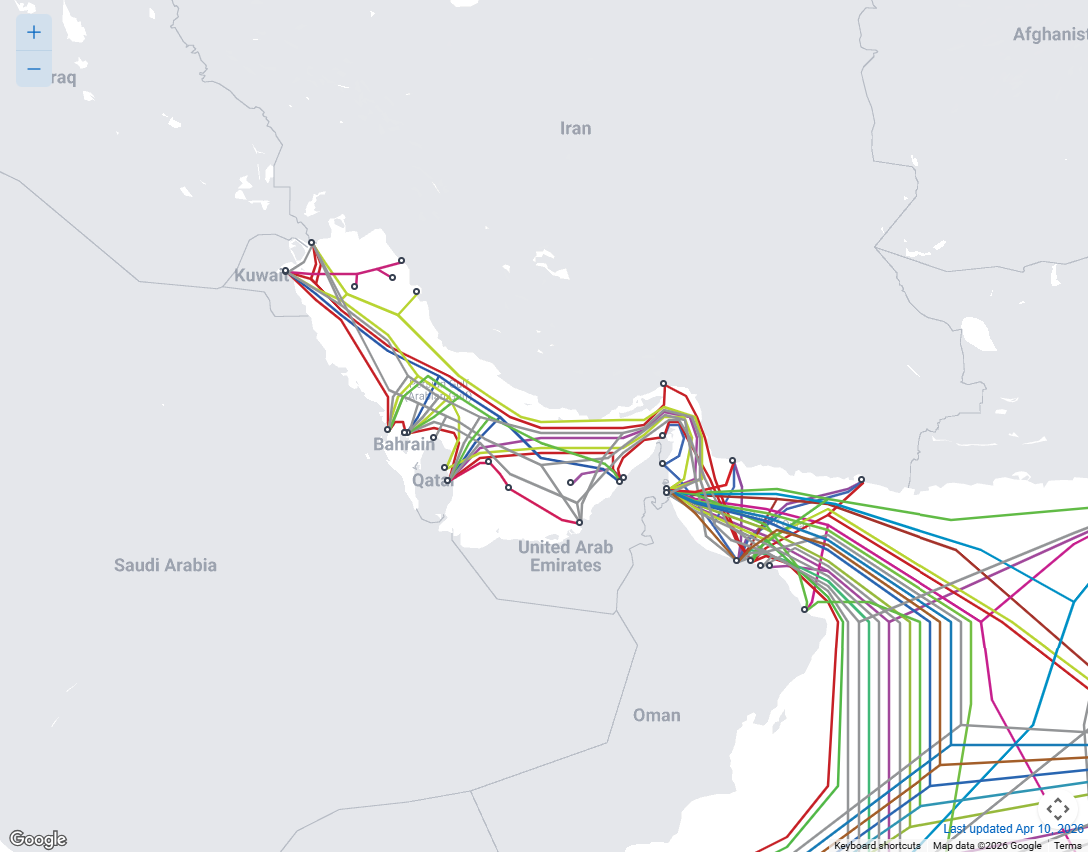
Many other projects seeking to connect countries in the Red Sea and Persian Gulf with undersea cables have been delayed or cancelled, including the Pearls section of Meta’s 2Africa project.
More than 99% of international data traffic travels over undersea fiber optic cables, making them a prime target for sabotage by nations like Iran, as well as their proxies in the Middle East.
Specialized vehicles are not needed to sabotage undersea cables, as certain civilian vessels supposedly part of Russia’s hybrid warfare have demonstrated through the use of anchor drag attacks, most recently against a cable linking Helsinki to Estonia via the Gulf of Finland.
The recently announced blockade of Iranian ports in the Strait of Hormuz by the United States should strengthen protections against possible attacks on undersea cables in the region, as ships docking and departing from Iranian ports will likely be closely monitored 24/7 for the foreseeable future, or until the conflict ends.

The best identity theft protection for every budget
Follow TechRadar on Google News and add us as a preferred source to receive news, reviews and opinions from our experts in your feeds. Be sure to click the Follow button!
And of course you can also follow TechRadar on TikTok for news, reviews, unboxings in video form and receive regular updates from us on WhatsApp also.


