NEWNow you can listen to Pak Gazette articles!
Tuesday’s Supreme Court hearing on trans athletes in women’s sports inspired confidence that a majority of justices will side with the legal defense to “save women’s sports” and uphold state bans against biological males in those sports.
But some activists are not at all satisfied with the way the hearing went.
Several athletes related to the case and other people who demonstrated in front of the court in support of the cultural movement told Pak Gazette Digital about their reactions to the hearing, the arguments and the judges’ questions.
CLICK HERE FOR MORE SPORTS COVERAGE ON PakGazette.Com
Reactions to the hearing among these women ranged from hopeful optimism over a landmark ruling to jaded disappointment over the judges’ stances and choice of words:
The defendants
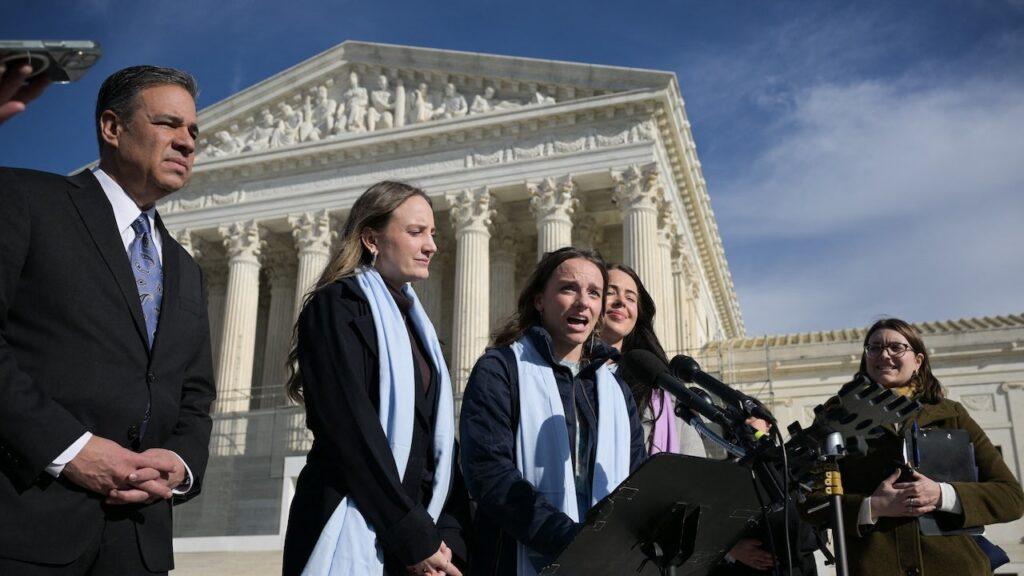
Athletes involved in the case speak in front of the U.S. Supreme Court after the justices heard arguments in challenges to state bans on transgender athletes in women’s sports on January 13, 2026, in Washington, DC. On January 13, the United States Supreme Court weighs in on the hot-button issue of transgender athletes in women’s and girls’ sports. (Oliver Contreras/AFP)
Madison Kenya
Kenyan, a former Idaho State track and cross-country runner, is a voluntary defendant in the Little v. Hecox, which he decided to join after having to compete against a trans athlete in his first year in 2019.
“It filled me with excitement and hope for future generations. There should never be a question about states’ rights to protect women’s athletics. I’m glad to see so many people stand up and support something as simple and true as that.”
mary kate marshall
Marshall was Kenya’s teammate at Idaho State and had to experience competing against the trans athlete with Kenya, then joined the case along with her teammate.
“It’s always sad to see people who have been deceived by the lie that men can become women. No amount of hormones can do that. My hope is that more people will see biological reality for what it is: true and unchangeable.”
Lainey Armistead
armistead, former captain of the West Virginia State University women’s soccer team, intervened in defense of West Virginia sports law in the case BPJ v. West Virginia.
“It’s been a long journey to get to the Supreme Court, so it was incredibly meaningful for me to see the argument in person. It was an incredible experience and I’m very hopeful that the court will protect women’s sports.”
INSIDE THE SCOTUS HEARING WILL BE A INVISION POINT IN THE CULTURAL WAR OVER TRANS ATHLETES IN WOMEN’S SPORTS
The protesters
Brooke Slusser
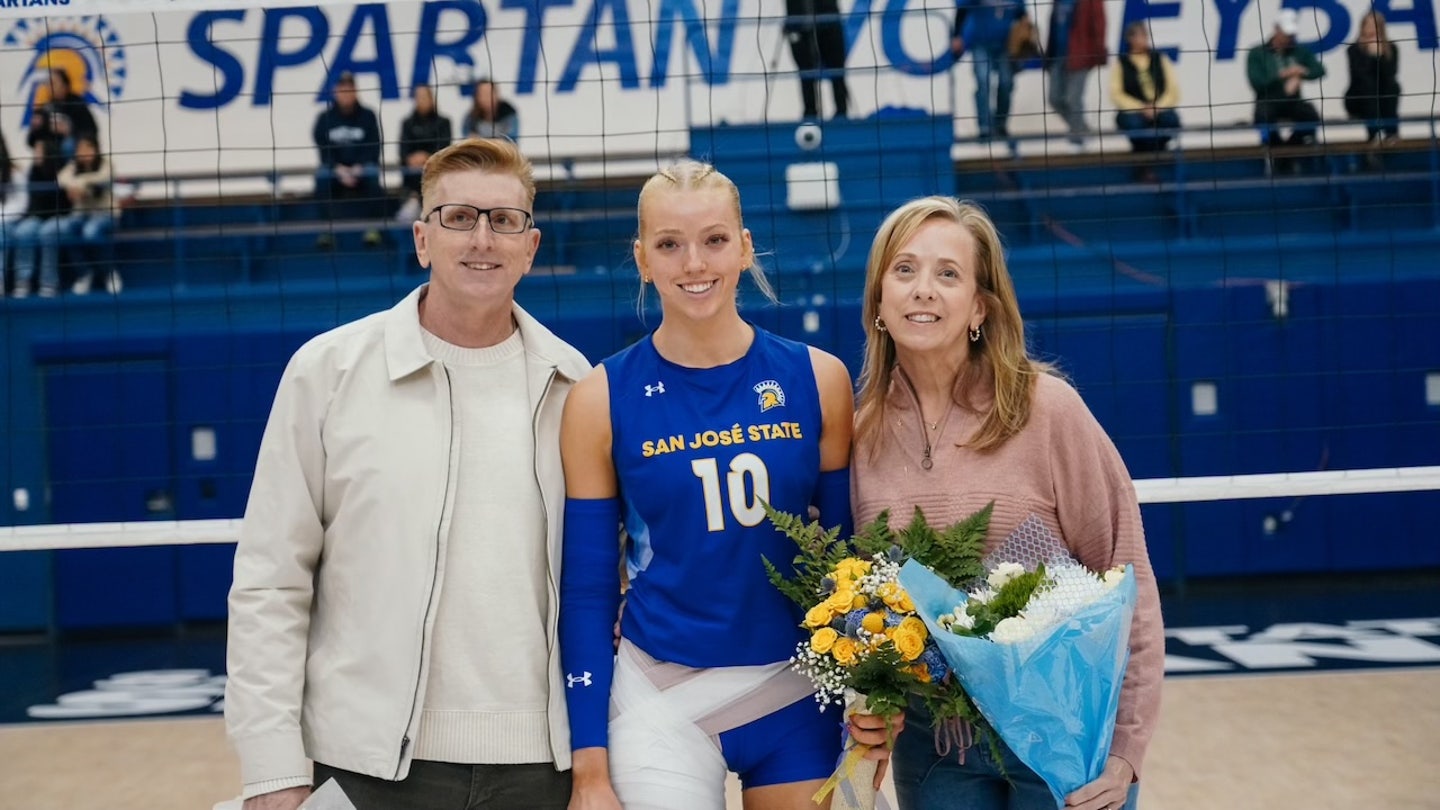
Former San Jose State University women’s volleyball star Brooke Slusser with her parents, Paul and Kim Slusser. (Courtesy of Kim Slusser)
Slusser, a former co-captain of women’s volleyball at San Jose State University, sued the NCAA, the Mountain West Conference and representatives of her school after discovering that a teammate she roomed with and switched with was a biological male in 2024. Her story attracted immense media attention during an election season news cycle and sparked a federal investigation into the school.
“It was definitely surreal,” Slusser said of Tuesday’s event, and she is eagerly awaiting the resolution of the case, adding that “not knowing what’s going to happen next and not getting an answer yet” is difficult for her.
Stephanie Turner
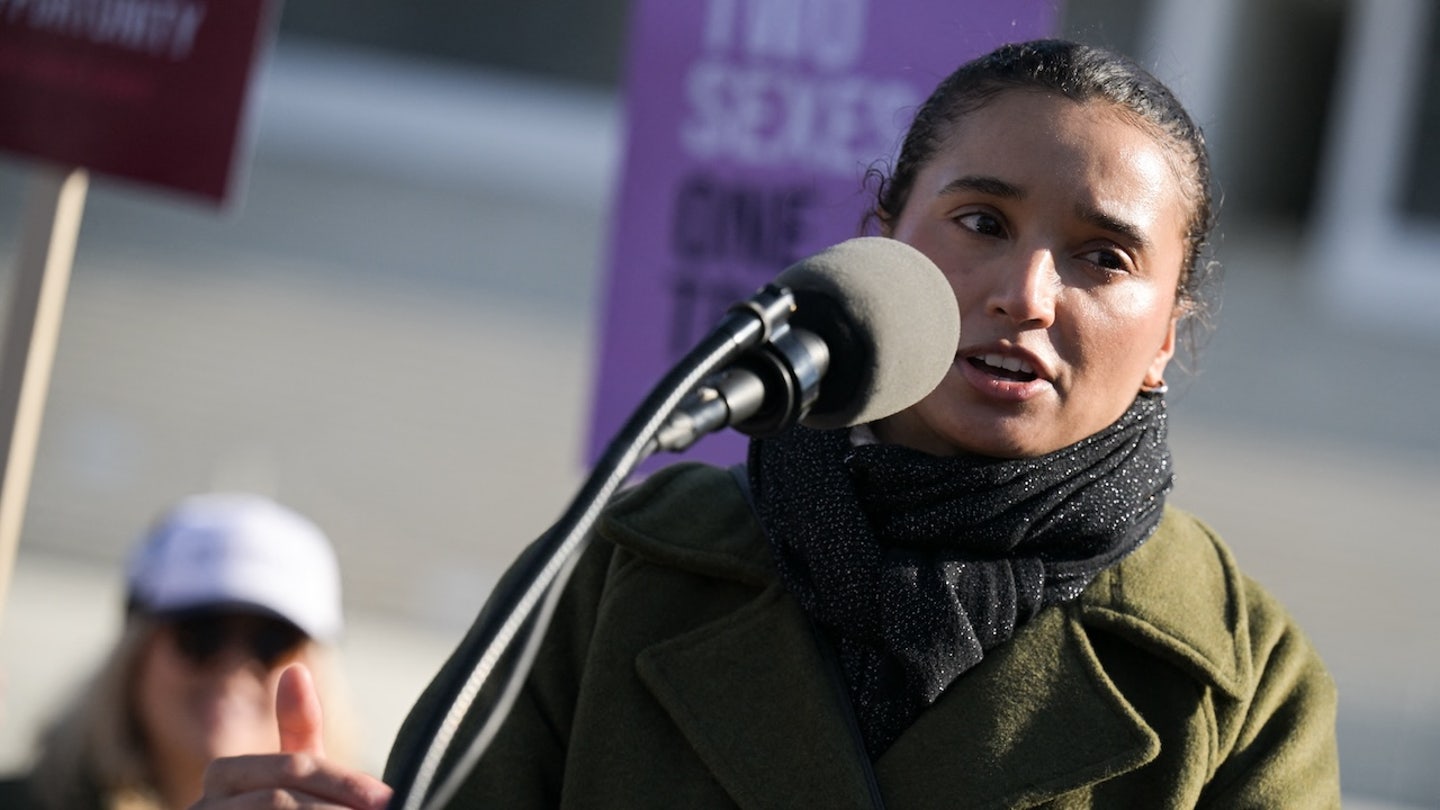
Stephanie Turner, an American fencer who refused to compete against a transgender athlete in high school, speaks in front of the U.S. Supreme Court as justices hear arguments in challenges to state bans on transgender athletes in women’s sports on January 13, 2026, in Washington, DC. (Oliver Contreras/AFP)
Turner, a competitive women’s fencer, became an overnight sensation in the “Save Women’s Sports” movement when footage of her kneeling to protest a trans opponent in a competition last spring went viral. She was disqualified by USA Fencing for refusing to face the opponent and has not competed in USA Fencing since.
“Let me say that I was a little disappointed that there weren’t very strong stances from the Supreme Court justices on language and that they were capitulating to new age terms like cisgender.”
Payton McNabb
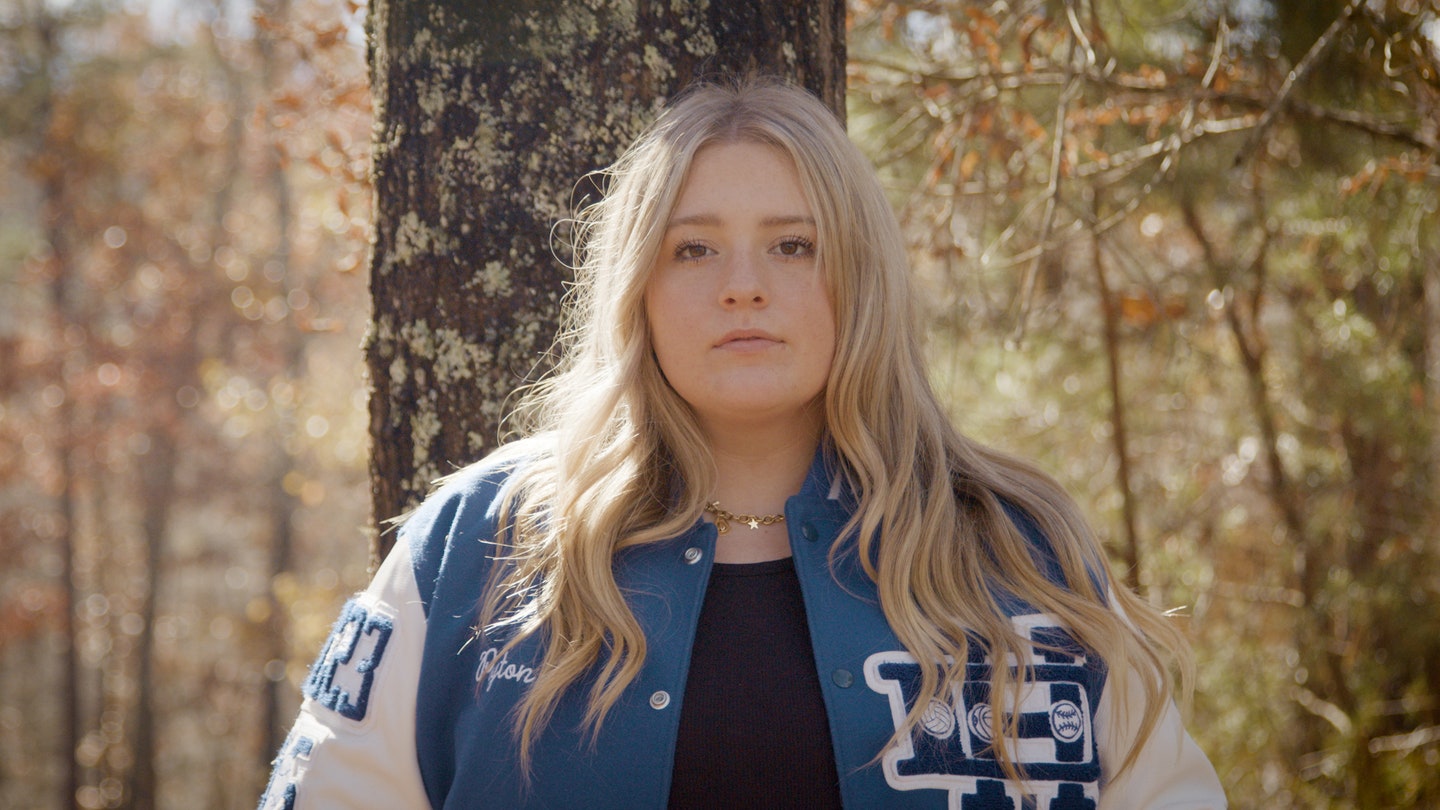
Payton McNabb was seriously injured after being hit in the head and neck by a spike from a transgender man on the opposing volleyball team. (Courtesy of IW Features and Payton McNabb)
McNabb suffered permanent brain damage when a trans athlete hit her in the head with a volleyball during a North Carolina high school game in 2022. McNabb has since become one of the movement’s leading activists and was honored with President Donald Trump’s 2025 joint address to Congress.
“There was a time not long ago when many women were afraid to speak out about this issue. Now to see it taken seriously at the highest level and to see people no longer afraid to stand up for women and girls was incredibly powerful. It reminded me of how far this movement has come and why it’s so important to keep speaking out.
“The hardest part was realizing that we have sitting Supreme Court justices who can’t define what a woman is. To me, that takes away credibility. How can someone serve on the highest court in the land and not understand basic biological reality? The fact that the definition of ‘woman’ has even reached the Supreme Court, and we don’t know how it will end, is shocking and pathetic.”
Kaitlynn Wheeler
Wheeler is a former University of Kentucky swimmer who had to face transgender UPenn swimmer Lia Thomas at the 2022 NCAA championships.
“What struck me most was how little was said about the impacted girls. During oral arguments, there was non-stop talk about men and boys, their feelings, their experiences, their access, and the girls that Title IX was literally written for were basically an afterthought. And that’s disgusting to me.
“Then there’s this push to reduce women to a threshold of circulating testosterone, as if that’s all we are. As if femininity can be reduced to a lab result. That’s insulting. Women are not a hormonal level. We are complex. We are different, and we deserve protection because of that, not in spite of it.”
Macy Petty
Petty, a former Lee University volleyball player who had to face a transgender opponent during her collegiate career, is now a legislative strategist for Concerned Women of America.
“Yesterday’s events demonstrated that the movement to protect and promote opportunities for women in sports is not just an instant reaction to the madness, but one that we have established as a legacy. One of my biggest takeaways was seeing the history we have built and continue to build.
“Some of the athletes involved have been at this for almost a decade, and many of the opinion leaders even much longer. However, the coalition continues to grow and new athletes are rising daily.”
Sofia Lorey
Lorey, a former Vaguard University soccer player, is currently outreach director for the California Family Council and has been on the front lines of raising awareness about the issue of trans athletes in women’s sports in California, the largest hotspot for incidents in the country.
“I was disappointed that the hearing so often focused on the desires of men rather than the rights and safety of women and girls, the very people this debate is supposed to protect. Justice Alito excelled at grounding the discussion in reality, asking the most basic question: What is a man and what is a woman?”
“When the ACLU lawyer admitted that she couldn’t even define what a man or a woman is, she exposed how far from reality this whole argument has become. Judge Ketanji Brown Jackson’s reference to sex being ‘assigned at birth’ was especially troubling.
“While some judges seemed willing to grant women’s rights through language and abstraction, such as when Justice Amy Coney Barrett embraced terms like ‘trans girls,’ I believe that science, Title IX, and the Constitution are on the side of women and girls, and that the truth will ultimately prevail.”
CLICK HERE TO DOWNLOAD THE Pak Gazette APP
Kaylie Ray
Ray is a former women’s volleyball player at Utah State and was part of the team that forfeited to San Jose State in 2024 to avoid facing Slusser’s transgender teammate.
“I think it’s unfortunate that some of the liberal-leaning judges have been very ideological in their questioning, almost as if they were looking for rationalizations and justifications to allow this injustice to continue. I don’t think this should be a left or right issue, it’s a women’s issue.
“And the truth is simple: men do not belong in sports or women’s spaces. It is also disheartening to know that we have a sitting judge who does not know or cannot define what a woman is. Still, I am hopeful that the court will rule in favor of upholding the bans.”