
ISLAMABAD:
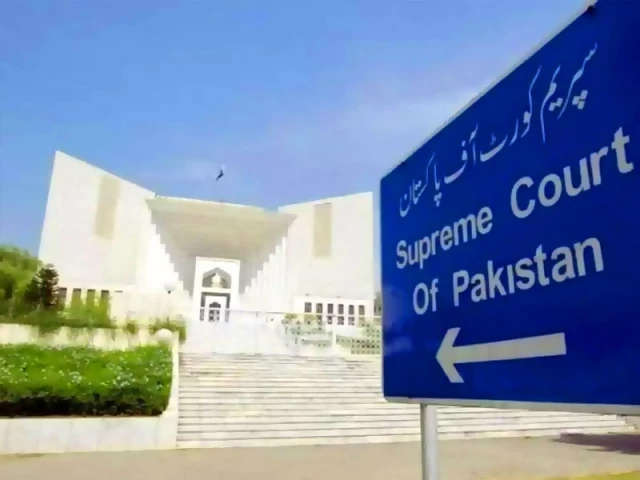
Despite the passage of the 27th Constitutional Amendment and the creation of the Federal Constitutional Court (FCC), the Supreme Court has indicated that it is far from being marginalized.
In a move that has raised eyebrows in legal and political circles, the top court has posted six cases related to former Prime Minister Imran Khan for hearing next week.
Dozens of PTI cases were transferred to the FCC after the amendment, and many expected the SC’s role in politically sensitive matters to diminish after the FCC’s establishment.
However, despite the jurisdictional issues, the SC continues to assert its relevance in hearing political cases. In contrast, the FCC has so far not included any PTI-related cases, adding another layer of intrigue to the evolving judicial landscape.
A three-judge bench of the Supreme Court, headed by Justice Hasham Kakar and comprising Justice Salahuddin Ahmed Panwar and Justice Ishtiaq Ibrahim, will hear these matters on February 18.
All three judges are renowned for their experience in criminal law and the court has been handling high-profile criminal cases over the past year.
Among the six cases, the most crucial one relates to the federal government’s appeals against the acquittal of Imran Khan and Shah Mahmood Qureshi in the Cypher case. A bench of the Islamabad High Court (IHC), comprising Justice Aamer Farooq and Justice Miangul Hassan, set aside the trial court’s judgment and acquitted both leaders.
Legal experts believe there is very little chance that the appeal against the acquittal will be accepted. They say that the prosecution made several errors during the trial, which have benefited both PTI leaders.
Lawyer Asad Rahim Khan says the Supreme Court is presiding over a historic and unique evaporation of its powers. What used to be the final arbiter of Pakistan’s constitutional promise is now a forgotten subordinate playing on his ability to hear in rent and divorce cases.
“But here we are: his authority in the Imran Khan case extends only to sending a roving inquiry to report on the jail facilities. Not a word on substantive justice; on the mountain of FIRs; on anything, in fact, that involves a final resolution.”
He said the current state of the high court should more than satisfy its critics of the past two decades: Instead of debating the merits of activism versus moderation, there is now a system that is legally incapable of attempting either.
“What’s really baffling is why this chief justice would want to push his court into complete constitutional redundancy. What’s the point?”
Last week, a division bench of the Supreme Court headed by Chief Justice of Pakistan Yahya Afridi referred these six cases to the three-member bench.
However, the same court had appointed lawyer Salman Safdar as friend of the court to visit Adiala jail to inspect Imran Khan’s living conditions and submit a report.
The report has already been submitted and it reveals that Imran Khan claimed that approximately three to four months earlier, until October 2025, he had normal vision of 6 x 6 in both eyes. He then began experiencing persistent blurry and hazy vision, which he repeatedly reported to the then-jail superintendent.
However, prison authorities took no action to address these complaints, according to the report.
Likewise, Salman Safdar in his report observed that Imran Khan appeared visibly disturbed and deeply distressed by the loss of vision and the absence of timely and specialized medical intervention.
Throughout the meeting, Imran Khan’s eyes were watering and he repeatedly used a handkerchief to wipe them, reflecting physical discomfort.
The SC then ordered formation of a medical team to examine Imran Khan’s eye and allowed him to talk to his children through a phone call. The court has requested a report on both issues by February 16.


