
ISLAMABAD:
A Senate panel on Tuesday called for tighter oversight of drug prices and a standardized, internationally aligned medical admissions system, warning that runaway costs and flawed criteria are driving students abroad and draining nearly $800 million in foreign currency a year.
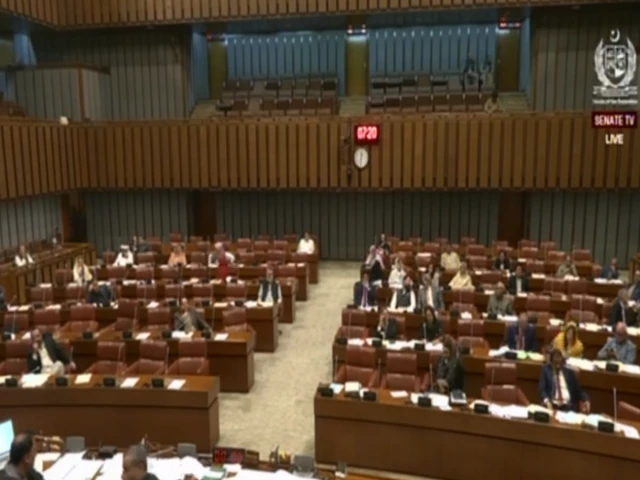
The meeting of the Senate Standing Committee on National Health Services, Regulations and Coordination, chaired by Senator Amir Waliuddin Chishti, addressed rising pharmaceutical prices and medical education standards, with lawmakers urging immediate corrective measures in both sectors.
Senator Rubina Khalid expressed concern over the high prices of pharmaceutical products in the market. The DRAP CEO briefed the committee on the pricing mechanism and promised to submit a detailed report in the next 14 days.
He also reported that a survey will be carried out that will cover 50% of the pharmaceutical products available on the market. The committee chair endorsed the concerns raised by the member and directed that a full report be presented at the next meeting.
The committee was also briefed on the entrance test criteria for medical and dental colleges in several Asian countries. The president indicated that international criteria in this regard be followed.
The federal minister for NHSR&C observed that in some countries even students who have failed in FA level manage to get admission in medical institutions. He further noted that less than 1% of qualified foreign graduates can pass the NRE exam. He highlighted the need to create awareness that not everyone can practice the medical profession.
The PMDC chairman informed the committee that last year some posts fell vacant and were filled according to a certain formula.
The committee chairman recommended that the ministry fill vacant MBBS and BDS posts this year, including those still not filled as of today, using the same formula applied last year.
The committee also expressed concern over the increase in seats in certain institutions.
The minister explained that increasing places in specific specialties are being considered to address the trend of students seeking medical education abroad.
He also reported that a limit has been imposed on the improvement of places for three years, under which no university will be able to increase its admission.
The Minister of National Health Services, Regulations and Coordination (NHSR&C) informed the committee that after prolonged efforts, the Nursing Council Act has been implemented and elections for President and Vice President have been held.
The president recognized and appreciated the minister’s efforts in this regard.
The committee chairman observed that a significant number of students continue to seek education in various Asian countries and emphasized that they should instead be accommodated in Pakistan in institutions recognized by the PMDC.
He called for an increase in seats in the government and emphasized the need to strengthen public and private universities to provide quality education at the local level, thus conserving foreign exchange.
Highlighting the financial impact, the minister noted that this outflow of students results in an annual foreign exchange loss of around $800 million.


