- CM Murad condemns calls for ‘disintegration of Sindh’.
- He says appeals against the sentiments of the people of Sindh.
- “Let us stand united for our motherland”: Sindh CM.
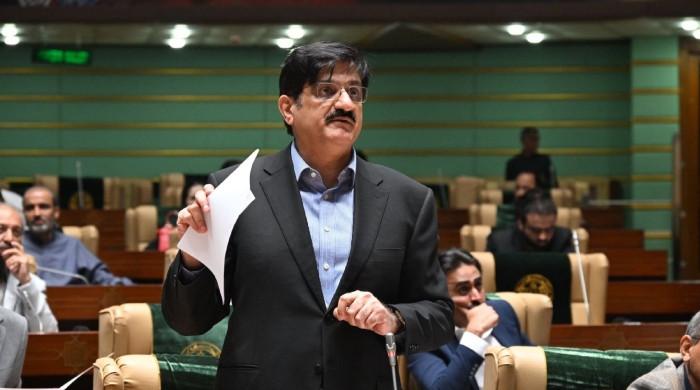
KARACHI: The Sindh Assembly on Saturday passed a resolution rejecting any move to make Karachi a separate province, declaring the metropolis an “integral part” of Sindh.
Sindh Chief Minister Murad Ali Shah introduced the resolution, condemning the “divisive statements calling for disintegration of Sindh or separation from Karachi.”
Speaking in the House, he said that any attempt to divide Sindh or separate Karachi from the province was contrary to the history, constitutional spirit, democratic norms and sentiments of the people of Sindh.
“This House unequivocally condemns and rejects any conspiracy aimed at the division of Sindh or the creation of [a] separate province comprising Karachi,” he added.
The CM of Sindh stated that the metropolis “is, and will forever remain, an integral and inseparable part of Sindh.”
“Today, [Sindh] The Assembly has made it clear: the unity of Sindh is sacred. Karachi is inseparable from Sindh: yesterday, today and always. We are united by our homeland,” reads a post on the official X account of the Sindh chief minister.
The resolution comes in response to calls made by the Muttahida Qaumi Movement-Pakistan (MQM-P) to declare Karachi as a federal territory under Articles 148 and 149 of the Constitution.
At a press conference in Karachi on January 22, MQM-P leader and Federal Health Minister Mustafa Kamal made a demand after a deadly fire at Gul Plaza left more than 70 dead and dozens injured.
The deadly inferno broke out at the mall on January 17 and took almost two days to extinguish. At least 73 people lost their lives and some 1,200 stores were affected by the fire.
MQM-P leader Farooq Sattar later urged Pakistan People’s Party (PPP) Chairman Bilawal Bhutto-Zardari to sack Sindh CM, Karachi Mayor Murtaza Wahab and Chief Minister Sharjeel Inam Memon over the Gul Plaza tragedy.
He demanded that Karachi be handed over to the Center if the provincial government could not fulfill its responsibilities.