
Solana’s latest phase looks much less flashy than its memecoin-fueled highs, and that may be the goal.
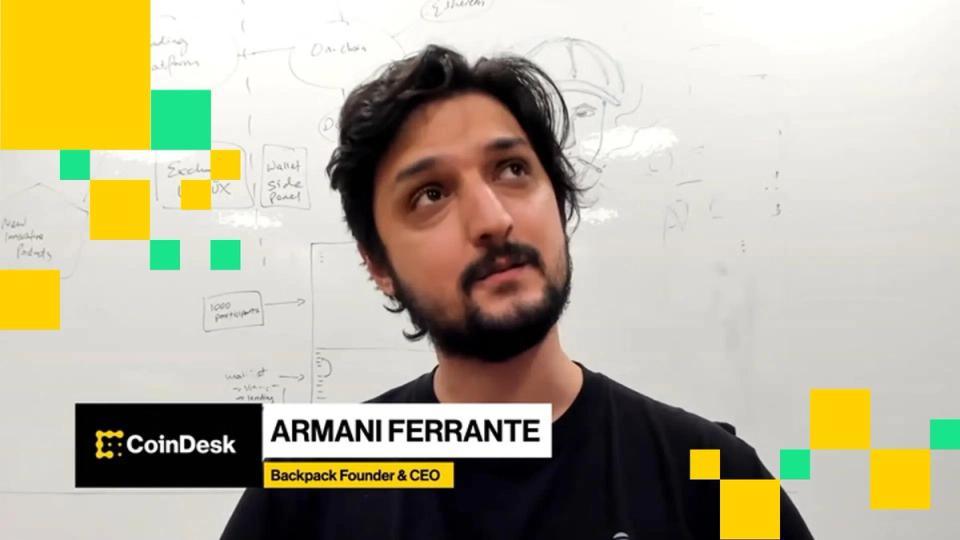
Armani Ferrante, CEO of cryptocurrency exchange Backpack, told CoinDesk in an interview that the Solana ecosystem spent the past year doubling down on a more sober approach: financial infrastructure. After years of experimentation while the broader crypto industry focused on NFTs, gaming, and social tokens, attention is now returning to decentralized finance, commerce, and payments.
“People are really starting to think about blockchains as a new type of financial infrastructure,” said Ferrante, who will speak at CoinDesk’s Consensus Hong Kong conference next month. “It’s less about NFTs, less about moon-type random games, and much more about finances.”
That change has made Solana boring to some outside observers, but Ferrante framed it as a sign of maturity. The network is increasingly positioning itself around trading, market structure and high-yield on-chain settlement, what some have called “Internet capital markets.”
The pivot comes amid a stark divide between crypto sentiment and traditional finance. While cryptocurrency prices remain subdued and crypto-native investors remain cautious, Ferrante said institutional interest has rarely been stronger.
“If you ask anyone on Wall Street, they’ve never been more bullish,” he said, pointing to growing momentum around tokenization, stablecoins and on-chain settlement.
Ferrante argued that the long-term argument for Solana, and blockchains in general, rests on their role as neutral settlement layers. In that future, assets like stocks and derivatives will move seamlessly between platforms as standardized tokens rather than remaining in isolated databases.
“A token is simply a canonical, agreed-upon entry into who owns something,” Ferrante said. “That concept applies everywhere.”
Crucially, Ferrante emphasized that real-world adoption will require deeper integration with regulatory frameworks, not an escape from them. As cryptocurrencies move from speculative experimentation to integrated financial infrastructure, compliance and legal clarity become prerequisites rather than obstacles.
“What maturity really means is the real world,” he said. “And the real world is not a pitched battle.”
In Ferrante’s view, Solana’s bet is that building for that reality, even at the cost of hype, will pay off as more global finance comes into the chain.
Read more: Ethereum and Solana set the stage for DeFi reboot in 2026


