
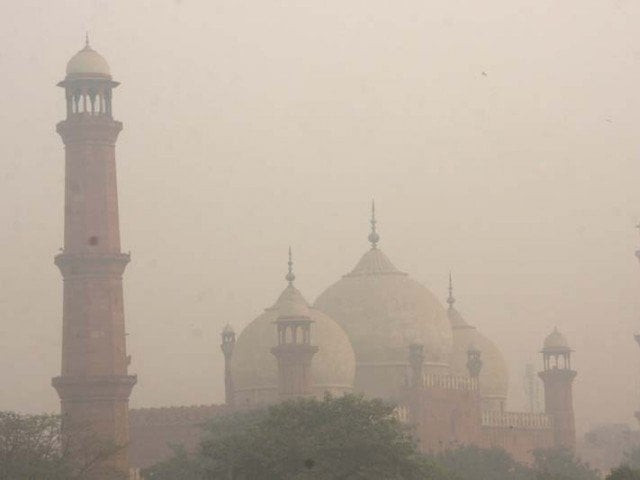
Experts believe that government measures alone cannot take credit, as favorable weather played a key role.
LAHORE:
In Lahore and several other cities of Punjab, the smog situation in 2025 has been somewhat better compared to last year. However, when the government attributes this improvement to its timely intervention, critics remain skeptical, considering that the improvement is a result of both government measures and favorable weather conditions.
According to Punjab Chief Minister Maryam Aurangzeb, a comprehensive strategy to combat smog has been adopted this year. The measures included a crackdown on brick kilns, the installation of filters and scrubbers in industries, vehicle emissions controls, a ban on burning crop residues, control of dust from construction activities and the establishment of anti-smog squads. The government claims that these policies improved air quality in Lahore, Faisalabad, Gujranwala and Rawalpindi.
However, air quality data and expert opinions present a different picture. Environmental scientists point out that the intensity of smog depends not only on human activities but also on weather conditions. During the current season, higher wind speeds, light rain and temperature fluctuations reduced the formation of temperature inversion, a condition that typically traps smog close to the ground.
Dr Zulfiqar Ali, an environmental expert at Punjab University, explained that the smog season normally lasted from late October to mid-December. “This year, wind direction and speed were relatively favourable, preventing smog from reaching the intensity seen last year. While AQI levels in some areas reached dangerous levels, recorded as high as 500, strong winds helped disperse harmful particles such as PM2.5,” Dr Ali said.
Independent researchers noted that although the AQI decreased noticeably on certain days, Lahore still ranks among the most polluted cities in the world overall. Environmental lawyer Rafay Alam said major sources of air pollution in Lahore, such as the transport sector, old diesel vehicles, industrial emissions, brick kilns and waste burning, remained largely unchanged.
“The reduction in severe smog waves in November 2024 and 2025 was mainly due to favorable weather conditions, including better air circulation and seasonal changes, rather than government actions. Overall, air quality this year was not significantly better than last year,” Alam said.
According to the World Wildlife Fund (WWF) Pakistan, vehicle emissions and low-quality fuel are the main causes of smog and air pollution. Measures like smog guns can provide temporary, localized relief, but they are not sustainable solutions. WWF Pakistan Director General Hammad Naqi Khan emphasized that clean fuels, strict vehicle emissions standards and effective law enforcement were the only long-term solutions.
The Pakistan Air Quality Initiative (PAQI) reported a notable reduction in smog intensity this year compared to last year; however, the improvement remained unsatisfactory. According to the report, air quality throughout November remained at a “very unhealthy” level, with Pakistan’s national environmental standards being exceeded every day.
PAQI further reported that air pollution was reducing the average life expectancy of Pakistanis by 3.9 years and was linked to approximately 128,000 premature deaths annually. In Lahore, the annual average concentration of PM2.5 was 22 times higher than WHO guidelines, causing residents to lose an average of seven years of life.
Reports further stated that in a single week in November, around 6,500 patients visited Mayo Hospital, 5,000 were reported at Jinnah Hospital and around 4,000 each at the Services and General hospitals. The total number of patients affected by air pollution and smog in November was estimated at 130,000.
Experts believe government measures have helped to some extent, but attributing the current improvement entirely to government success is not scientifically accurate. The real test will come in the coming years, when it becomes clear whether the Punjab government can address the root causes of air pollution through sustained, scientific and structural reforms.


