
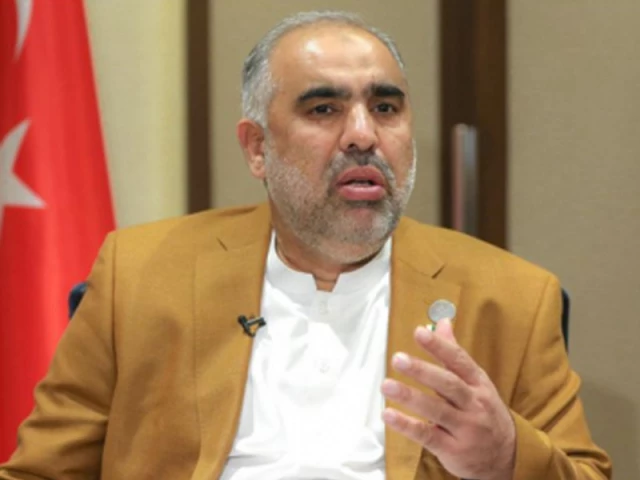
Opposition parties on Wednesday criticized the federal government’s economic performance and governance failures, warning that rising poverty, unemployment and fiscal mismanagement were pushing the country toward an unmanageable crisis. In a joint press conference, Tehreek-e-Tahaffuz-e-Aain-e-Pakistan (TTAP) leaders, including Zubair Umar and Asad Qaiser, alleged that the ruling system had failed to fulfill constitutional obligations, particularly those related to provincial shares and economic parity. Former National Assembly Speaker Asad Qaiser said the government had "It failed in terms of economic policy."adding that inflation and unemployment have skyrocketed to such an extent that people no longer have money for two meals a day. He also condemned the long-delayed meeting of the National Finance Commission (NFC), saying Khyber Pakhtunkhwa (KP) was not getting its fair share. He recalled that the Sartaj Aziz-led committee had recommended allocating Rs 1 trillion for the development of FATA and that after the merger of tribal areas, the province’s NFC share had been fixed at 19 per cent. However, he alleged that even gas rights payments to KP had been suspended. Qaiser said the province had become "a part of international politics" handing over airports to foreign entities, and reminded journalists that KP bore the scars of both the Afghan war and the war on terrorism. He noted that these conflicts had deterred investors and left tribal districts without employment opportunities, educational facilities or functioning markets. He said that the tribal belt covered 2,000 kilometers and yet "Tribal people’s businesses have been labeled as smuggling."
Qaiser further said that the suspension of Afghan transit trade had aggravated unemployment in KP. While acknowledging that Pakistan had "problems with afghanistan"insisted that there was "different ways" to resolve them and noted that PTI founder Imran Khan had also expressed concern over deteriorating ties. He questioned why Pakistan was willing to negotiate with India but not explore diplomatic solutions with Iran and Afghanistan. "We are democrats, this country is ours," said. He added that the TTAP was "with the Pakistan army, not against it," but he stressed that each institution must remain confined to its constitutional ambit, noting that during the PTI’s rule, Pakistan had improved trade ties with Afghanistan and several African countries. Former Sindh governor Zubair Umar said Pakistan’s exports had declined while the trade deficit had increased by 37 percent. Citing several officials, he said senior military officer General Sarfaraz had admitted that "the business can no longer operate in Pakistan," while the SIFC had admitted that the investment climate was not conducive.


