
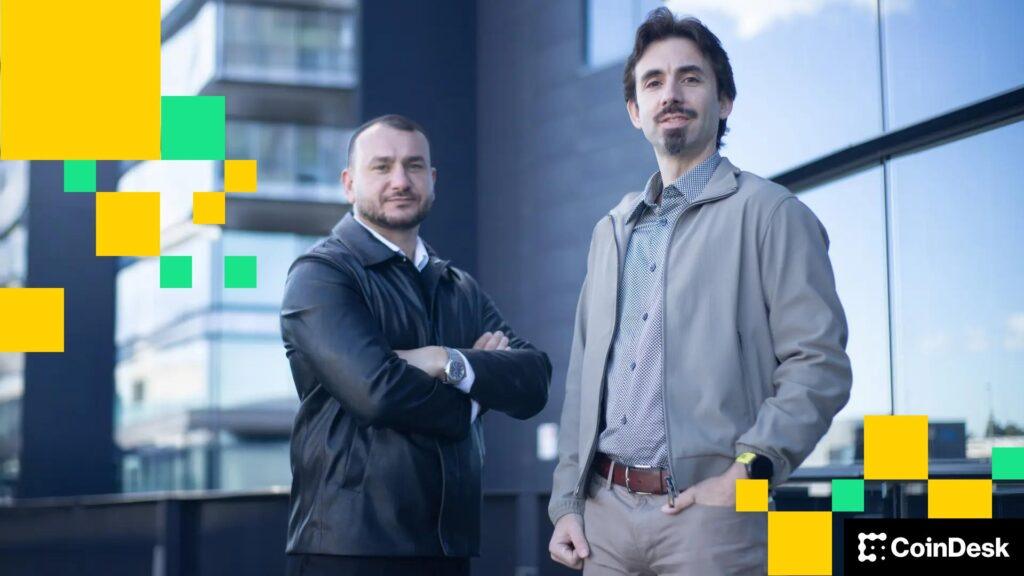
Spain’s largest cryptocurrency exchange, Bit2Me, moved €5.3 billion (around $6.24 billion) in trading volume in 2025, eight times more than 2023, as it transitioned from a consumer-facing platform to backend infrastructure for banks and law enforcement.
That volume was accompanied by growth in business-to-business revenue, which rose from 18% of the total in 2023 to 27% in 2025. Cryptocurrency-backed loans, a relatively new offering, increased 672% in a single year, and the company’s chief financial officer, Pablo Casadio, said he sees the crypto industry entering a phase of financial infrastructure that the company is taking advantage of, given its support.
The exchange, backed by several banks including Bankinter, Unicaja and Cecabank, as well as telecommunications giant Telefónica and Tether, made $25 million in revenue last year.
Read more: Spanish bank Bankinter joins BBVA and Tether with participation in cryptocurrency exchange Bit2Me
Much of that came from a new API product that allows institutions to effectively outsource their crypto operations. Spanish wholesale bank Cecabank, which also has a stake in the company, has integrated Bit2Me’s infrastructure to offer digital asset services to other regional banks, complementing a similar liquidity agreement with BBVA’s Turkish crypto subsidiary, Garanti BBVA Kripto.
The exchange became the first in Spain to obtain an EU Crypto Asset Markets (MiCA) license and spent 3,000 hours on regulatory-compliant work and €2.5 million ($2.9 million) to achieve it, Bit2Me executives told reporters during a briefing.
The effort temporarily pushed its EBITDA into negative territory, but opened doors that few crypto companies can access and allowed it to begin expanding. Last week, the company began expanding into the Portuguese market, with plans to enter Italy, France and Germany in the near future.
Bit2Me also revealed that it has been watching the US and Middle East markets, which are much more competitive. “If we do something, it should be done like we did in Spain, everything by the rules,” said Andrei Manuel, COO and co-founder of the platform, during the briefing attended by CoinDesk.
Convert seized cryptocurrencies into fiat
He has also been acting as a “cryptoliquidator” for the Spanish government. Bit2Me has built a channel to convert confiscated digital assets into euros, working directly with Interpol, Europol and the national police, its executives added.
The system leverages blockchain analysis company Chainalysis to ensure traceability. In 2025, Bit2Me processed 1.5 million euros ($1.76 million) in seized cryptocurrencies on behalf of agencies such as Interpol, Europol, and the Spanish police. These funds become fiat currency for the state.
While other governments still auction cryptocurrencies through third parties, Spain’s direct settlement model mirrors the US Marshals Service’s agreement with Coinbase.


