
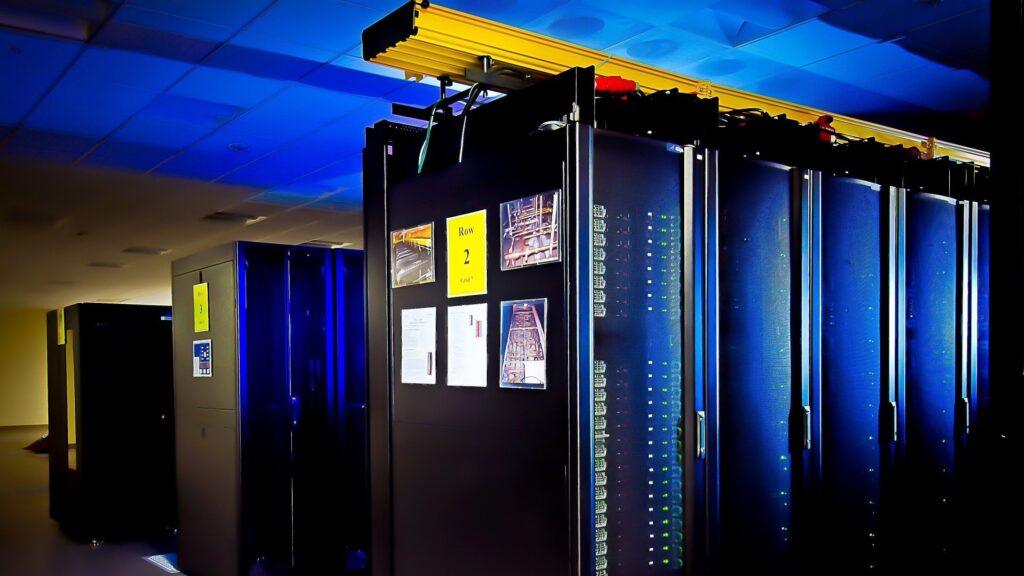
- Lux and Discovery supercomputers will combine EPYC CPUs, Instinct GPUs and advanced networking
- The Lux AI supercomputer is considered the first US “AI factory.”
- Discovery builds on Frontier’s legacy with increased bandwidth and improved efficiency
The US Department of Energy has announced a $1 billion collaboration with AMD to deliver two supercomputers, Lux and Discovery, to Oak Ridge National Laboratory (ORNL).
AMD says the partnership will help it deliver computing platforms that drive research in energy, health and national security, and make both systems part of the federal effort to maintain an edge in artificial intelligence and high-performance computing.
Lux, which will arrive in early 2026, and Discovery, scheduled for 2028, are being developed together with HPE and Oracle.
Lux and Discovery: two heavy systems
“We are proud and honored to partner with the Department of Energy and Oak Ridge National Laboratory to accelerate the American foundation for science and innovation,” said Dr. Lisa Su, president and CEO of AMD.
“Discovery and Lux will use AMD’s AI and high-performance computing technologies to advance the most critical U.S. research priorities in science, energy and medicine, showcasing the power of public-private partnership at its finest.”
The systems will combine AMD Instinct GPUs, EPYC CPUs and networking hardware to expand national computing capacity and power future AI tools.
The Department of Energy describes the Lux AI system as the first U.S. “AI factory” dedicated to science and research, used to train and tune basic models designed for areas such as biology, materials science and clean energy.
Its architecture is designed for data-intensive workloads that cannot be handled by a typical workstation.
Despite strong technical claims, there is limited independent verification of how Lux will perform once implemented.
Its co-development with cloud providers like Oracle raises questions about how much of the infrastructure will remain sovereign and under direct federal control.
“Oracle will provide a high-performance, sovereign AI infrastructure that will support the co-development of the Lux AI cluster,” said Mahesh Thiagarajan, executive vice president of Oracle Cloud Infrastructure.
Discovery, planned as the successor to the Frontier supercomputer, will use AMD’s next-generation EPYC CPUs and MI430X GPUs.
“The Discovery system will drive scientific innovation faster and further than ever before,” said ORNL Director Stephen Streiffer.
The project is expected to increase bandwidth and efficiency while keeping power usage stable, a goal that has yet to be demonstrated.
Its backers at Oak Ridge say it will expand the DOE’s ability to simulate scientific processes and design materials, reactors and catalysts at record speed.
However, large-scale AI tools require ongoing maintenance and it is unclear whether Discovery will meet its power and cost goals once it reaches production.
“Winning the AI race requires new and creative partnerships that bring together the brightest minds and industries that American technology and science have to offer,” said US Secretary of Energy Chris Wright.
“That’s why the Trump administration is announcing the first example of a new common-sense approach to computing partnerships with Lux. We are also announcing, as part of a competitive acquisition process, Discovery. Working with AMD and HPE, we are bringing new capacity online faster than ever…”
Follow TechRadar on Google News and add us as a preferred source to receive news, reviews and opinions from our experts in your feeds. Be sure to click the Follow button!
And of course you can also follow TechRadar on TikTok for news, reviews, unboxings in video form and receive regular updates from us on WhatsApp also.


