
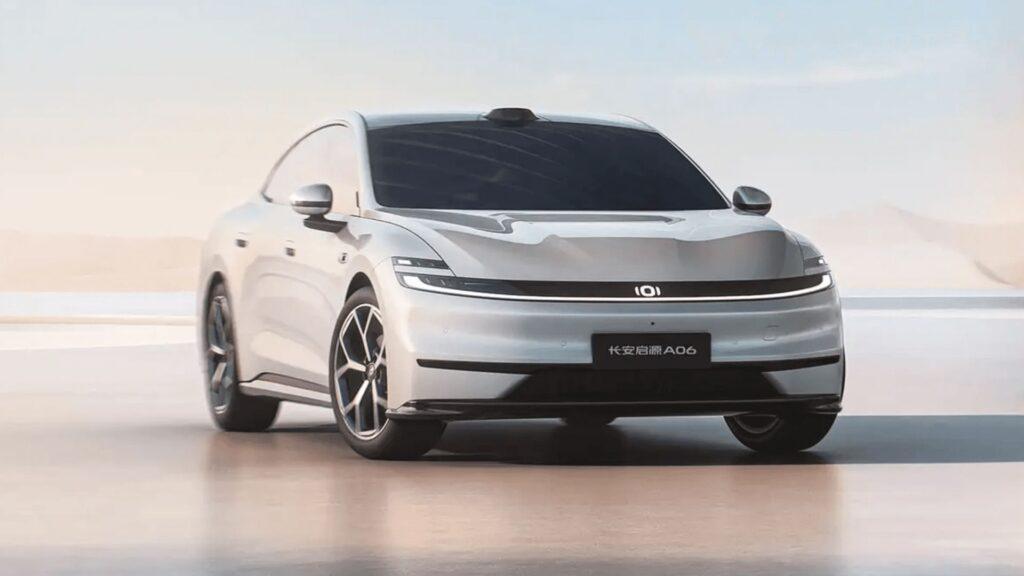
- Changan will be the first company to use a sodium ion battery
- Improved performance in extremely cold weather is just one highlight
- CATL also announces 5C lithium-ion packs that will outlast most cars
The world’s first mass-produced sodium ion (Na-ion) automotive battery has entered mass production and will be sold in China in the upcoming Changan Nevo A06 EV.
The battery technology, which has been developed by CATL (arguably the world’s largest manufacturer of electric vehicle batteries), has just completed winter testing in Inner Mongolia, where temperatures regularly fall well below what most electric vehicles are designed to withstand.
According to Gizmochina, the Nevo A06 was able to charge without issue at around -30°C (-22°F) and continued to operate at temperatures as low as -50°C (-58°F).
Reports claim that at -40°C (-40°F), the battery retained more than 90% of its original capacity, a level of performance that is very difficult to achieve with conventional lithium iron phosphate (LFP) batteries, as can be seen in this brutal winter test.
The CATL Naxtra sodium-ion battery pack is claimed to be the first certified for use in passenger vehicles and the version selected by Changan has a capacity of 45 kWh, meaning it only offers around 250 miles of range on China’s CLTC test cycle.
According to Changan, this puts it on par with similar entry-level LFP EVs, but cold-weather performance is much higher.
The Mongolian tests revealed that sodium ion packs could sustainably deliver more power in extremely cold climates than their LFP counterparts, without the associated range loss.
Analysis: a breakthrough
CATL sees mass production of its Naxtra sodium-ion battery pack as the beginning of a “dual chemistry” phase for electric vehicles, where EV manufacturers can select the right technology for the right application.
For example, sodium-ion batteries may appear in electric vehicles that regularly operate in freezing conditions, although Changan is reportedly considering introducing the technology across its wider range, given the potential savings it offers.
Sodium-ion battery packs have also been supported by opponents of lithium mining, as sodium is 1,000 times more abundant and available in multiple geographic regions, meaning the supply chain is not largely controlled by a single country.
In addition to this, Na ion packs are said to be slightly safer as there is a lower risk of thermal runaway, while production, if scaled correctly, can be cheaper, offering greater options to EV manufacturers who want to reduce the cost of entry-level EVs with lower overall electric range.
That said, lithium-ion packs are also improving at a rapid rate and are quickly becoming the best option both in terms of longevity and charging speed.
CATL claims its latest 5C lithium-ion pack can retain 80 percent of its original capacity after 3,000 full charge cycles under ideal 20 degrees C (68 F) conditions, even when charged solely at some of the fastest plugs in circulation.
According to Carscoops, this equates to approximately 1.1 million miles of driving before the battery is considered to have lost enough capacity to cause concern.
The 5C in the title also refers to a charge rate the battery can handle, and CATL claims its ultra-durable lithium-ion technology can theoretically be charged from empty in around 12 minutes, which should provide added peace of mind to those who regularly charge on the public grid and fear this could prematurely affect battery capacity.
Follow TechRadar on Google News and add us as a preferred source to receive news, reviews and opinions from our experts in your feeds. Be sure to click the Follow button!
And of course, you can also follow TechRadar on YouTube and tiktok for news, reviews, unboxings in video form and receive regular updates from us on WhatsApp also.


