
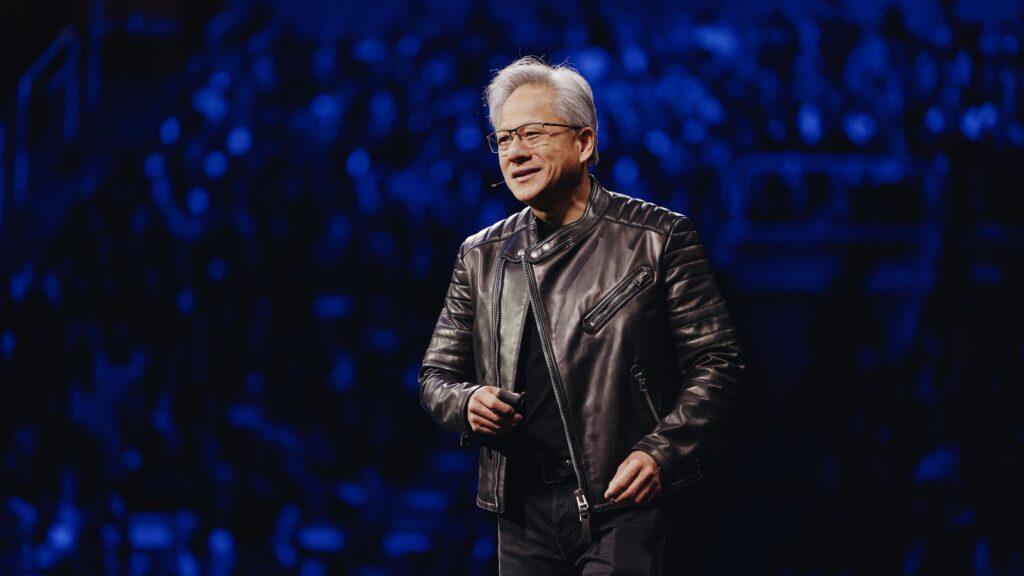
- Nvidia CEO Jensen Huang warned of China’s great advantages in AI
- It is about the rapid completion of data center construction and China’s robust energy infrastructure to meet AI energy demands.
- Meanwhile, a new study has found that China’s open source LLMs have secured almost a third of global AI use.
The CEO of Nvidia, Jensen Huang, has once again warned about the rapid advances that China is making in AI, and the advantages that the country has in terms of infrastructure for its development.
Fortune reports that late last month, Huang spoke with John Hamre, president of the Center for Strategic and International Studies (CSIS), noting that: “If you want to build a data center here in the United States from startup to stand-up, [an] The AI supercomputer will probably take about three years. They [China] “We can build a hospital in a weekend.”
In other words, China is capable of carrying out large construction projects at incredibly fast speeds and also has a huge advantage in terms of energy infrastructure.
These are crucial elements for the development of AI in terms of quickly building huge data centers, addressing processing needs, and having the energy to drive all of this.
Huang noted that China has “twice as much energy as us.” [the US] “we have as a nation, and our economy is bigger than theirs” and that this “doesn’t make sense to me”, and also that the growth of energy capacity is going “straight up” in China, while it remains more or less stable in the United States.
However, to balance the concerns expressed, the CEO made it clear that Nvidia is “generations ahead” of China when it comes to AI chip technology (there may be a bit of bias in that statement), but Huang still said this was no reason to rest on his laurels.
Huang has previously commented that China is “nanoseconds behind the United States” in the AI race, but we’re told the Nvidia CEO remains apparently hopeful about the Trump administration’s push to boost AI investment and domestic manufacturing jobs.
Token efforts and rapid rise
Meanwhile, a separate South China Morning Post (SCMP) article claims that almost 30% of global AI usage now comes from China’s open source models (LLM).
That figure comes from a report compiled by OpenRouter, an independent aggregator of AI models, together with venture capital firm Andreessen Horowitz. It is based on a study of 100 billion tokens, which are the data units processed by LLMs (or in friendlier language, the basic components behind the functioning of AI).
Most of it remains in the hands of closed source LLMs from the Western world, such as ChatGPT, which own the rest of the market (around 70%).
However, remember that just a year ago, open source Chinese LLMs only accounted for just over 1% of tokens, so reaching 30% now is a pretty steep growth trajectory, to say the least.
If we take just the open source LLMs, they tell us that Chinese models average around 13% of weekly token usage, almost matching the 13.7% taken from the rest of the world. (Remember this is an open source usage; the remaining majority are proprietary closed source models like ChatGPT.)
Another interesting point revealed here is that China’s open source LLMs are now doing everything equally, it’s not just about DeepSeek (as was the case originally). Naturally, DeepSeek V3 is a major force in the use of AI in China, but there are also Alibaba’s Qwen and Moonshot AI’s Kimi K2, which are big players.
The report maintains that Chinese-language signs now rank second in symbolic volume behind English.
Putting all this together, China’s rise in the AI sphere is, then, a pretty dizzying rise, and you can see where Huang’s concerns come from. Especially since it’s hard to see this growth slowing down any time soon for China, and what Nvidia’s CEO observes about the country’s energy infrastructure is indeed a telling advantage over the US—again, one that’s hard to see changing in the near future.
And then, as we’ve seen recently with the release of DeepSeek’s new v3.2 models, there’s what China has to offer in terms of reducing the costs of using AI to begin with. It would seem that we are in for a very competitive battle for global AI dominance.
The best computers for all budgets
Follow TechRadar on Google News and add us as a preferred source to receive news, reviews and opinions from our experts in your feeds. Be sure to click the Follow button!
And of course you can also follow TechRadar on TikTok for news, reviews, unboxings in video form and receive regular updates from us on WhatsApp also.


