
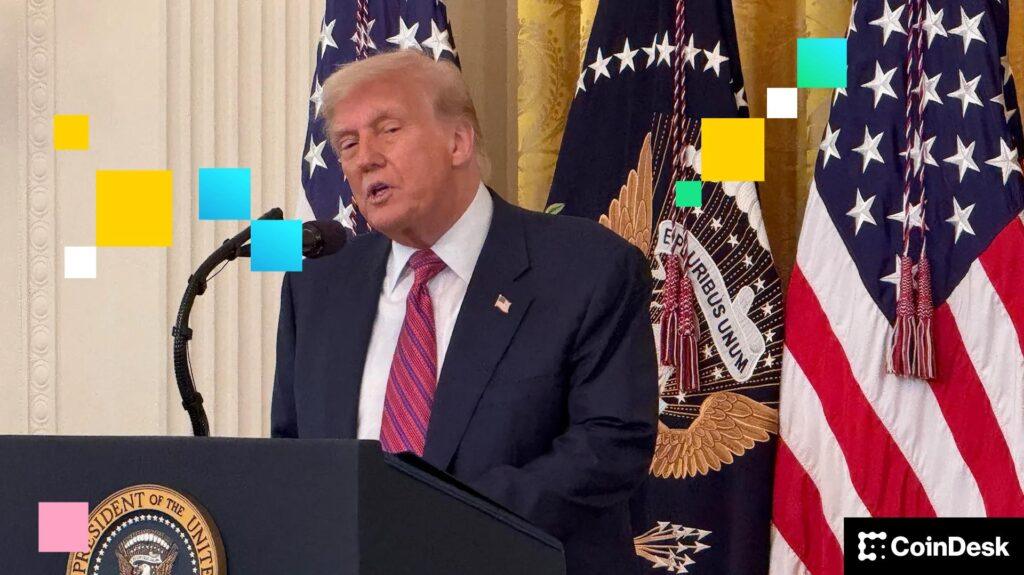
President Donald Trump’s decision to establish what he called a “Strategic Bitcoin Reserve” within the federal government was met with celebration in the crypto sector at the beginning of his administration. The industry applauded it because it further consolidates the arrival of bitcoin. as a mature asset, but a year has passed and there is still no reserve.
The Trump administration did the initial work of accounting for the government’s cryptocurrency holdings, but the U.S. bitcoin reserve is no closer to being formed due to the outcome of a concept in the March 6, 2025, order: “the need for any legislation to put any aspect of this order into effect.” Trump’s Treasury Department lacks the necessary authorizations to create specialized accounts. That requires action by Congress, the White House acknowledged, and Trump crypto adviser Patrick Witt said the situation presents “novel legal questions” that must be answered.
Lawmakers such as Sen. Cynthia Lummis have proposed reserve legislation, and the best current chance for its passage, according to people familiar with the legislative strategy, may be to include it in the National Defense Authorization Act by the end of the year. But the Trump White House would likely have to re-embrace the issue as a priority cause for that to happen.
Speculation about the planning and financing of the reserve (and its cousin, a separate reserve of digital assets that Trump also ordered to pool all other types of cryptocurrencies) has waxed and waned. Last month, CNBC’s head of markets talk, Jim Cramer, dropped a rumor that Trump’s people were ready to start filling the reserve when BTC hit $60,000, despite the lack of a place to put it or money to buy it.
The president’s crypto officials continue to demur when asked how many bitcoins the feds actually own, though some estimates put it at more than 300,000, for a total of more than $20 billion.
The crypto sector’s biggest disappointment with Trump’s bitcoin order was that it was not accompanied by new government purchases of the leading crypto asset. Instead, he encouraged creative policies that would allow the government to increase reserves without spending taxpayer money.
Witt, the Trump adviser, has not been willing to share top ideas for getting more bitcoins for the fund, which is to be held for long-term appreciation, not technically as a strategic reserve that would mean its contents would be released to mitigate any emergency.
The White House did not respond to a request for comment on the halt in the process, but it further underscores that executive orders, a pillar of the Trump administration, have no power of law and often act as little more than high-level guidance from the president.
If Trump’s allies in Congress bring forward a proposal to have the reserve bill included in the defense bill later this year, that legislative process typically concludes in December. The mandatory funding bill is often used as what D.C. insiders like to call a “Christmas tree,” a piece of legislation on which a wide array of unrelated decorations hang, because the package has to pass. If that’s the plan, it would happen in this session’s “duck out” period, the point at which some members of Congress will have been removed from office or elected to retire — like Lummis — but have not yet reached their exit dates.
Lummis’ own bitcoin reserve bill calls for a spending program that would lead to the United States owning one million tokens, about 5% of the eventual total supply. The Wyoming Republican, who is the inaugural chairman of the Senate Banking Committee’s first digital assets subcommittee, has so far only gotten legislation out of committee, but the panel’s top priority is another crypto issue: passing the Digital Asset Market Clarity Act.
Read more: Why does the United States still not have a Bitcoin reserve?


