NEWNow you can listen to Pak Gazette articles!
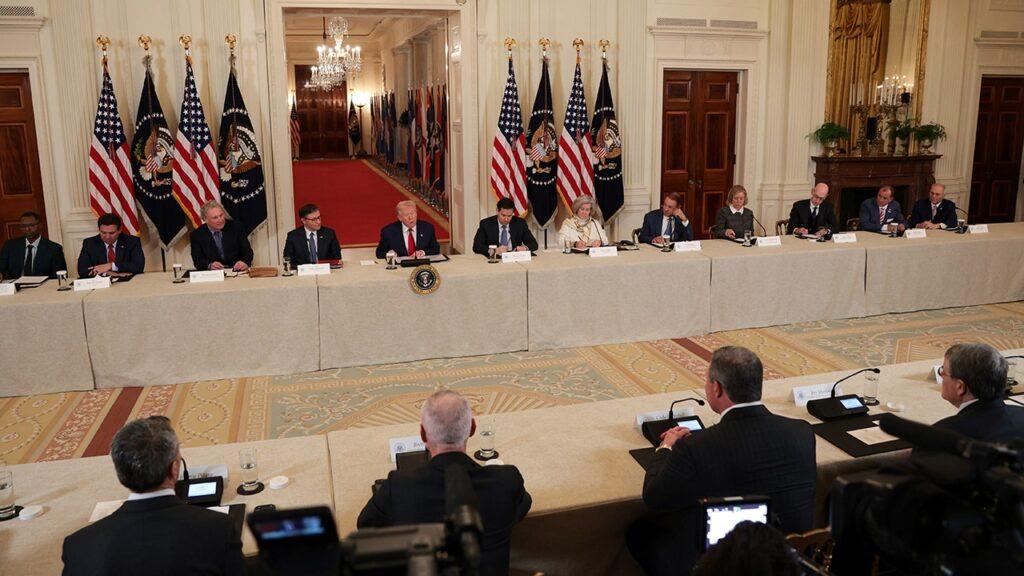
President Donald Trump hosted a roundtable on college sports on Friday to examine solutions to key challenges, including the authority of the NCAA; name, image and likeness (NIL) issues; collective bargaining; and governance concerns.
Athletic officials in attendance included NCAA President Charlie Baker, former Alabama football coach Nick Saban, OutKick founder Clay Travis, New York Yankees President Randy Levine, and each of the Power Four commissioners, among others.
“I think this is the future, beyond college sports. This is the future of universities,” Trump said as he opened the roundtable. “The amount of money that otherwise very successful schools spend and lose is staggering in a short period of time. It’s only going to get worse. We have to save college sports and, I think, universities.
CLICK HERE FOR MORE SPORTS COVERAGE ON PakGazette.Com
President Donald Trump speaks during a roundtable discussion on college sports in the East Room of the White House in Washington, District of Columbia, March 6, 2026. (Julia Demaree Nikhinson/AP Photo)
“Crazy things are happening… We have a seven-year-old freshman. We’re seeing things we’ve never seen before. College players who don’t want to turn pro because they make more money in college,” he added.
Trump said there has been an “inability to set rules,” noting that different states have different NIL laws, creating another challenge for college sports.
“If Congress doesn’t take action quickly, it could destroy college sports,” Trump said.
Trump criticized “a judge who knew nothing about sports, knew nothing about football, knew nothing about the Olympics, knew nothing about anything, just decided it was all unconstitutional.”
He was likely referring to Judge Claudia Wilken, who ruled in 2019 that the NCAA’s limits on education-related benefits violated antitrust law.
“It’s crazy. Only Congress can offer a permanent solution,” Trump said.
Trump noted that he did not intend to stop paying athletes again.
“It’s not the worst idea, though,” he admitted. “But I think a lot of people would invalidate me in that sense.”
Trump later said he wanted to “just go back to what you had, let a judge tell you you can’t do it, appeal and win at some point. Because what you had…what a great system. Everyone was happy.”
Saban said helping athletes be more successful on a personal level has become “impossible” in today’s era.
“People, instead of making decisions about creating value for their future, were making decisions about how much money they could make at whatever school they could go to or transfer to,” Saban said.
“I think we need to come up with a system, and obviously we need to do it with the president’s leadership and probably Congress as well… to allow student-athletes in all sports to improve their quality of life while they go to college, but still give them the opportunity to advance beyond their athletic career, which is what the philosophy of college athletes and getting a college education has always been about.”
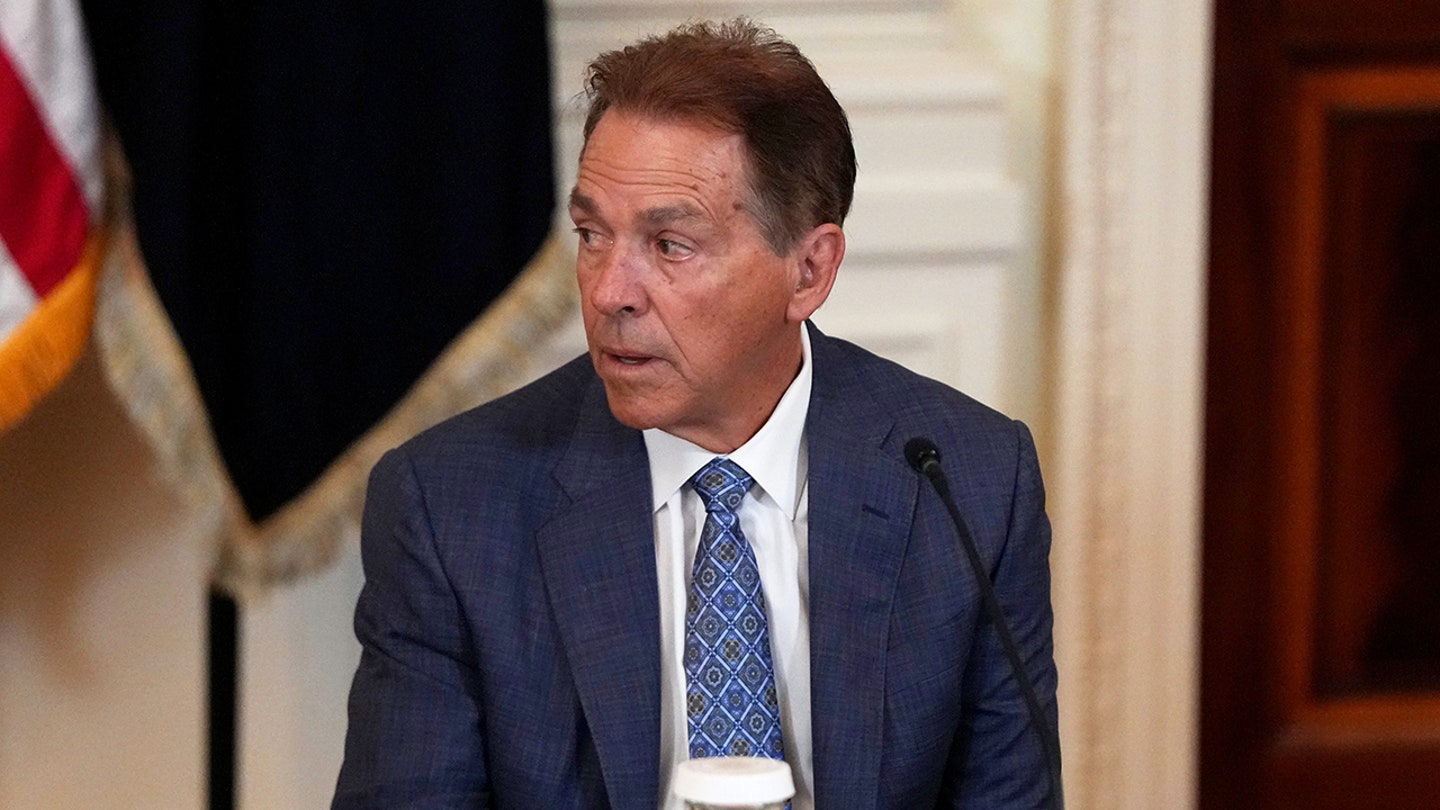
Former Alabama head coach Nick Saban appears before a roundtable discussion on college sports in the East Room of the White House in Washington, District of Columbia, on March 6, 2026. (Julia Demaree Nikhinson/AP Photo)
Trump has been adamant about “saving college sports,” even signing an executive order establishing new restrictions on payments to college athletes in July.
The president’s order prohibits athletes from receiving payments for playing from third-party sources. However, the order did not impose any restrictions on NIL payments to college athletes by third parties. It also holds schools accountable for preserving resources for non-revenue-generating sports.
The SCORE Act was at the forefront of the roundtable. The vote was scheduled for December, but the vote was canceled shortly before. The White House backed the bill, but three Republicans (Byron Donalds of Florida, Scott Perry of Pennsylvania and Chip Roy of Texas) voted with Democrats not to bring the bill to the floor. Democrats have largely opposed the bill and urged House members to vote against it.
The SCORE Act would give the NCAA a limited antitrust exemption in hopes of protecting the NCAA from potential lawsuits over eligibility rules and would prohibit athletes from becoming employees of their schools. Prohibits schools from using student fees to fund NIL payments.
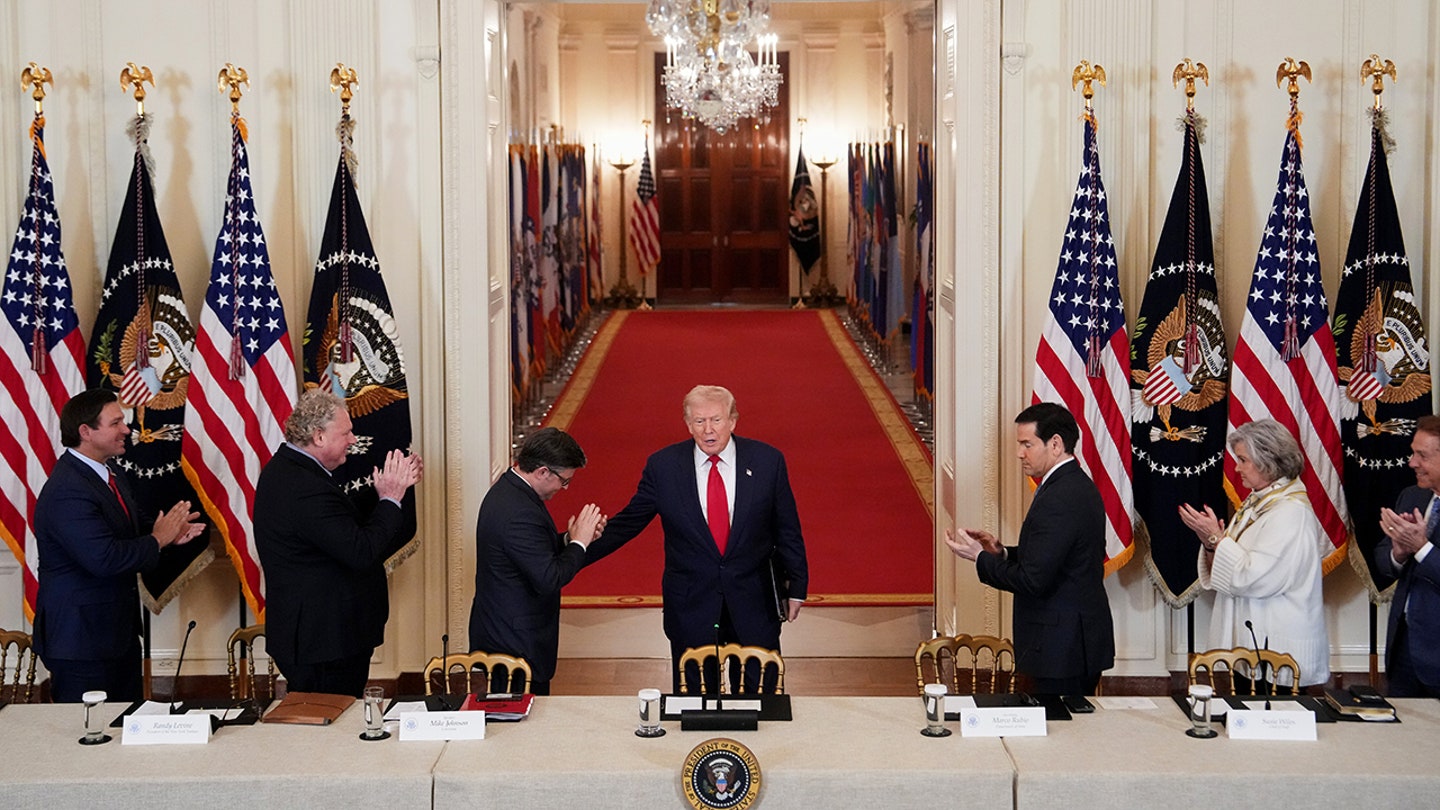
President Donald Trump greets House Speaker Mike Johnson, left, as he arrives for a roundtable discussion on college sports in the East Room of the White House in Washington, District of Columbia, March 6, 2026. (Julia Demaree Nikhinson/AP Photo)
Rep. Lori Trahan, D-Mass., said the law “harms” women’s sports and that strengthening Title IX “has to be part of the SCORE Act.” He also said the SCORE Act “represented a consolidation of what we have today, which is the SEC and the Big Ten,” getting a lot of the money that college athletics raises.
Trahan agreed that “maybe the SCORE Act is the right vehicle that we continue to modify,” showing some confidence in it and expressing a desire to work with those at the roundtable to make it a success. U.S. Rep. Steve Scalise, R-La., said women’s sports would be “protected,” while ACC Commissioner Jim Phillips said 56% of ACC athletic scholarships have gone to women since the House case.
Tim Pernetti, commissioner of the American Conference, said the SCORE Act does not solve the “economic crisis” of college athletics. Meyer admitted that he didn’t like how collectives were still included in the SCORE Act and called it a “trap.”
“I think if the collective goes away, college sports will improve immediately,” Meyer said.
After deliberations, Trump said he would draft an executive order “based on great common sense.”
“It will allow colleges to survive and players to survive and it will allow a lot of people to be very, very happy,” Trump said.
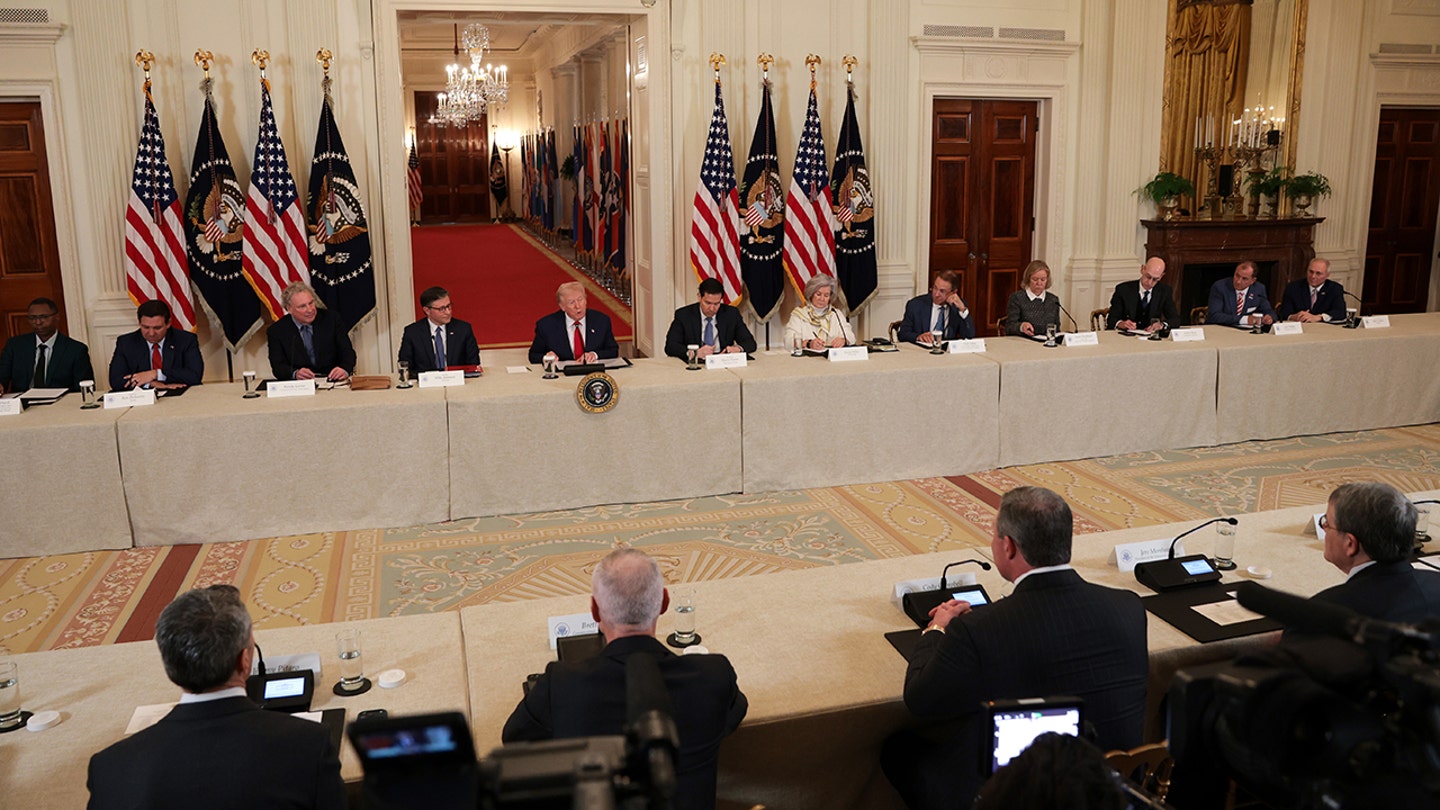
U.S. President Donald Trump speaks during a roundtable discussion on college sports in the East Room of the White House on March 6, 2026, in Washington, DC. The Trump administration held the roundtable discussion titled “Saving College Sports” with leaders from Power Four conferences, media executives and former coaches. (Anna Moneymaker/Getty Images)
A month before Trump’s order, Wilken approved a settlement between the NCAA, its most powerful conferences and lawyers representing all Division I athletes. The settlement means the NCAA will pay nearly $2.8 billion in damages over the next 10 years to college athletes who competed between 2016 and 2025. The settlement also allows college programs to pay athletes directly.
Related article