
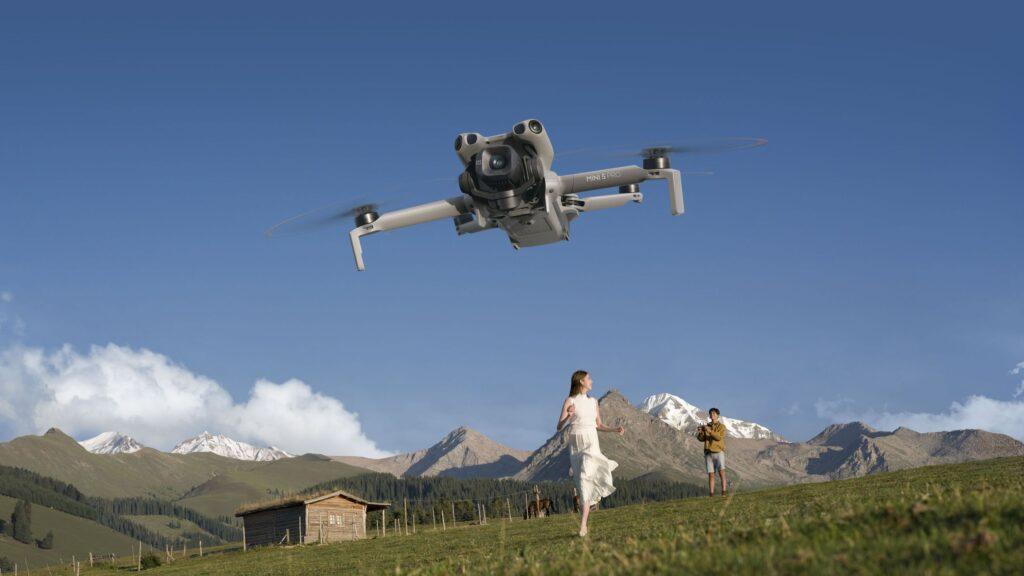
As of yesterday (1 January 2026), the UK’s drone laws have just changed in three major ways, and I don’t blame you for not realizing – I have a drone and I didn’t know the rules changed either.
We reported on the changes when they were released, but as a summary: the first change is to the way drones are classified (no longer simply based on weight, as some safety features will also be considered, but weight still plays an important role) and the second change is that you will need to activate remote ID on your drone, while the third is that most of you will now need to get your Flyer ID, which means you will need to pass a test.
It’s great to know what changes have occurred, but it’s also important to understand what needs to be done. Here’s a helpful guide to finding your Remote ID and performing the Traveler ID test so you can make your drone comply with the new rules.
How to activate remote identification
You can imagine remote ID as a kind of drone license plate; It digitally transmits your aircraft’s serial number, real-time position data, and your operator ID, although it won’t share any further personal information or live video feed if your drone has a camera.
Many classes of drones must have their Remote ID attached starting January 1, 2026, for several categories, including some drones protected by the previous system. You won’t need to fix Remote ID until January 1, 2028. Still, I’m a cautious person and would fix it for all your drones now if you can.
You can view your remote ID number in ‘My Registration Area’ on the CAA website. You will then need to find the exact instructions for your drone on how to enter your Remote ID into your device. However, it should be an option in your settings, usually in the Security, About, or dedicated Remote ID section.

How to get your traveler ID
If you were already flying a drone that weighs 250g or more, you should already have a Flyer ID, unless you like breaking the laws. Now, the rules have changed, so you’ll need a Flyer ID for 100g or larger drones, which won’t be simpler toys. That is, your DJI drone.
The good news is that a Flyer ID is completely free and lasts for five years after receiving it – a much better deal than the Carrier ID, which you have to renew annually and pay £11.79. The bad news is that you will have to pass a test to get a Flyer ID.
To access it, you can head to the CAA’s Get a Booklet ID page and press the big “Take the Test and Get a Booklet ID” button. You’ll need an email address and payment card on hand if you plan to renew your Carrier ID at the same time.
The test should take you about 30 minutes, but there is no time limit and you can have the UK CAA Drone and Model Aircraft Code open in another tab to help you answer questions. You must answer at least 30 of the 40 questions correctly and you can always try again if you fail.
Follow TechRadar on Google News and add us as a preferred source to receive news, reviews and opinions from our experts in your feeds. Be sure to click the Follow button!
And of course you can also follow TechRadar on TikTok for news, reviews, unboxings in video form and receive regular updates from us on WhatsApp also.


