
Six die in unrest over Iran’s economic crisis; Trump threatens to intervene; Araghchi and top Khamenei advisers criticize the United States
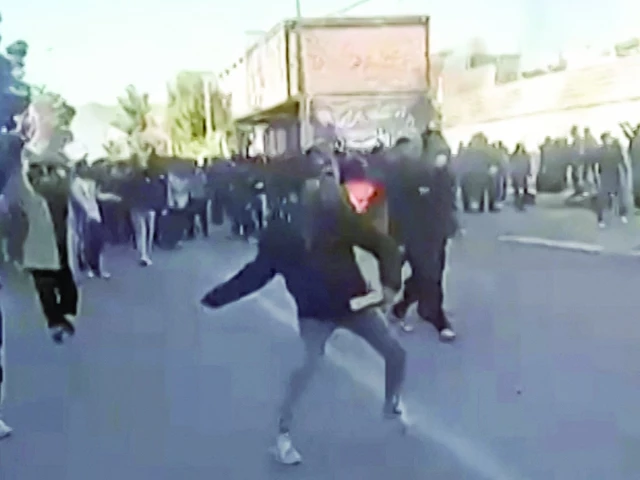
A UGC screenshot posted on social media shows protesters attacking a government building in Fasa, southern Iran. Photo: AFP
WASHINGTON/TEHRAN:
President Donald Trump on Friday issued a stark warning to Iran, declaring that the United States was “ready and prepared” to intervene if Iranian security forces killed protesters, prompting swift condemnation from Tehran.
As Iran grappled with nationwide unrest that erupted over the country’s worsening economic crisis, Trump, in a post on his Truth Social platform, said the United States would “come to the rescue” of protesters if they were violently attacked.
His remarks came amid the biggest wave of unrest in Iran in three years, which has already claimed at least six lives and spread to at least 20 cities, mainly in the western provinces. The president framed the protests as a response to rising inflation and economic stagnation.
The threat drew swift condemnation from Tehran. Iranian Foreign Minister Abbas Araghchi described the comments as “reckless and dangerous”, warning that any interference would destabilize the region.
Ali Larijani, head of Iran’s National Security Council and top adviser to Supreme Leader Ayatollah Ali Khamenei, warned that American intervention would endanger American troops and interests. Ali Shamkhani, another senior adviser to Khamenei, stressed that Iran’s security was a “red line” that would trigger a response if violated.
The protests were sparked by Iran’s faltering economy, with inflation officially above 36% and the national currency plummeting following partial deregulation of the currency exchange.
Economic grievances have translated into broader civic unrest, including merchant strikes in Tehran and demonstrations in Western cities. Images on social media showed crowds gathering in front of a burning police station, with gunshots sometimes heard and slogans such as “shameless” directed at the authorities.
President Masoud Pezeshkian adopted a conciliatory tone, acknowledging the government’s failures and promising dialogue with protest leaders. “We are to blame… Don’t look to the United States or anyone else to blame. We must serve properly so that people are satisfied with us,” Pezeshkian said, highlighting efforts to address the cost of living crisis.
At the same time, authorities have taken a firm stance against illegal activity. Police spokesman Said Montazeralmahdi said security forces understood the legitimate economic and civic demands of protesters but would not tolerate chaos or actions aimed at destabilizing public order.
In Lorestan province, the judiciary warned that participation in illegal gatherings or violent acts would be dealt with “with the greatest firmness.”
Regional context
The unrest in Iran is further complicated by external pressures. The country’s economy and regional influence have been weakened by Western sanctions, recent Israeli and US airstrikes against its nuclear facilities and allies, and military setbacks in Lebanon, Syria and Gaza.
Human rights organizations are reporting arrests in western provinces, including among Kurdish and Baloch minorities, and Hengaw said there are at least 29 detainees linked to the protests.
In Zahedan, members of Iran’s Baloch community reportedly chanted slogans such as “Death to the dictator.” State media confirmed some deaths in Lordegan and Kuhdasht, while reports from Fars province remain controversial.
The United Nations and rights advocates, including UN human rights chief Volker Turk, have urged Iran to respect freedoms of expression, assembly and association, calling for restraint and protection of civilians.


