Caracas: The United States on Thursday eased sanctions on Venezuela’s oil industry, expanding the ability of American companies to operate in the country after the lifting of state controls over the sector.
An hour after Venezuelan parliamentarians voted to open the oil industry to private investment, the US Treasury Department gave the green light to a series of activities by US energy companies.
The department issued a general license that allows transactions related to “the lifting, export, re-export, sale, resale, supply, storage, marketing, purchase, delivery or transportation of oil of Venezuelan origin.”
Authorized activities include oil refining, according to the license.
Venezuela’s interim president, Delcy Rodríguez, praised the reform as a “historic leap.”
“We are taking important steps,” Rodríguez said after a call with US President Donald Trump.
For the future
Trump pressured Caracas to open its oil fields to American investors after toppling his socialist archenemy Nicolás Maduro in a deadly US bombing of Caracas on January 3.
The US president backed Maduro’s vice president, Rodríguez, to take power, on the condition that she gives Washington access to the world’s largest proven oil reserves.
Rodríguez has seemed eager to meet their demands, arguing that an influx of foreign capital is needed to revive Venezuela’s battered economy.
The reform adopted Thursday paves the way for the return of big American energy companies, two decades after socialist firebrand Hugo Chavez seized foreign oil fields.
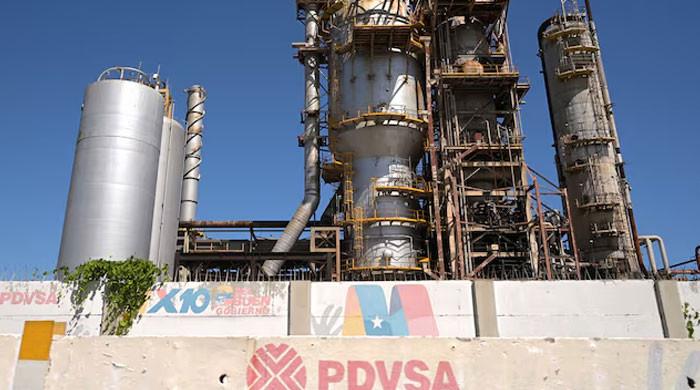
It modifies a law dating back to 2006 that required foreign investors to form joint ventures with state oil company PDVSA, which insisted on a majority stake.
Jorge Rodríguez, head of parliament and brother of Venezuela’s new interim president, said the reform will help the country recover from years of living under US sanctions.
“Only good things will come after suffering,” he said as he hit the law “for history, for the future.”
Trump has said that Washington is now “in charge” of Venezuela and that Rodríguez will “hand over” millions of barrels of oil to sell at market prices.
Rodríguez has already invested $300 million from a first U.S. sale of Venezuelan crude to shore up the country’s currency, the bolivar.
Slow recovery
Venezuela holds approximately one-fifth of the world’s oil reserves.
It was once a major supplier of crude oil to the United States, and several American companies operated in the country until 2007, when Chávez led a new wave of nationalizations.
The industry is undergoing a slow recovery after being hit by years of underinvestment, corruption, mismanagement and six years of US sanctions.
It reached production of 1.2 million barrels per day in 2025, a milestone compared to the 300,000 barrels per day extracted in 2020, but far from the 3 million reached at the beginning of the century.
Trump, who has praised Rodríguez, has been pressuring oil executives to invest in Venezuela.
Exxon Mobil and ConocoPhillips withdrew in 2007 after refusing to cede majority control to the state.
Chevron is the only American company still operating in Venezuela, under a special sanctions exemption.
The revised law offers greater guarantees to private actors, renounces state control of exploration and reduces taxes and royalties.
“This obviously completely dismantles Hugo Chávez’s oil model,” said oil analyst Francisco Monaldi, noting that the state will retain some discretion in granting contracts to private actors.
New fields
The US Department of Energy has already revealed a plan to develop Venezuela’s oil industry and has begun marketing Venezuelan crude.
Rodríguez says that the reform will bring money for “new fields, to fields where there has never been investment and to fields where there is no infrastructure.”
The changes are cause for optimism for many in a country struggling with economic collapse and mass emigration.
“This hydrocarbon reform helps restore our dignity,” said Karina Rodríguez, a PDVSA worker, at a recent demonstration.