
ISLAMABAD:
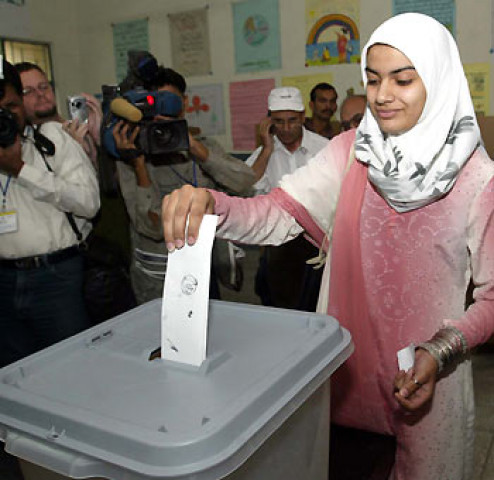
After the passage of the 26th and 27th constitutional amendments, there has been speculation about the 28th amendment. Among the ideas circulating, the one that has drawn the most attention and criticism is the suggestion to raise the voting age from 18 to 25.
This debate has generated concern as it directly affects democratic participation and the political role of a predominantly young electorate.
The issue gained widespread political attention after Farhatullah Babar, a senior PPP politician, publicly criticized the proposal.
In a post on
Speculation reached Kot Lakhpat jail, where senior PTI leaders (detained under the May 9 violence cases, including Shah Mahmood Qureshi, Dr Yasmin Rashid, Ejaz Chaudhry, Mian Mehmoodur Rasheed and Omar Sarfaraz Cheema) wrote a letter publicly opposing the idea, speculating that “anonymous forces” were circulating it fearing the political power of the youth.
While the debate was gaining momentum, Rana Sanaullah’s comment raised fears that something could be in the works.
When asked on a private television channel, he said that although there were no official discussions underway, some people believe that if a person cannot participate in elections until the age of 25, there is little reason for the voting age to remain at 18.
He added that the idea is under debate and if there is consensus it could happen.
The public discourse got so out of control that Planning Minister Ahsan Iqbal officially declared it baseless.
On Thursday he posted a video on his X account clarifying the government’s position, stating that “there is no such legislation [is] is being considered.”
He added that while political debate is emerging about raising the voting age, no formal bill has yet been introduced. He stressed: “We trust our young people and we cannot even think about depriving them of the right to vote.”
Despite the government’s adamant denial, the intensity of the discussion has revived questions about how the voting age was originally determined in Pakistan.
About twenty years ago, Pakistan took a different approach to voting rights. In 2002, President General Pervez Musharraf lowered the voting age from 21 to 18 years by issuing the Conduct of General Elections (Amendment) Order, 2002.
This change was presented as part of broader electoral reforms to increase democratic participation by giving younger people the right to vote. Since then, the voting age of 18 has remained intact and is now a regular part of Pakistan’s electoral system.
To fully understand the extent of this impact, it is useful to look at demographic data that quantify how many young people would be directly affected by such a change.
According to data from the Election Commission of Pakistan (ECP) at the time of the 2024 general elections, the total number of voters was around 128.58 million, and 56.86 million young voters, aged between 18 and 35 years, constituted 44.22% of the total electorate.
Of them, 24.66 million voters were between 18 and 25 years old. In light of these figures, it is evident that any proposed change in the voting age would affect not just a minor segment, but a substantial portion of the electorate.
Building on this, the Free and Fair Elections Network (Fafen) has analyzed publicly available data from the ECP to provide deeper insight into voter trends.
Fafen published detailed reports using ECP data from January 22, 2025 and December 30, 2025. It reports that the ECP added more than 3.3 million new voters in 2025, about 9,113 new voters each day, based on district-level data.
The growing number of voters shows how the electorate is constantly changing, so any change in the voting age would have a huge impact on both current and future voters.
In this historical context, analysts believe that the debate cannot begin. Ahmad Bilal Mehboob, president of the Pakistan Institute of Legislative Development and Transparency (Pildat), explained this point while speaking to The Express PAkGazette.
He explained that “although Mr. Ahsan Iqbal has strongly denied that such a proposal is being considered, I believe the idea is a failure from the beginning. It will politically damage the government and further alienate the youth.”
Mehboob further explained, “Voters in higher age groups, except the 50+ cohort, also voted in higher percentages for the PTI compared to the PML-N and the PPP. So if the idea was to deprive the PTI of the youth votes, it will not be achieved.”
Adding global context, he said: “It is contrary to the global trend, where the voting age is seen to be lowered to 15 years.”
Mudassir Rizvi, Fafen spokesperson and election expert, echoed Ahsan Iqbal and said this is more about misinformation than merit.
Speaking to The Express PAkGazette, he said: “It’s more speculation than debate. I would call it a classic case of misinformation apparently intended to provoke more than 20 million young men and women, aged 18 to 25.”
He welcomed the categorical denial by a senior federal minister and stressed the need to trace the origin of this misinformation rather than discuss the merit of a proposal that, if it exists, has no substance.


