
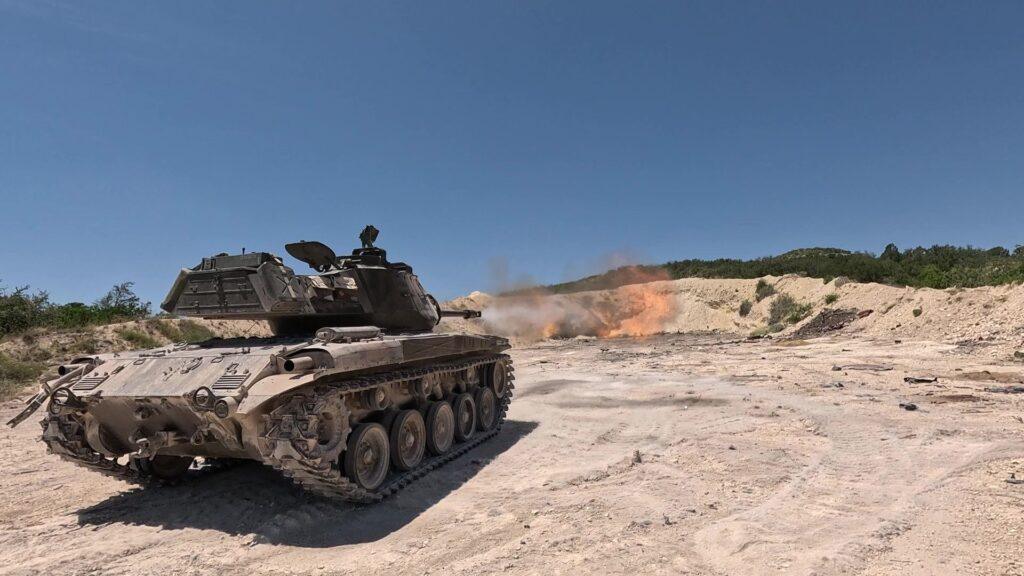
- He Battlefield 6 The audio team dropped cars from cranes, fired real-world weapons, and more to capture the perfect sounds.
- Senior technical sound designer Gonçalo Tavares revealed that the team will “do everything possible to record real sounds.”
- The game’s audio “comes from a real-life context first,” he said.
He Battlefield 6 The audio team has revealed they destroyed cars, walls, shipping containers and more in their quest to capture the perfect sound.
In a new interview with TechRadar Gaming, senior technical sound designer Gonçalo Tavares explained that each audio clip in the game “comes from a real-life context first.”
“We try our best to record real sounds, because it’s easier to record reality than to try to replicate it,” he said. “We have accompanied, for example, the Swedish army in some of its exercises, recording for reference.”
Article continues below.
From ruined buildings to exploding vehicles, Battlefield 6 It features a lot of destruction, requiring its own sound profile, some of which the developers recreated in the real world.
“We tried a lot of experimental techniques on those recordings,” Tavares said.
“We did things like put microphones underground to see how they would sound through floor vibrations, put microphones inside buildings to hear how they would sound obstructed by a couple layers of walls. And probably my favorite, although it cost me a tape recorder, was that I attached the microphone to a shipping container that we dropped and filmed in slow motion.”
Tavares also mentioned another incident in which the crew “was recording bullet impacts” by shooting into the side of a car and accidentally hit “at least one of the recorders.” Luckily, he says, it turns out that “the last sound of a recorder is pretty good.”
Similarly, senior audio director Mari Saastamoinen Minto recalled that the team built “brick walls to knock down and dropped cars” equipped with a microphone (a microphone that Tavares quickly specified “didn’t last”).
Many weapons were also recorded, although audio director David Jegutidse explained that in cases where it would be “really difficult” to record something (he gave “large projectiles like tank or artillery shells or rockets” as examples), the team relied on paid sound libraries.
Follow TechRadar on Google News and add us as a preferred source to receive news, reviews and opinions from our experts in your feeds. Be sure to click the Follow button!
And of course you can also follow TechRadar on TikTok for news, reviews, unboxings in video form and receive regular updates from us on WhatsApp also.


