
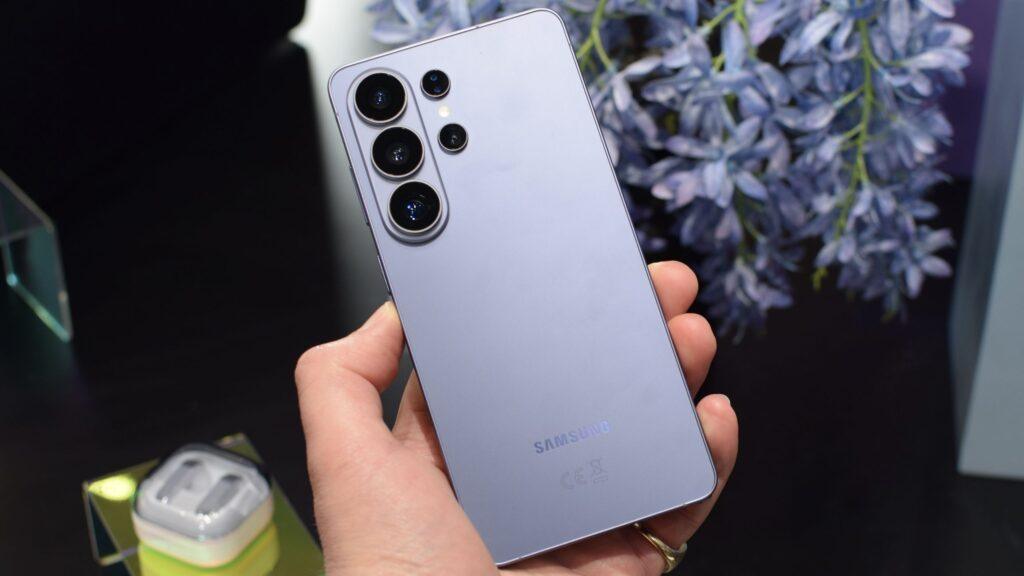
- Samsung has spoken more about its plans for an ‘AI OS’ which it says will help it stand out from iPhones and other Android phones.
- Apparently, this will be a proactive system that will be able to perform tasks without being asked.
- The company has also said that core AI features will remain free.
The Samsung Galaxy S26 series is, aside from the Ultra’s impressive privacy screen, a bit of an iterative hardware upgrade. But when it comes to software and particularly artificial intelligence, Samsung has made greater strides, and it looks like this is just the beginning.
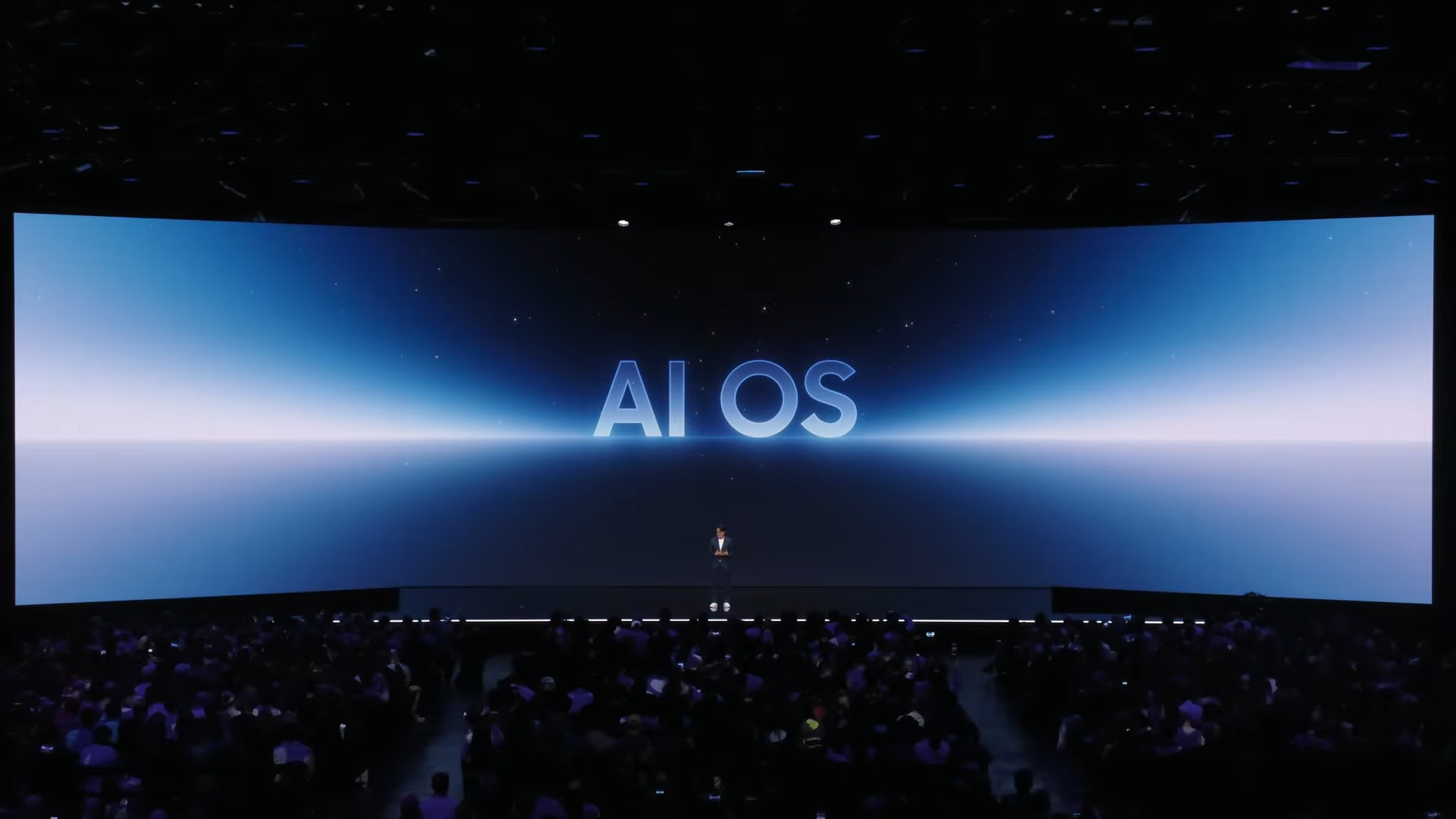
Speaking at the launch, Samsung executives Won-Joon Choi (COO of Mobile eXperience Business) and Benjamin Braun (Samsung Europe Marketing Director) have talked a lot about their vision for AI, saying, “we want to create a new Android operating system” called AI OS.
This AI operating system is something the company is working on with Google and will apparently be “a big differentiator in our market,” helping Samsung phones stand out from both iPhones and other Android rivals.
As Samsung admitted, that hasn’t always been the case. “So before it was iOS versus Android. Android was kind of a follower in a sense because the iPhone was first released in 2007 and then Android was introduced a couple of years later,” Won-Joon Choi said.
“But in the age of AI I think there are many innovations we can do at the operating system level and we are working with Google to create the so-called AI operating system. We want to create a new Android operating system which we will call the AI operating system,” he added.
Words in bold, so what exactly will this AI operating system be capable of? Well, the discussion was still light on specific details, but Samsung describes the AI at the center as a “magical, invisible friend” that can proactively do things for you, instead of you having to ask it.
This is in contrast to current phone-based AI, which is mostly reactive and requires you to tell it to do things. Instead, AI OS will apparently do “the things you thought would be a good thing, but didn’t have time to do,” all without being prompted.
“So I can see a shift as we move out of infancy, as we reach a little more maturity, as we move from reactive AI to proactive AI,” added Benjamin Braun.
There was a basic example of this during the Unpacked keynote. In a preview of its latest Now Brief (below), Samsung showed a restaurant reservation that wasn’t on the phone owner’s calendar. Instead, Galaxy AI remembered that the restaurant confirmation had been sent to the person’s text messages and flagged it in that day’s Now Brief in the “here’s something to check” section.
Clearly, Samsung’s vision for its new ‘AI OS’ goes much further and requires a fair amount of buy-in from a privacy point of view. But if it works as well in practice as that little example, then it could be a subtle but powerful change from traditional smartphone operating systems.
An AI agent powered by many LLMs
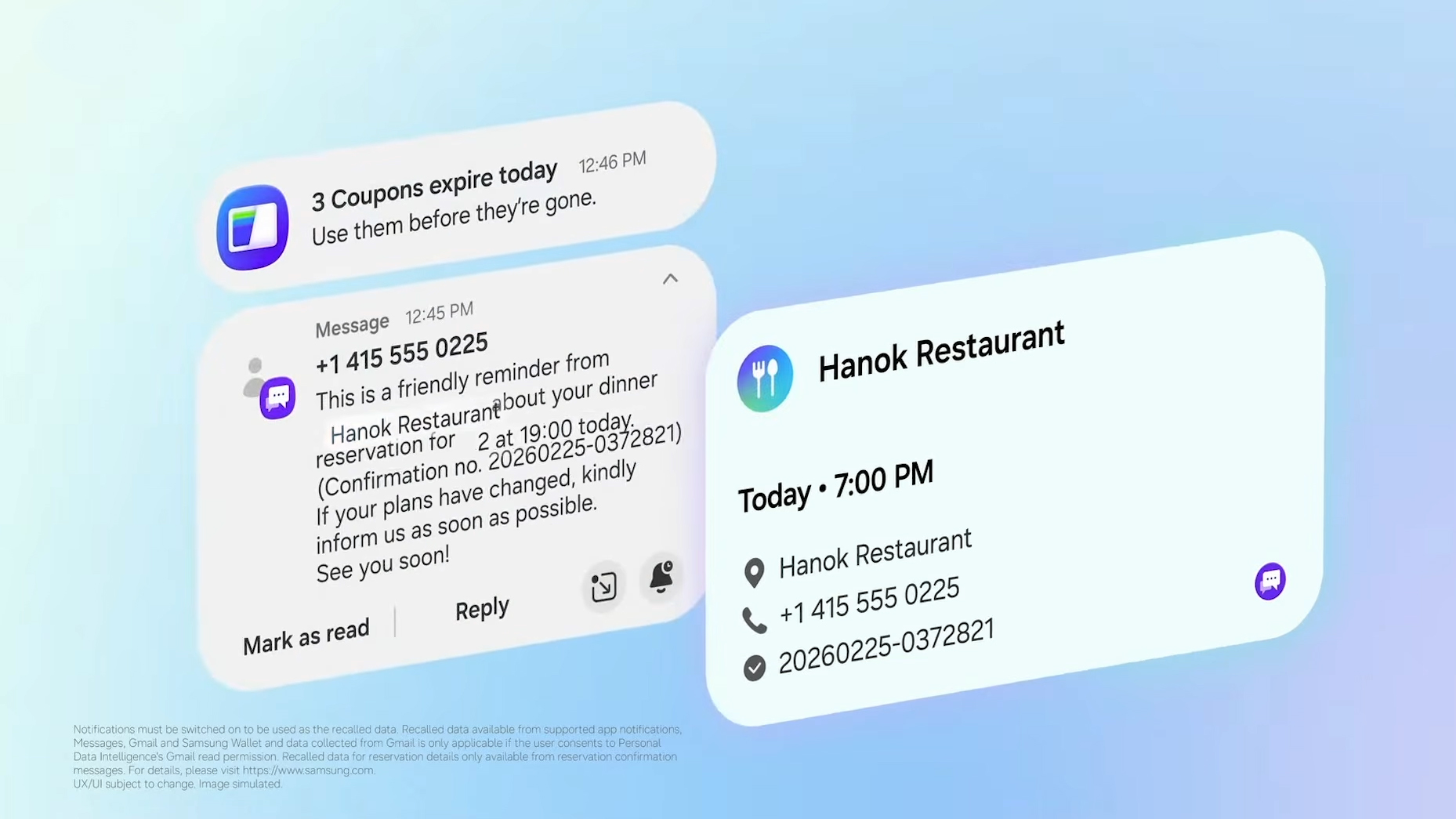
Basically, what Samsung is describing here is what is known as agent AI, where AI systems can achieve goals without much human supervision.
This is an idea that many companies are exploring, but it looks like Samsung plans to put it at the heart of Galaxy phones, and the good news is that much of it should remain free, as the company said it plans to “keep the basic, fundamental AI features free.”
You might be worried about the privacy implications of giving an AI access to all the data on your phone so it can perform tasks, but Samsung is confident it can convince you, too. It noted that for most of its AI tools, you have the option of using on-device AI or sending data to the cloud.
Commenting on this ‘security versus convenience’ conundrum, Won-Joon Choi said: “Our approach is to offer both options. Therefore, for most of our functions we have the option of using an on-device AI solution or cloud-based AI solutions.”
Those on-device AI features are apparently growing as well. Samsung gave the example of the Winter Olympics, which it recently sponsored, where there was often no phone signal in the mountains of Cortina, Italy.
“If you go to Cortina, sometimes you’ll have a hard time finding someone who speaks English,” Benjamin Braun said. “But because Samsung Galaxy AI is on the device, you can still use it as a translator, which is pretty amazing. You take a lot of photos because it’s a competition – editing those photos, where in the past you needed to use Photoshop, took hours and was very complex, now you can do it because, again, it’s natively on the device,” he added.
While those features aren’t exactly unique to Samsung, the company claimed it has an additional advantage over some of its rivals. Unlike Google’s Pixel phones, which rely heavily on Gemini from an AI perspective, Samsung’s phones also have the company’s in-house AI features, like Bixby, and tools from other companies, like Perplexity, along with Google’s AI features.
So Samsung’s AI OS, which we’re seeing the first steps of with the Galaxy S26 series, could include some of the best features and models in the entire AI ecosystem, making it something that could, in theory, be difficult for Apple or anyone else to beat. Whether that’s actually the case is something we’ll find out as the loading bar progresses in the year 2026.
Follow TechRadar on Google News and add us as a preferred source to receive news, reviews and opinions from our experts in your feeds. Be sure to click the Follow button!
And of course you can also follow TechRadar on TikTok for news, reviews, unboxings in video form and receive regular updates from us on WhatsApp also.


