
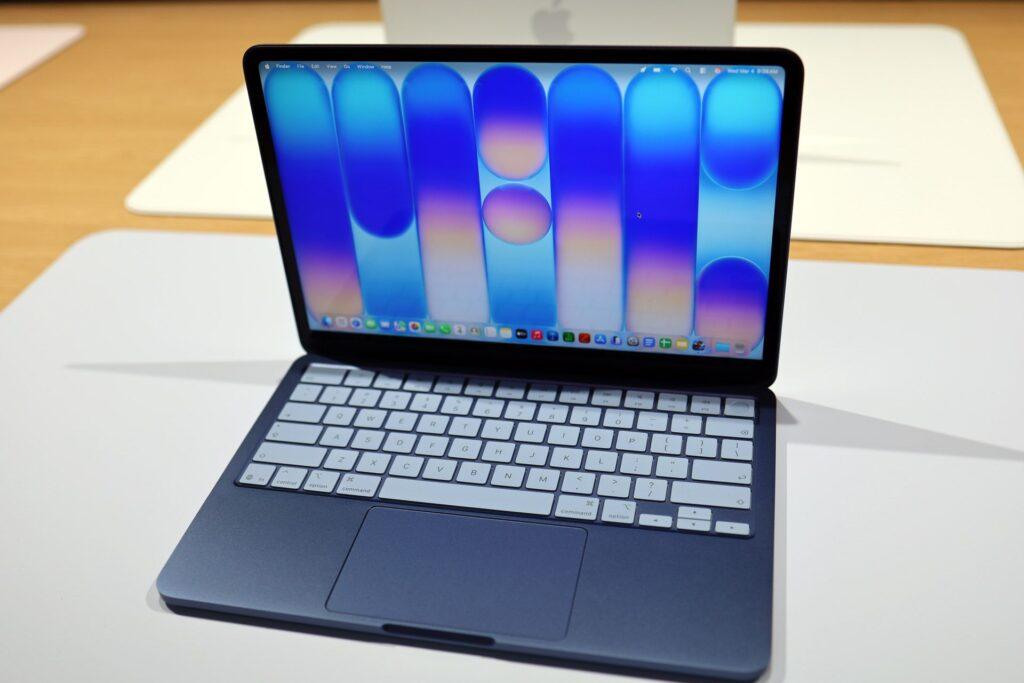
AppleMacBook Neo. The name seemed ridiculous to me at first, but then I hadn’t seen this colorful, classic, affordable laptop in person. What I didn’t know is that it’s very likely that the look, which includes colors like Citrus and Blush that spread playfully across the keyboard, is probably at least partially responsible for the Neo name.
Think about it: “Neo” is one letter away from “Neon,” and these colors, especially Citrus and Blush, have the boldness of neon lights.
Find the market
What Noveilli could talk about is the aspirations for the MacBook Neo and some of the challenges Apple faced in bringing the MacBook DNA to life in an affordable system.
While he couldn’t offer details on the manufacturing process, Novielli shared some insights, mainly comparing what other laptop makers are doing in the space.
“If you think about a lot of the comparable personal computers you can get in this price range, what you’ll find is that it’s very easy to make a computer that has features and experience that are just right,” he told me, adding that Apple has “relentless focus and attention to detail” and “an obsession with making sure the user experience is perfect in every way.”
It’s true, there are plenty of laptops in this price range made of plastic and not as many $599, 2.7-pound laptops made with relatively durable (and mostly recycled) aluminum.
I think, however, that the real challenge here was marrying Apple’s obsession with design and quality of materials with a product that would still sell for $599 or less ($499 in the education market). To do so, Apple had to build a new product from scratch and make early decisions that allowed it to fit within that relatively narrow price range.
The magic here is that most consumers may not even notice the sometimes subtle but impactful differences, like the switch from a haptic trackpad to a physical trackpad (which works and looks a lot like the trackpad on a MacBook Air) and the use of a standard sleep button (Touch ID will cost you an extra $100 but will also let you double your storage).
Even the decision to go with just 8GB of RAM, although that choice may have been partly determined by the decision to use the A18 Pro, which was paired with 8GB of unified memory in the iPhone 16 Pro.
Direct RAM into the room
Thinking about that RAM, I was less concerned about the quantity (8GB in a budget laptop is actually pretty good) than about how Apple would handle dwindling RAM supplies (and skyrocketing prices), especially if the MacBook Neo is, as I expect it to be, a big hit.
Novielli, however, was optimistic and declined to comment on demand for the product, but assured me: “We are very confident that we will be able to get this amazing new product into the hands of many, many more customers around the world.”
Apple, he assured me, is very aware of the global situation. “Of course, all the things you ask are things that very smart teams at Apple are thinking about on a regular basis,” he said, adding: “We understand what’s happening in the world and we’re very focused on making sure we can deliver the right products to the right customers at the right time.”
I reminded Novelilli that the last time I had seen such a unique Apple MacBook was the 12-inch MacBook, which was released more than a decade ago. It looked like the MacBook Air, but if you looked at it through the wrong end of the telescope. It only had a USB-C port (a novelty at the time, Novielli reminded me) and cost $1,299. The product was not a success. Still, I saw echoes of the effort in this new MacBook Neo. Perhaps, however, I shouldn’t
“I think some may draw parallels to the MacBook product that you’re referring to, but really, you know, the MacBook Neo is a completely new product that, again, was reinvented from the ground up,” he explained.
Finally, we come to the question of the purchasing decision; It’s not whether you should get the MacBook Neo or a MacBook Air, but rather choosing between 256GB and 512GB. Look, some might want that Touch ID, but I asked Novielli how consumers should think about their storage options. He offered a simple and I would say useful rule of thumb.
You should analyze your current storage needs, he told me. “So whether you’re using a Mac or a PC, or if you have your iPhone, you probably have an idea of how much storage you’re using in terms of your files, your photos or committed to important things, and whatever else you have stored on your current devices. And so, that’s a really good way to evaluate what your needs are today and for the future.”
Hmm. You may need that 512 GB.
Follow TechRadar on Google News and add us as a preferred source to receive news, reviews and opinions from our experts in your feeds. Be sure to click the Follow button!
And of course, you can also follow TechRadar on YouTube and tiktok for news, reviews, unboxings in video form and receive regular updates from us on WhatsApp also.


