King Charles’ ruthless decision to banish his younger brother Andrew from public life was born out of a desire to isolate a weakened monarchy before passing on to the crown, but it remains to be seen whether the deep damage can be contained.
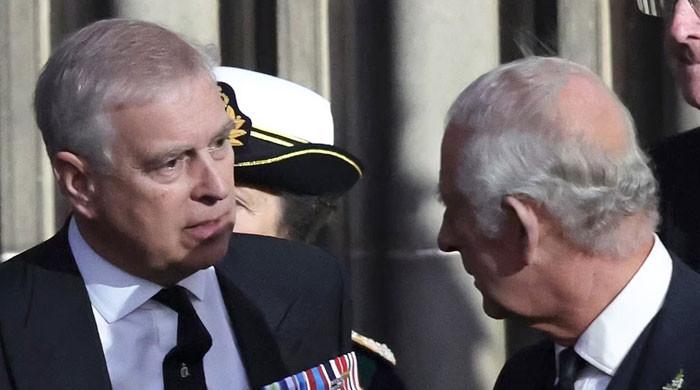
Charles stripped Andrew of his title as prince, evicted him from his mansion near Windsor Castle and said he and the queen were thinking about abuse survivors, to draw a line under a scandal surrounding his links to Jeffrey Epstein that has battered the royals for years.
It marked one of the most dramatic moves against a member of the royal family in modern British history, by a king who is still receiving regular cancer treatment and whose priority is to bolster support for the monarchy before his eldest son, Prince William, inherits the throne.
But some commentators said the move should have come much sooner.
With Queen Camilla and the king’s sister-in-law Sophie being long-term activists against sexual violence, royal author Robert Hardman said Andrew’s links to the American sex offender were increasingly placing the royal family on “Team Epstein”, which Charles could not live with.
“He wants to put as much distance as possible between his brother and the monarchy,” said Hardman, author of Charles III: The Inside Story. Reuters.
THE ROYALS THROWED ANDREW OUT OF SELF-PRESERVATION
The royals have been trying to sideline Andrew, Charles’ younger brother and the late Queen Elizabeth’s second son, for years, fearing he would tarnish the family with the same air of entitlement and bad behavior that has long lingered around him.
Andrew was once considered a handsome naval officer who returned from the Falklands War with Argentina in 1982 to greet his mother with a red rose between his teeth.
But in the decades that followed, the queen’s supposed favorite son became the center of much ridicule as the British press focused on his personal life, nicknamed him “Randy Andy” and “Air Miles Andy” for his jet-setting lifestyle.
That mockery turned to revulsion when it was revealed that Andrew had remained in contact with Epstein after he was jailed for sex crimes in 2008, and when he gave a disastrous interview in which he showed no sympathy for abuse victims.
Andrew said in the BBC’s Newsnight interview that he did not regret his friendship with the American financier because it had had some “seriously beneficial results”.
He resigned from all royal duties following the interview and was stripped of his military ties and royal patronages in 2022.
That year he also settled a lawsuit filed by Virginia Giuffre that accused him of sexually abusing her when she was a teenager after being introduced by Epstein.
Andrew had denied knowing Giuffre, who committed suicide in April. His story regained prominence with the publication of his memoirs this month.
The exile reflects the threat he represents to the royal family
Royal experts said Charles’ actions reflected the threat to the institution, after a move earlier this month to stop Andrew from using his title as Duke of York was deemed inadequate.
In recent weeks, Andrés had overshadowed two of Charles’s efforts to shape cultural and public life: his historic prayer with the Pope at the Vatican and the inauguration of a monument to LGBT military veterans that had previously been banned.
“I think the fact that the royal family decided to go against him is a big deal,” recruitment employee Anna Hunter, 29, said in London on Friday morning.
Giuffre’s brother Sky Roberts told BBC Newsnight he praised the king but said a further investigation was needed. The charity Rape Crisis praised the king and queen for their commitment to survivors of sexual violence.
But others questioned whether the royals had been too slow to act. “I don’t know if this measure will be enough to repair the damage that has been caused,” said Afua Hagan, a journalist and royal commentator. Reuters.
SUPPORT FOR THE MONARCHY HAS BEEN DECLINING
Support for the institution has declined over the last decade, and the British Social Attitudes survey showed that 51% of people in Britain thought it was “very important” or “fairly important” for Britain to have a monarchy.
This is the lowest figure recorded to date and reflects the lack of interest among younger generations.
For its supporters, the British royal family provides stability and continuity in a time of constant political turmoil, acting as a draw for political leaders such as US President Donald Trump.
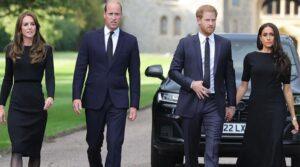
But to its detractors, a hereditary monarchy that requires subjects to bow is an anachronism holding the country back, while the lives of prominent members, such as William and Kate and their three young children, are followed like a soap opera.
Charles will hope that his very public defenestration of his brother, which a royal source said had been supported by Prince William, will go some way to addressing the problem.
“It’s cruel on the part of King Charles, but it’s also cruel on the part of Prince William,” commentator Hagan said.