
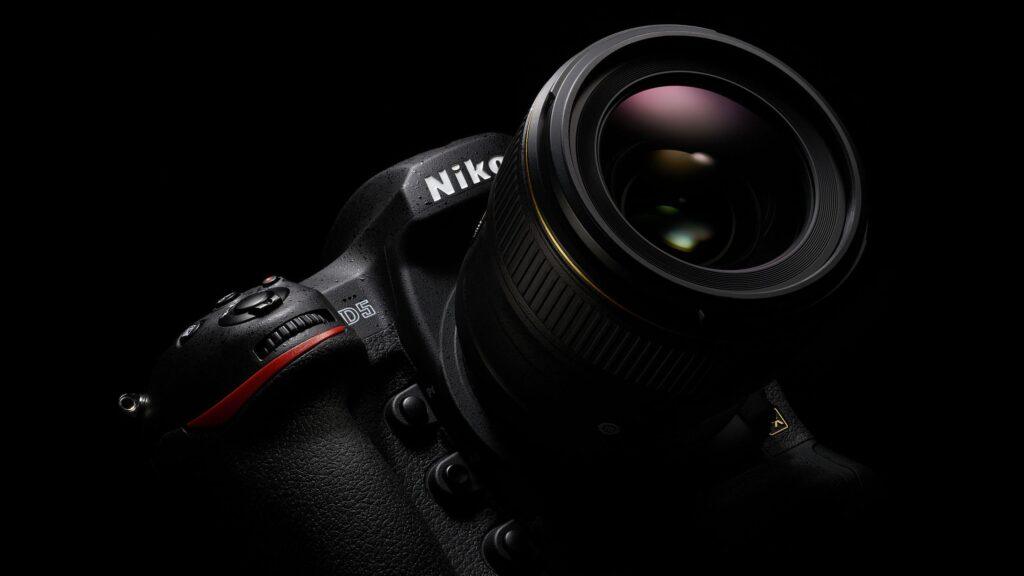
- NASA has published new photographs of Artemis II taken on its flyby to the Moon
- The ‘Earthset’ image was taken again with a Nikon D5
- D5, launched in 2015, is NASA’s choice for the most important Artemis II photographs
NASA has released some stunning new photos taken by Artemis II during its Moon flyby, and the key photos were once again taken with the ten-year-old Nikon DSLR camera.
The series of incredible photos (scroll down to see them) show some unique views, including a solar eclipse from the far side of the Moon. And ‘Earthset”s signature photograph, described as “generational” by one observer on NASA’s Flickr gallery, was taken with the Nikon D5 (settings were f/8 at 1/1000s, ISO 400, in case you were wondering).
This has become something of a theme. When the first stunning images from NASA’s Artemis II mission began streaming last week, online photographers did what they always do: They looked at the EXIF data. And what they found raised some eyebrows.
Land. The Artemis II crew captured this view of an Earth sunset on April 6, 2026, while flying around the Moon. The image is reminiscent of the iconic image of Earthrise taken by astronaut Bill Anders 58 years earlier as the Apollo 8 crew flew around the Moon. pic.twitter.com/ag72r97wzbApril 7, 2026
Those stunning shots were captured with the Nikon D5, a DSLR that was released over a decade ago and, frankly, wasn’t exactly met with universal adoration at the time. Shouldn’t the astronauts aboard the Orion spacecraft be wearing something a little more, well, space-age than that? Was this really the best camera to capture these historic photographs?
But NASA’s choice makes a lot of sense when you look closer, and says something interesting about what “the best camera” means when the stakes are so high.
An unlikely hero?
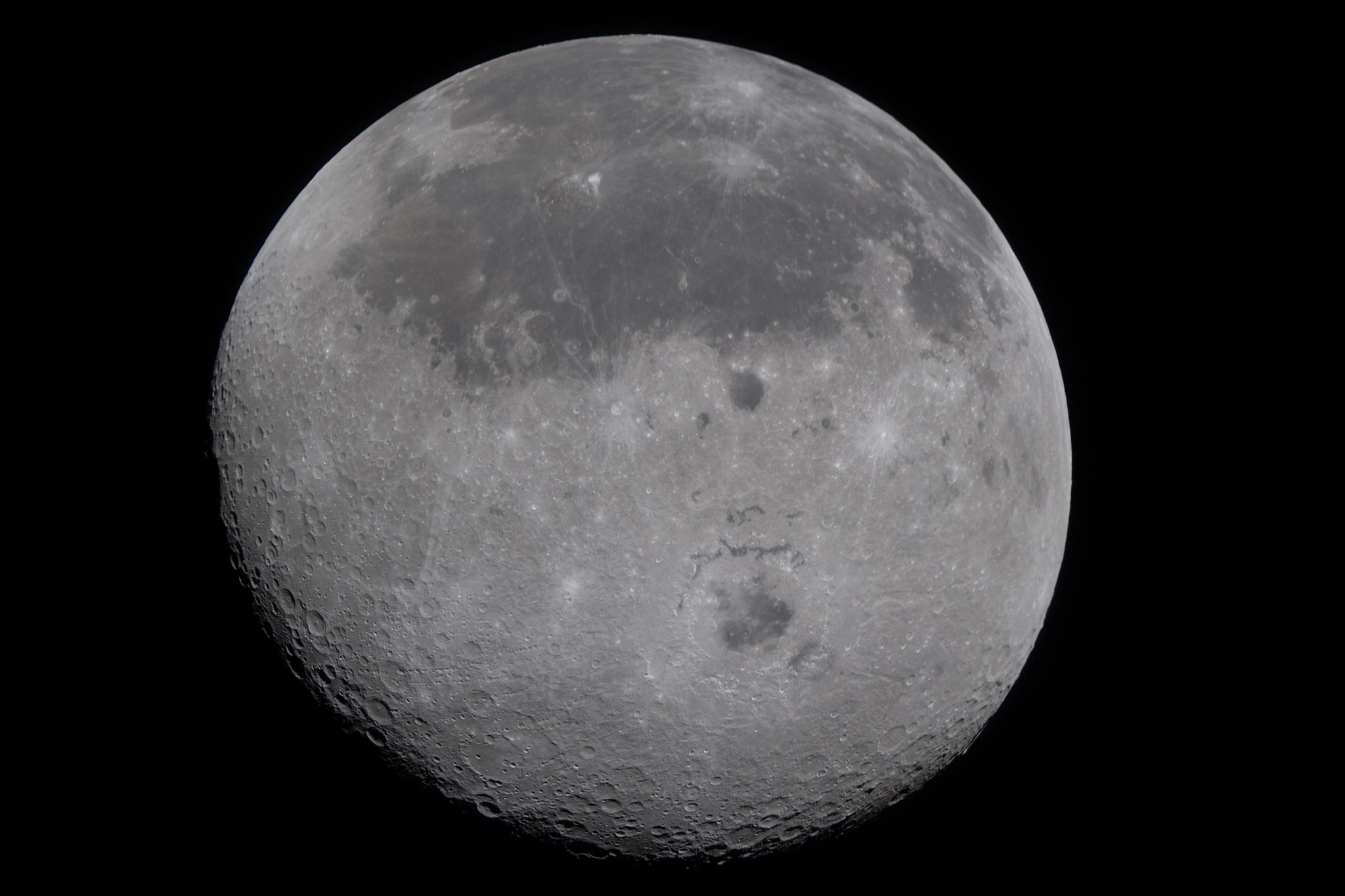
Hello Moon. It’s great to be back. Here’s a sample of what the Artemis II astronauts photographed during their flight around the Moon. See more photos from the mission: pic.twitter.com/6jWINHkDLhApril 7, 2026
The four photographs above were taken with the Nikon D5. That DSLR arrived in 2016 with a spec sheet designed to make noise, due to how little noise the camera photos actually showed.
The most notable specification was the camera’s maximum ISO of 3,280,000, a number so high that it provoked immediate skepticism from camera experts, most of whom concluded that the upper limits of that range were essentially unusable. It turned out they were right, but they still missed the point.
While no one shoots at ISO 3,280,000 and expects clean results, the engineering effort that went into pushing that sensor so high on the sensitivity scale had a knock-on effect when shooting at more “normal” settings. The D5 remains, even today, Nikon’s best digital camera for high ISO performance. The Nikon Z9, the company’s current mirrorless model, maxes out at ISO 102,400.
That low-light performance is essential for a mission traveling through the darkness of deep space. Astronaut Reid Wiseman’s already widely shared snapshot of Earth (the planet mostly in shadow, with only a thin crescent of reflected sunlight at its edge) was captured at ISO 51,200 with a shutter speed of 1/4 second.
Interestingly, Wiseman reportedly asked NASA control to adjust the angle of the Orion slightly, so he could press the front of the lens up to the window in an attempt for greater stability. Those are settings guaranteed to show the limitations of a weak sensor.
Analysis: Tested in the harshest conditions
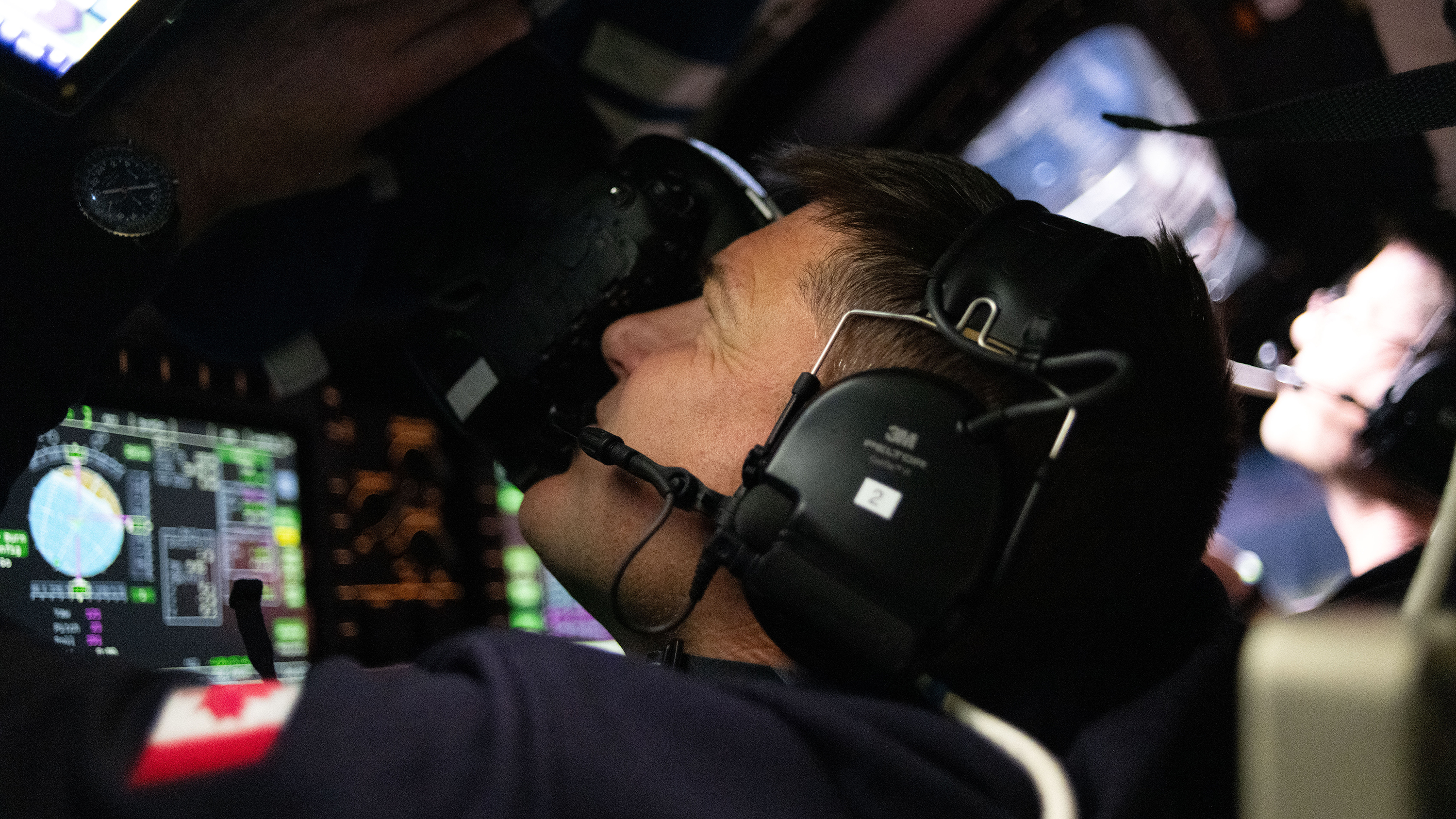
However, the D5 is not just about high ISO performance. The ‘Earthset’ photograph from NASA’s recent Moon flyby, and many others, were taken at ISO 400.
The D5’s low-light performance alone wouldn’t be enough to earn it a seat on one of the highest-profile space missions in a generation. It also has an enviable track record in extreme environments. The camera has been a fixture in conflict journalism and professional sports photography for years; In other words, the type of work in which reliability is essential. As a professional, you simply cannot afford for your camera to fail you.
Beyond its overall robustness, the D5 has also demonstrated strong radiation resistance, which becomes a serious concern once you advance beyond low Earth orbit. The Artemis II crew (Wiseman, Victor Glover, Christina Koch and Jeremy Hansen) is operating at distances that expose their equipment to radiation levels beyond what the ISS has to deal with. The D5 has gone through the proper qualification testing to confirm it can handle that environment. A newer camera, no matter how impressive its spec sheet, would need to earn the same level of trust.
NASA has confirmed that future Artemis missions will use next-generation camera systems currently undergoing qualification, and it is understood that Nikon’s Z9 platform will underpin the upcoming Portable Universal Lunar Camera (HULC) for Artemis III. The Nikon Z9 has also been used for some Artemis II photography, such as ‘Artemis II in eclipse’ (f/2.0 at two seconds, ISO 1600). But for this mission, the tested option won most of the time.
Incredibly, you can pick up a second-hand Nikon D5 from companies like MPB for just $874 / £654 (around $1,250) at the time of writing. This is for a “well used” model with a high shutter count (effectively miles on the clock, in camera terms), but even models in “good” condition can be found for just $1,079 / £824 (around AU$1,570).
The mirrorless era has brought significant advances in autofocus, speed and video capability. What it hasn’t necessarily done is improve high ISO image quality across the board. The D5’s particular strength – its ability to get sharp detail in the dark – has never been surpassed in a later Nikon body.
As swan songs go, being the lead camera on a mission that has already set a new record for the longest distance humans have traveled from Earth (400,000 kilometers) isn’t a bad way to retire. The D5 may not be the most glamorous camera out there, but up there in the dark, it’s the perfect tool for the job.
Two D5s made the trip aboard the Orion, accompanied by a Nikon Z9. There’s also a 30-year-old Nikkor 35mm f/2 AF-D prime lens in the bag, a touch that will delight a certain type of photography nerd. GoPros are also on board, courtesy of Disney, for a National Geographic documentary. There are reportedly 17 total portable cameras inside the spacecraft for crew use and 15 installed outside.
To see more images from the Artemis II mission, be sure to check out NASA’s Flickr photo gallery.
The best cheap camera.
Follow TechRadar on Google News and add us as a preferred source to receive news, reviews and opinions from our experts in your feeds. Be sure to click the Follow button!
And of course you can also follow TechRadar on TikTok for news, reviews, unboxings in video form and receive regular updates from us on WhatsApp also.


