
- Windows 10 is approaching the support deadline with almost half of the desktop computers that still execute it
- The Windows 7 final saw a faster migration with Windows 10 much more dominant worldwide
- Strict hardware needs and business cycles maintain windows 10 generalized before cutting
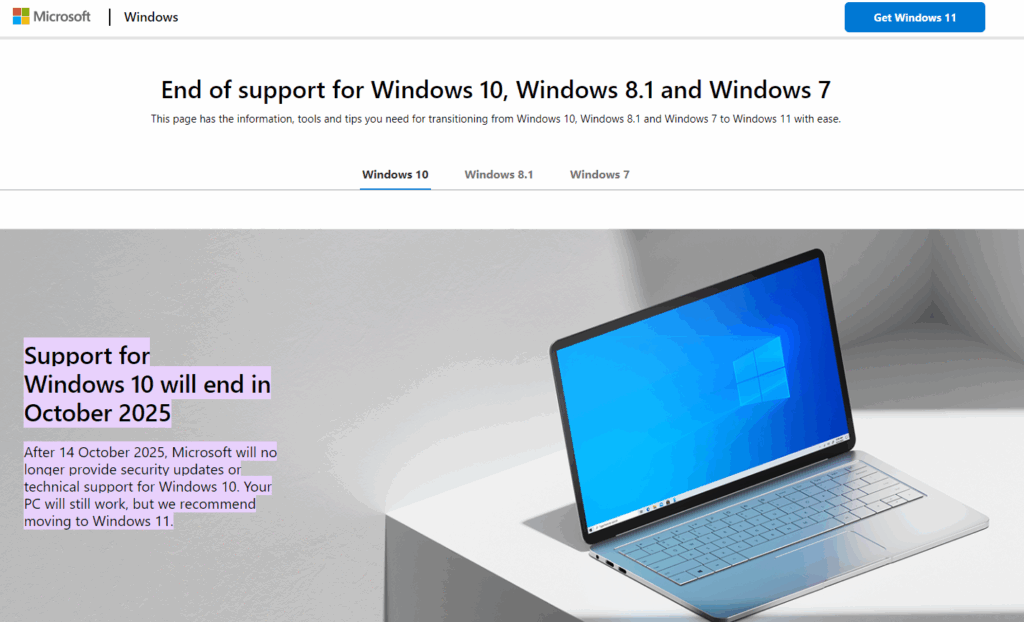
Now we must all take into account that the end of the life of Windows 10 is coming, since the operating system reaches its end of October 14, 2025, but it is not becoming soft on that good night.
Statcounter’s instantaneous 2025 shows that Windows 11 is the upper desktop Windows version worldwide with 49.08%, while Windows 10 is very close to 45.53%. A distance behind them, with 3.59%, is the next closest operating system, Windows 7, which reached the end of life on January 14, 2020.
All this shows how the image of the end of the life of Windows 10 and that of Windows 7 is very different, this is what we find.
Not compatible with Windows 11
Two months before the Windows 7 support finished, the operating system had a market share of 27.49%, while Windows 10 had 64.64%. People were ready, and capable of migrating to the newest operating system of Microsoft.
Windows 8.1, which never found a significant audience, had 4.98%.
From Statcounter’s figures it is clear that people are much less ready for the end of the life of Windows 10 than for Windows 7.
Windows 7 did not die quickly, only submerged below 10% in 2023, but did not cling in the same way as Windows 10 is today.
There are several reasons why Windows 11 is not the fugitive leader at this time.
Their hardware requirements are stricter for the starters, which means that many PCs that execute Windows 10 without problems are simply not compatible.
Companies also plan longer cycles. Some will keep devices on Windows 10 while trying applications and program replacements, using support options when available.
For many PC owners, the option is to update Windows 11 in eligible hardware or existing purchase devices that admit it.
Companies can explore extended updates paid for a limited period, depending on politics, but that is really just kicking the can in the street and could end up being very expensive.
The use data suggests that, with or without Microsoft support, Windows 10 will remain in generalized use far beyond the limit, maintaining occupied migration equipment.


