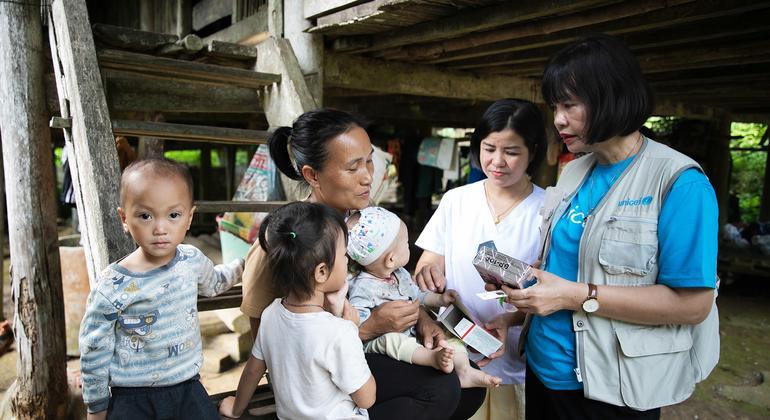
The prevalence of malnutrition in the region decreased to 6.4 percent in 2024, down from seven percent in 2023, marking a significant improvement, the report said.
This progress translates into 25 million people escaping hunger in just one year.
However, progress is uneven: nearly 80 percent of people living in South Asia are at risk. Overall, the Asia-Pacific region still accounts for nearly 40 percent of the world’s hungry people.
Cost is to blame
In 2024, 24.4 percent of children under five were stunted, with South Asia recording the highest prevalence. On the other hand, obesity in adults continues to increase, particularly in Oceania (Australia, New Zealand and the South Pacific).
The report reveals that the cost of a healthy diet in the region was on average higher than the global average last year, at $4.77 per person per day in purchasing power parity (PPP).
Among other key recommendations, the report urges countries to strengthen multisectoral policies that address food insecurity and nutrition.
Key water pipeline in Gaza repaired, but miserable conditions persist
In Gaza, a major water pipeline in the south is back online, after Israeli authorities allowed a repair team to access the site.
The UN aid coordination office (OCHA) reported a week ago that the main water line running from Israel to Khan Younis in southern Gaza had been damaged and was out of service, posing a key concern for the enclave’s 2.1 million residents.
At that time a request to arrive at the site and carry out repairs was denied.
Getting ready for winter
Meanwhile, amid the cold winter temperatures, UN agencies and partners continue to work to help Gazans stay warm.
This includes UNICEF, which welcomed Sweden’s support for winterization supplies, sanitation, nutrition and humanitarian cash transfers for children and families.
The United Nations Development Program (UNDP) also highlighted the critical need for safe and resilient shelters.
With assistance from the Republic of Korea, the agency has replaced more than 800 worn-out tents for displaced Gazans, but it is just a start, UNDP insisted.
New strain of influenza circulating in Europe, says WHO
The early arrival of seasonal influenza has continued to sweep across Europe, with at least 27 European countries reporting “high or very high” flu activity as of Wednesday.
In six countries (Ireland, Kyrgyzstan, Montenegro, Serbia, Slovenia and the United Kingdom) more than one in two patients with flu-like symptoms tested positive for the virus, according to the World Health Organization (WHO).
The new variant dominates
The UN agency confirmed that a new influenza variant called A (H3N2) It currently accounts for up to 90 percent of all confirmed cases in the European region.
“It shows how a small genetic variation in the flu virus can put enormous pressure on our health systems because people do not have developed immunity against it,” said Dr Hans Kluge, WHO Regional Director for Europe.
He also emphasized the importance of getting vaccinated quickly.
As in previous flu episodes, school-age children are the main drivers of community spread. But adults at least 65 years old tend to be most at risk and make up the majority of severe cases requiring hospitalization.