
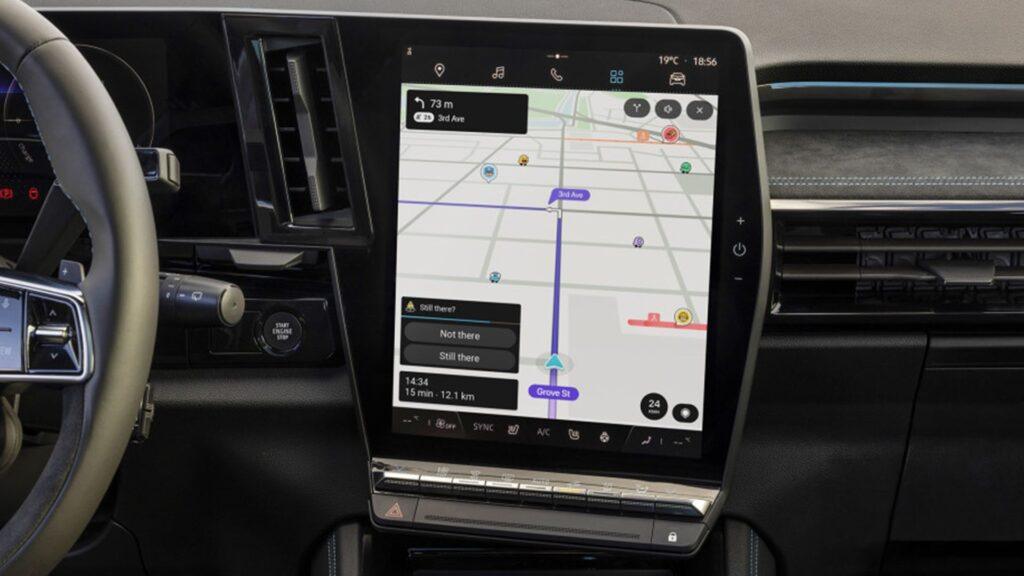
- Waze Reportedly Testing Traffic Light Support
- A popular Google Maps feature could soon be available
- The feature is currently only being tested in Israel for now.
Waze is reportedly introducing a feature that many users have been asking for and that Google Maps has been offering since 2022.
Traffic light and stop sign support has helped Google Maps users anticipate upcoming turns and better understand the correct lane for more than three years, but it looks like Waze is finally catching up.
According to Android Authority, which received a tip from GeekTime, Waze is testing traffic lights on its maps in Israel, where the app was originally founded and where many of the developers still live and work today, despite Google’s acquisition of the company in 2013.
The report suggests that the feature is still in its early stages and that the number of traffic lights displayed at any given time is currently limited, to avoid cluttering the map to the point of distraction.
Android Authority claims that when actively navigating, the map displays a maximum of three traffic lights at a time. Although this changes when users are not navigating, and all nearby traffic lights are shown to those simply navigating the map or driving without navigation.
Waze confirmed in May that data from traffic lights, stop signs and other important traffic signs would be introduced to its mapping services after asking its users to vote in favor of the new features.
Google takes the lead
As mentioned above, Google Maps added traffic lights, stop signs, and other road elements to its maps years ago, as these are some of the most important landmarks when arriving at an intersection or other complex traffic system.
They allow drivers to more effectively plan to be in the correct lane for an upcoming turn and is something that close rival Apple Maps has also been offering for some time.
Since Waze is now owned by Google, it wouldn’t be too much of a stretch to think that the former could use traffic light data that already exists to roll out the feature beyond Israel in the very near future.
In fact, the two services are becoming more similar as time goes on, as the tech giant has effectively “borrowed” most of the features that made Waze so popular in the first place.
But Google now arguably has the advantage, as it also integrates its Google Places data, as well as live information on fuel price and EV charger availability.
Add to this the implementation of Google Gemini in vehicles, and it is quickly becoming one of the most powerful ways to safely interact with navigation on the move, with the ability to ask complex questions about a destination, reserve tables at a restaurant and receive recommendations from a huge community of users.
Follow TechRadar on Google News and add us as a preferred source to receive news, reviews and opinions from our experts in your feeds. Be sure to click the Follow button!
And of course you can also follow TechRadar on TikTok for news, reviews, unboxings in video form and receive regular updates from us on WhatsApp also.


