
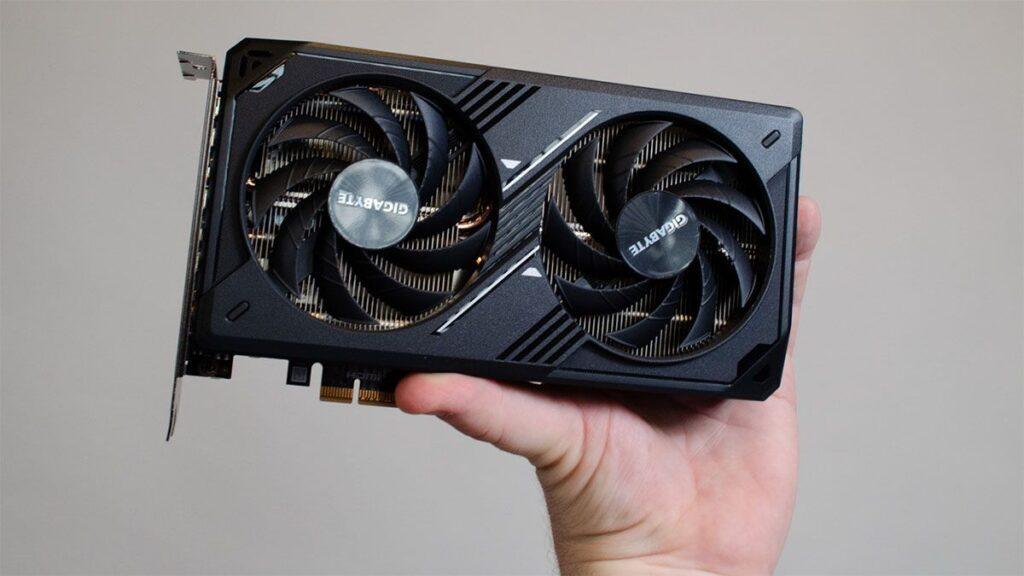
- New rumor suggests Nvidia could focus more on 8GB GPU
- The theory is that the RTX 5070 Ti and 5060 Ti with 16 GB of VRAM will be a lower priority
- Nvidia could focus on the RTX 5060 and 5060 Ti with 8 GB this year
Rumor has it that Nvidia could be recalibrating its production strategy for RTX 5000 GPUs, stopping making affordable models with 16GB of video RAM (VRAM) in favor of 8GB graphics cards at these mid-to-low tiers.
This is due to, as you may have guessed, the RAM crisis, which also affects VRAM supply and costs. VideoCardz reports that a post on the Board Channels forum in China (where supply chain rumors regularly circulate) claims that Nvidia is reducing production of the RTX 5070 Ti and 5060 Ti graphics cards with 16GB of VRAM.
Apparently, Team Green will shift to favor production of the RTX 5060 Ti model with 8GB of VRAM, and also the RTX 5060 (which also has 8GB of VRAM, with no 16GB variant available for it).
Those two RTX 5060 GPUs are identified as the two key models for Nvidia’s GeForce GPUs in the Chinese market, and by extrapolation, it would be surprising if the rest of the global picture didn’t reflect that to a reasonable extent.
Analysis: Will 8 GB still be enough in 2026?
It’s been rumored for some time that Nvidia might shift its attention away from more affordable GeForce graphics cards that carry larger amounts of VRAM relative to their price range, so this isn’t exactly a surprise. While we have to treat the source with some caution (I’m always a little wary of board channels, although this forum may contain accurate information), it also makes sense for Nvidia to do this.
Nvidia won’t want to “waste” next-generation VRAM (GDDR7), which has become a much scarcer commodity, on lower-tier graphics cards, especially since the rising cost of that video RAM will feel even more proportional to the price of a 16GB RTX 5060. Of course, a steeper price increase isn’t a good idea, and it’s worth noting that this same post suggests that price increases for Nvidia GPUs in the “next quarter” haven’t been ruled out, so Q2 could be a bit painful in that regard, which again wouldn’t be a surprise.
And so, with a possible shift back to producing more 8GB graphics cards, this raises the oft-repeated question: is VRAM enough for a modern GPU? On the one hand, it’s true that an 8GB GPU can be pretty decent for many contemporary games, as we discovered when testing the RTX 5070 laptop GPU with that amount of video RAM. When using DLSS (and especially frame generation, where supported), you can get great results with a relatively affordable 8GB GPU.
However, not all games support DLSS or frame gen, and there are some titles that really struggle with an 8GB allocation, even today, without considering where games will go in the future.
And that’s the key problem with the 8GB VRAM arguments: future-proofing seems shaky, to say the least. A graphics card is expected to last a few years (preferably five in my opinion) and it won’t be long before those 8GB GPUs start to fall by the wayside with the increasing demands that future games will no doubt place on them.
Personally, I wouldn’t buy an 8GB GPU right now, but if necessary and you have no other option, you might be able to get by just fine for some time with this VRAM configuration, especially taking advantage of DLSS.
The best graphics cards for all budgets
Follow TechRadar on Google News and add us as a preferred source to receive news, reviews and opinions from our experts in your feeds. Be sure to click the Follow button!
And of course you can also follow TechRadar on TikTok for news, reviews, unboxings in video form and receive regular updates from us on WhatsApp also.


