
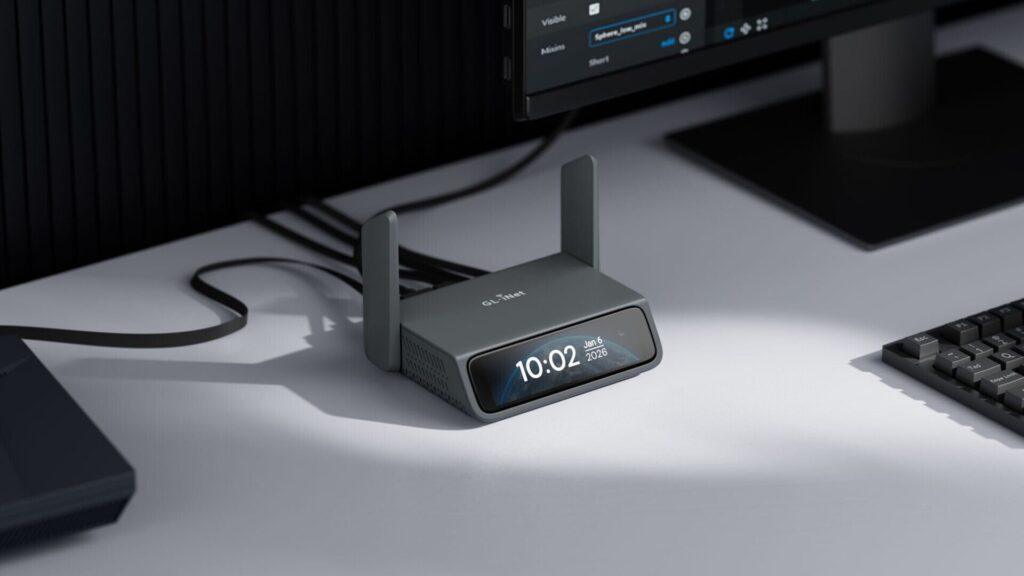
- Comet 5G ensures persistent remote access even when core networks fail unexpectedly
- Multi-network failover automatically switches between Ethernet, Wi-Fi 6, and 5G RedCap
- Local wireless SSID enables control even in private Internet environments or sandboxed setups
GL.iNet has announced the Comet 5G, a remote KVM designed to maintain control of computers when conventional network access becomes unreliable or unavailable.
The device combines wired Ethernet, Wi-Fi 6 and cellular connectivity in a single enclosure, aiming to reduce reliance on a single access method.
Comet 5G is based on GL.iNet Comet and retains the compact, subscription-free simplicity of KVM over IP that made it popular among IT professionals and home lab enthusiasts.
Multiple Network Failover and Connectivity Claims
The core claim is simple: persistent remote control even when networks fail or environments are restricted.
Comet 5G is based on a multi-network failover system that automatically switches between Ethernet, Wi-Fi 6 and cellular connections.
The intent is to keep the device accessible when the primary network goes down, particularly during troubleshooting or disaster recovery scenarios.
This approach aligns with environments where access conditions are unstable, including facilities with void spaces where connectivity is deliberately restricted.
The cellular component is based on 5G RedCap, a reduced capacity standard designed for lower power and bandwidth demands.
This is similar to its implementation on devices like the CTL NL73 Chromebook, which leverages 5G RedCap to expand mid-speed connectivity affordably.
While this allows basic remote access when wired or wireless networks are not available, it does not imply full 5G performance.
There’s also no microSD card slot, eliminating a simple option for expandable local storage or offline media management, and the absence of eSIM support limits deployment flexibility, as physical SIM management is still required.
Beyond wide area connectivity, Comet 5G includes a local access feature intended for environments without Internet availability.
The device can broadcast its own SSID, creating a direct wireless management link to a nearby control system.
This allows administrators to interact with connected machines on site, even when both the KVM and controller lack external network access.
This functionality expands deployment scenarios, although it depends on physical proximity rather than remote reach.
GL.iNet has increased the onboard storage to 64 GB of eMMC, intended to support multiple operating system images.
Data transfer speeds are specified at up to 25 MB/s, which could shorten recovery processes after system failures.
This internal storage replaces the reliance on removable media, although it also reinforces the previous limitation created by the lack of microSD expansion.
The hardware includes a touch screen and an HDMI port, reinforcing its role as a direct monitoring and control device rather than a purely headless tool.
The touch screen and dual Ethernet features echo designs seen on GL.iNet Slate 7 Portable Router, while the concept of multi-network failover is refined from its Puli AX Cellular Router.
According to GL.iNet, Comet 5G is a response to increasingly fragile network assumptions and is currently available for pre-order through its official channels.
Via TechPowerUp
Follow TechRadar on Google News and add us as a preferred source to receive news, reviews and opinions from our experts in your feeds. Be sure to click the Follow button!
And of course you can also follow TechRadar on TikTok for news, reviews, unboxings in video form and receive regular updates from us on WhatsApp also.


