
ISPR says participation highlights Pakistan’s indigenous aerospace and export potential
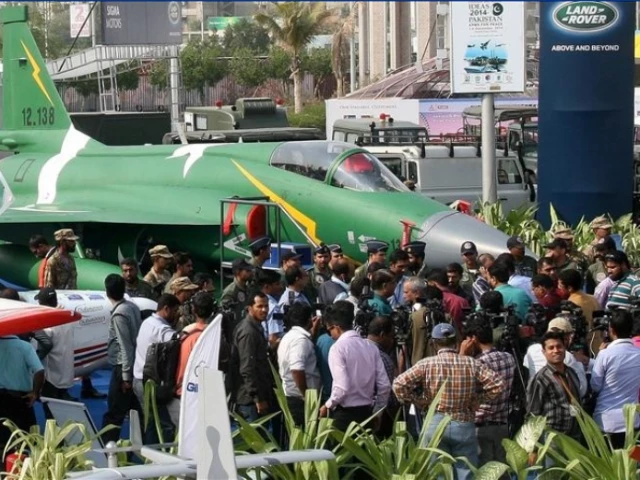
JF-17 fighter plane. Photo: Anadolu Agency
A Pakistan Air Force (PAF) contingent is taking part in the World Defense Show 2026 in Saudi Arabia, displaying the JF-17 Thunder Block-III multi-role fighter aircraft and the Super Mushshak basic trainer aircraft, the army’s media wing Inter-Services Public Relations (ISPR) said on Tuesday.
ISPR said World Defense Show 2026 serves as a premier global platform for defense and security, adding that PAF’s participation reinforces Pakistan’s position as an emerging hub of aerospace innovation, operational competence and reliable defense solutions.
VIDEO: RADIOPAK
The participation reflects PAF’s commitment to highlight Pakistan’s rapidly advancing indigenous aerospace capabilities and its proven operational excellence, the statement said.
The JF-17 Block-III, described as the pinnacle of Pakistan’s combat aviation technology, features state-of-the-art avionics, an advanced AESA radar, an enhanced electronic warfare suite and beyond-visual-range combat capabilities. ISPR said these features make it a formidable 4.5 generation fighter aircraft designed to meet the operational requirements of modern air forces.
Read: Pakistan Army’s 19-nation patrolling exercise concludes in Kharian
Along with the fighter jet, the Super Mushshak training aircraft is also on display, showcasing Pakistan’s strength in pilot training solutions. ISPR said the aircraft is known for its reliability, cost-effectiveness and ease of maintenance, and has been inducted by several friendly countries, serving as a reference platform for basic flight training across the world.
ISPR said PAF’s presence at the exhibition reflects its leadership’s vision of promoting defense cooperation, encouraging defense exports and strengthening strategic partnerships with friendly nations.
The exhibition provides an opportunity for international delegations, defense officials and defense industry leaders to interact with PAF representatives and explore prospects for collaboration, training and technology transfer, the statement added.


