
- Ring founder’s comments appeared in leaked email
- They suggest that Ring wants its cameras to “reduce crime to zero”
- Ring has responded to claims that this could lead to mass surveillance.
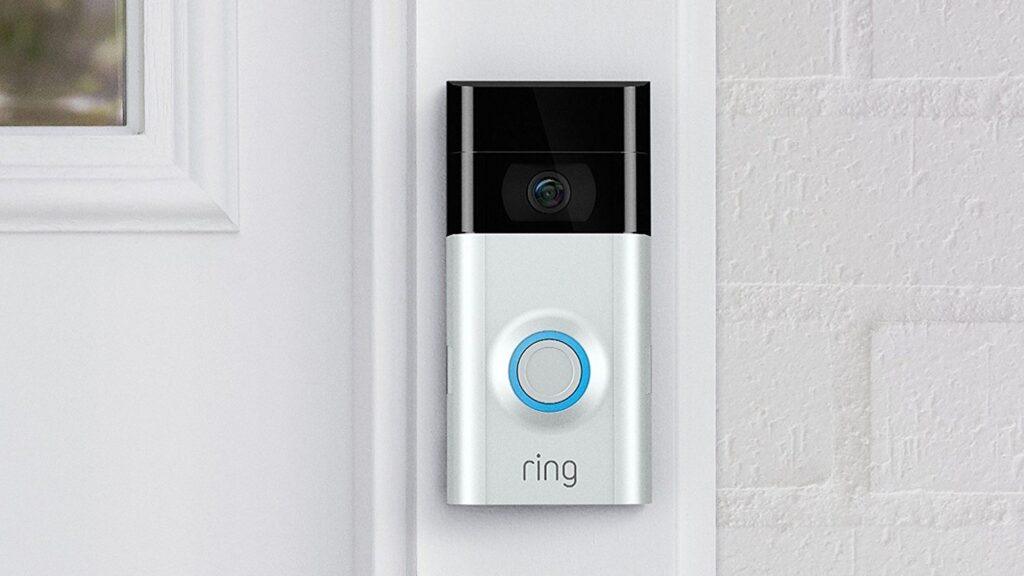
A commercial showcasing Ring’s new ‘Search Party’ feature made headlines after the Super Bowl earlier this month, when privacy concerns were raised about how it could potentially be used for mass surveillance. Now, a leaked email from Ring’s founder has added fuel to the fire, but Ring has responded to claims that it reveals mass surveillance plans.
The Search Party feature on Ring cameras is currently used to locate lost dogs, and it does so by leveraging artificial intelligence (AI) to scan images of other Ring users in order to recognize stray dogs. But according to a leaked email seen by 404 Media, that’s just the beginning of Ring’s plans.
In the message sent to staff in October 2025, Ring founder Jamie Siminoff said, “I believe the foundation we created with Search Party, first to find dogs, will end up becoming one of the most important pieces of technology and innovation to truly unlock the impact of our mission. You can now see a future where we can reduce crime in neighborhoods to zero.”
The argument from critics and privacy advocates is that by saying Search Party is designed “first to find dogs,” the implication is that it could then be expanded to find people. After all, dogs don’t commit crimes (unless they mess up your neighbor’s yard counts), so the idea of Ring cameras being used to “reduce crime to zero” seems to suggest that they could be used to find people.
However, Ring dismissed those claims in a response shared with 404 Media and TechRadar.
What did Ring say?
Ring has been quite optimistic in its response to the leaked email. A spokesperson said that rather than reveal specific plans, Jamie Siminoff’s comments were “intended to speak broadly to the long-term potential of customer-controlled features and technologies working together to support safer communities.”
“No feature is designed to ‘zero out crime,’ and tools like Search Party for Dogs are designed specifically for specific use cases, such as helping reunite lost pets, with privacy and user choice at the center,” the spokesperson added.
The leaked email was apparently not private either. “Jamie writes these emails knowing they may be shared externally, this is not the first (nor the last) time his notes have been shared,” the spokesperson said.
While its Search Party feature is enabled by default, Ring also says it’s possible to disable it. “Ring provides relevant context about when sharing can be useful, but the decision remains firmly in the customer’s hands, not ours,” the Ring spokesperson said.
Finally, Ring wanted to emphasize that features like Search Party are not designed to be expanded to identify other topics. “Search Party for Dogs helps camera owners identify potential lost dogs using detection technology built specifically for that purpose; it does not process human biometric data or track people. Fire Watch alerts owners to nearby fire activity. Community Requests notifies neighbors when local public safety agencies request help from the community,” the spokesperson added.
Analysis: Far from the end of the controversy

At first glance, reducing crime is something most people would be in favor of. No one likes having their packages stolen from their front porch, for example, and the idea of using home security cameras and video doorbells to catch perpetrators (and those responsible for more serious crimes) may seem like a worthwhile effort.
But despite Ring’s protests, this controversy has arisen due to the way Ring’s Search Party feature works, as well as its future implications. Search Party is enabled on Ring cameras by default and uses AI to scan images from other Ring cameras on the company’s network, turning it into a kind of automated surveillance system.
With law and order in the United States becoming increasingly politicized – and with agencies like ICE coming under heavy criticism for their actions – many critics are concerned that law enforcement could misuse a network like Ring’s to surveil the general public.
Given that revelations about the size of the US government’s mass surveillance programs have made headlines in recent years, that might not be too far-fetched an idea. It was these concerns that likely forced Ring to sever its ties with surveillance technology company Flock Safety.
It will be interesting to see if Ring continues to modify its stance in light of public reaction. Ring says facial recognition data is kept private and secure, but several customers have returned their cameras.
Follow TechRadar on Google News and add us as a preferred source to receive news, reviews and opinions from our experts in your feeds. Be sure to click the Follow button!
And of course you can also follow TechRadar on TikTok for news, reviews, unboxings in video form and receive regular updates from us on WhatsApp also.


